



Science News Roundup: Indonesian village turns unwanted trash into COVID helper; Boeing assessing launch dates in August for Starliner space capsule and more
Following is a summary of current science news briefs. Indonesian village turns unwanted trash into COVID helper A homemade robot designed by Indonesian villagers and scientists for fun has found a new use during the pandemic - bringing food, and hopefully a smile, to self-isolating residents who have contracted COVID-19.
Following is a summary of current science news briefs.
Indonesian village turns unwanted trash into COVID helper
A homemade robot designed by Indonesian villagers and scientists for fun has found a new use during the pandemic - bringing food, and hopefully a smile, to self-isolating residents who have contracted COVID-19. An eclectic assembly of household items like pots, pans and an old television monitor, it is now named the "Delta robot" in a nod to the highly contagious variant of the coronavirus that has ripped through Indonesia.
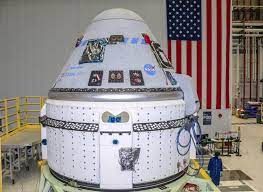
Boeing assessing launch dates in August for Starliner space capsule
Boeing Co said on Monday it was assessing multiple dates this month for the launch of its CST-100 Starliner space capsule to the International Space Station. The company last week postponed the capsule's much-awaited launch after discovering a glitch in its propulsion system valves during pre-launch checks.
Prehistoric cave paintings in Spain show Neanderthals were artists
Neanderthals may have been closer to our species of prehistoric modern humans than previously believed after cave paintings found in Spain proved they had a fondness for creating art, one of the authors of a new scientific report said on Sunday. Red ochre pigment discovered on stalagmites in the Caves of Ardales, near Malaga in southern Spain, were created by Neanderthals about 65,000 years ago, making them possibly the first artists on earth, according to the study published in the Proceedings of the National Academy of Sciences (PNAS) journal.
(This story has not been edited by Devdiscourse staff and is auto-generated from a syndicated feed.)
- READ MORE ON:
- Indonesian
- Spain
- Indonesia
- COVID
- Delta
- Boeing Co
- Neanderthals
- earth
- Malaga
ALSO READ
Supreme Court Mandates No-Fault Compensation Policy for COVID Vaccine Adverse Events
China Restarts Passenger Train Services to North Korea Post-COVID
COVID Inquiry Report Says NZ Restrictions Went Too Far
COVID-19's Lingering Impact on Young Learners
Covid vaccination: SC says no-fault framework formulation shall not be construed as admission of liability, fault of Centre, other authority.


 Google News