

Hubble snaps this star-studded image of enigmatic star cluster
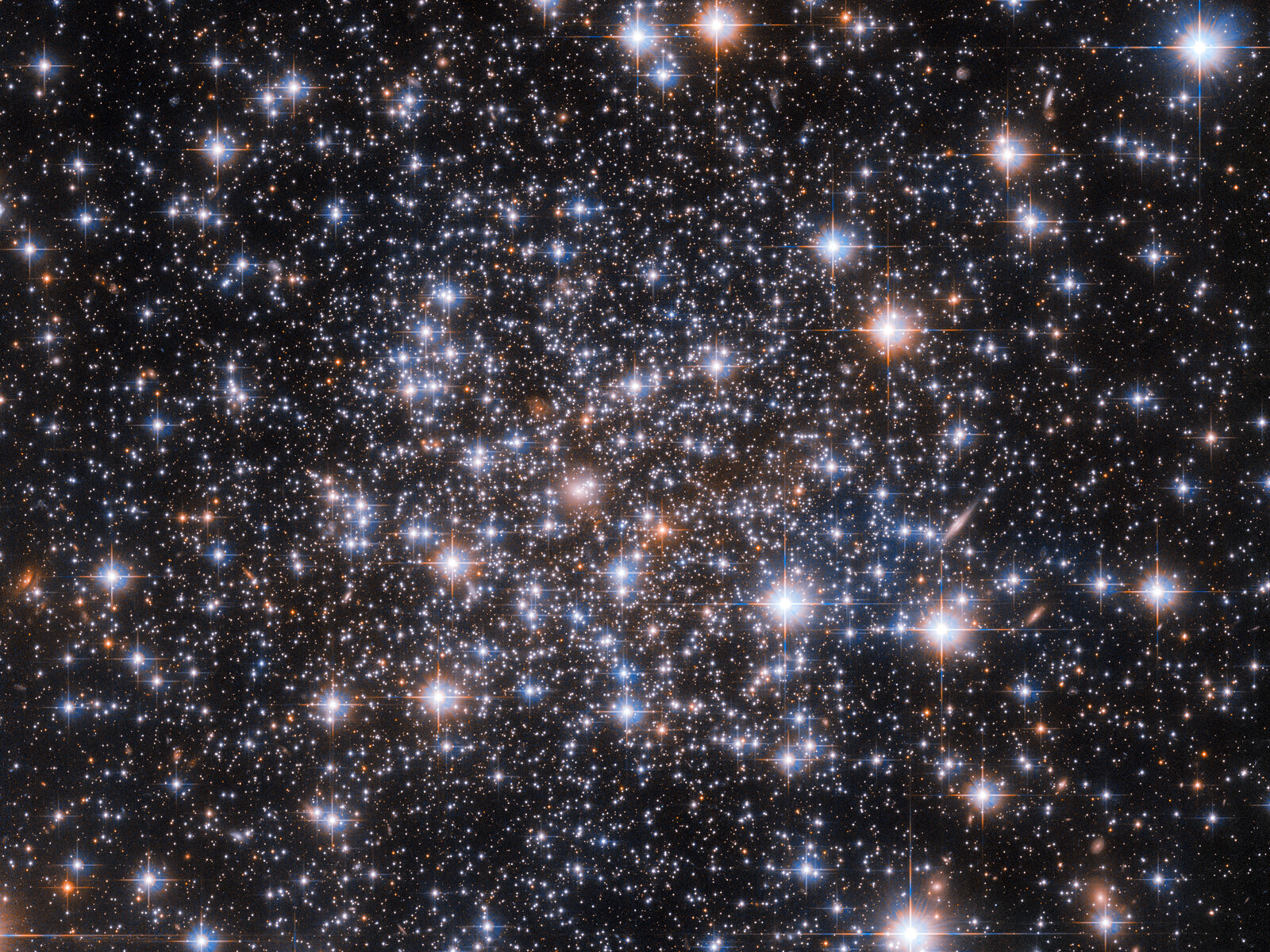
The NASA/ESA Hubble Space Telescope has captured a breathtaking picture of an enigmatic globular cluster, Ruprecht 106. The premium space-based observatory has been peering into the evolving universe for more than 30 years.
Globular clusters are stable, tightly bound clusters of tens of thousands to millions of stars and the intense gravitational attraction between the closely packed stars gives them their regular, spherical shape.
Sharing the image, the European Space Agency (ESA), wrote, "While the constituent stars of globular clusters all formed at approximately the same location and time, it turns out that almost all globular clusters contain groups of stars with distinct chemical compositions. These distinct chemical fingerprints are left by groups of stars with very slightly different ages or compositions from the rest of the cluster. A tiny handful of globular clusters do not possess these multiple populations of stars, and Ruprecht 106 is a member of this enigmatic group."
Hubble investigates enigmatic globular cluster Ruprecht 106 - find out more with the picture of the week from @HUBBLE_space 👉 https://t.co/hVf8LFGOuA pic.twitter.com/o8TYu9N5Fl
— ESA (@esa) June 7, 2022
Hubble has revolutionised the study of globular clusters, as it is almost impossible to distinguish the stars in globular clusters from one another with ground-based telescopes.
This latest picture shared by the mission teams has been captured using the Advanced Camera for Surveys (ACS) - one of Hubble's most versatile instruments. Installed on the telescope during Servicing Mission 3B in 2002, ACS has detectors that are sensitive to both visible and ultraviolet light. The third-generation instrument replaced the original Faint Object Camera in 2002.
Upgrading the ageing equipment or replacing instruments with newer, more capable versions helps keep the NASA/ESA Hubble Space Telescope at the cutting edge of astronomy. In its 30+ years of operation, the observatory has made more than 1.5 million scientific observations.


 Google News