

(Updated) Cygnus spacecraft's first space station reboost attempt aborted after 5 seconds
- Country:
- United States
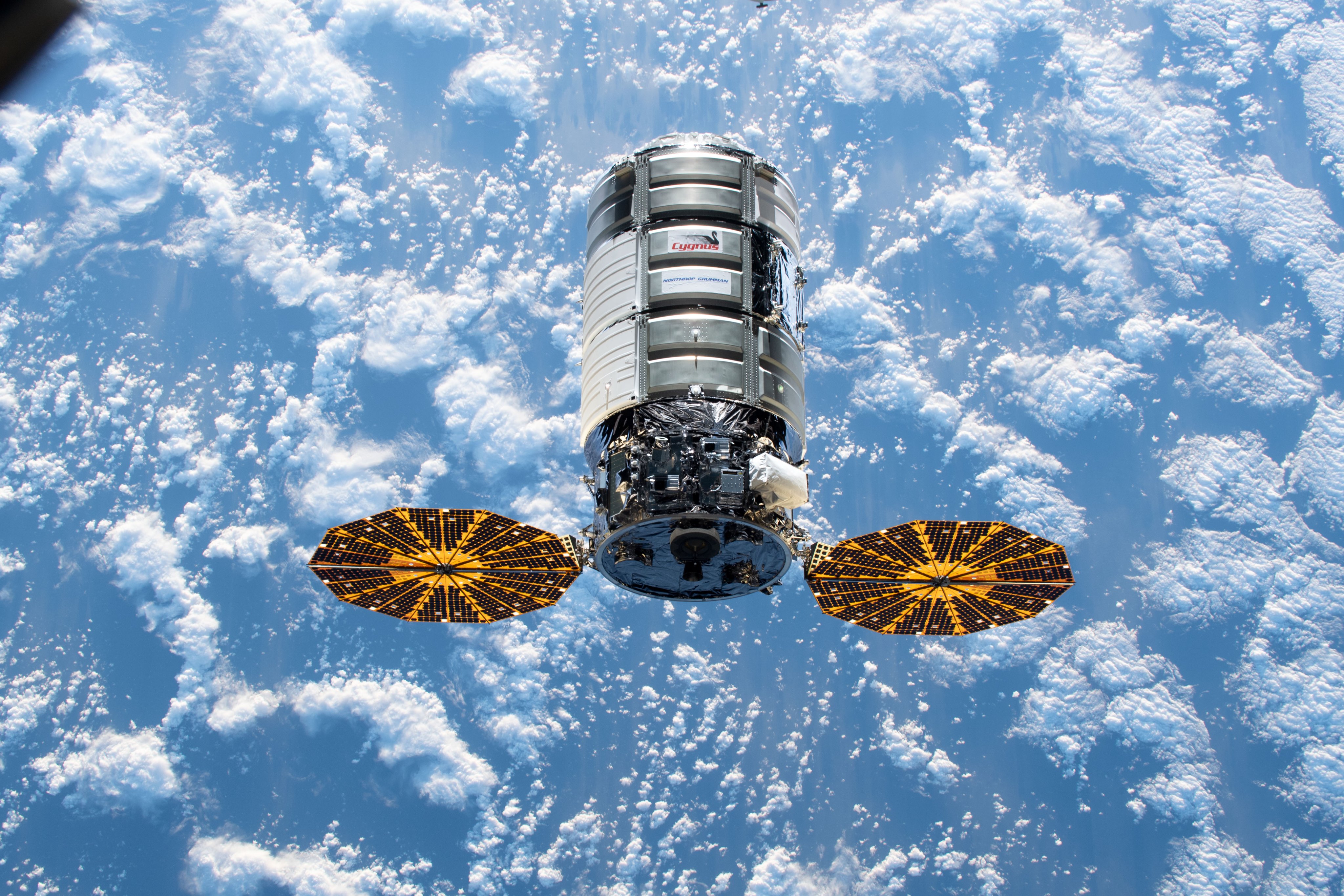
The first limited reboost of the International Space Station (ISS) by the Northrop Grumman Cygnus resupply vehicle, NG CRS-17, was aborted after 5 seconds. The engine was scheduled to fire for about 5 minutes to test the spacecraft's ability to reboost the ISS in the future.
The cause for the abort is understood and under review, Cygnus Mission Director at Dulles, Virginia said in a statement.
NASA and Northrop Grumman are now working on a plan for Cygnus to try another reboost attempt as early as Saturday, June 25, that would lead to the cargo craft potentially departing the station next Tuesday, June 28, the agency said on Monday.
.@NASA and @NorthropGrumman controllers are reviewing data after the #Cygnus reboost test was aborted today after five seconds. Next steps are being planned. More... https://t.co/fuzzgn9nE3 pic.twitter.com/8tHzhJ0Dxl
— International Space Station (@Space_Station) June 20, 2022
Cygnus launched atop an Antares rocket at 12:40 p.m. EST Saturday, February 19 from NASA's Wallops Flight Facility in Virginia, carrying 8,300 pounds of research, hardware, and science experiments to the International Space Station.
This Cygnus mission is the first to feature this enhanced capability as a standard service for NASA, following a test of the manoeuvre which was performed in 2018 during Cygnus's ninth resupply mission. Cygnus is slated to depart from the space station later this month when it will be deorbited to burn up harmlessly in the Earth's atmosphere over the Pacific Ocean.
Update
Cygnus completed its first limited reboost of the International Space Station on Saturday, June 25. According to NASA, the maneuver lasted 5 minutes, 1 second and raised the station's altitude 1/10 of a mile at apogee and 5/10 of a mile at perigee.
The @NorthropGrumman #Cygnus cargo craft fired its engine and completed its first limited reboost of the space station today. https://t.co/ykbPodImH2
— International Space Station (@Space_Station) June 25, 2022


 Google News