

NASA completes test firing of SLS solid rocket booster for future Artemis missions
- Country:
- United States
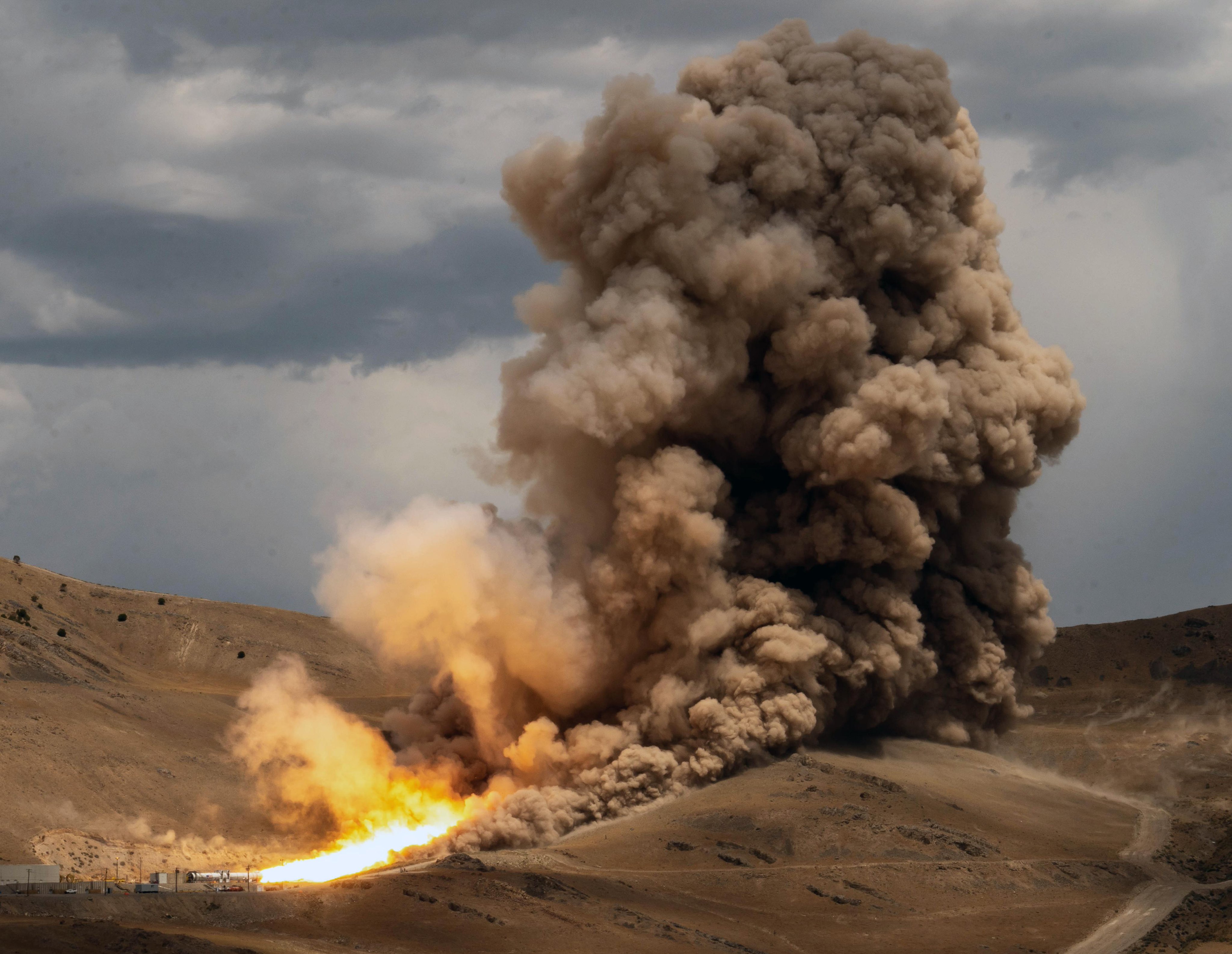
On Thursday, July 21, NASA and Northrop Grumman successfully conducted a full-scale, static test of a five-segment booster motor for future flights of the agency's mega Moon rocket, the Space Launch System (SLS).
The firing demonstrated the performance of a new motor ignition system and thrust vector control system. Northrop Grumman, the SLS booster lead contractor, and NASA are using the test data to evaluate improvements and new materials in the boosters for missions after Artemis III.
According to NASA, the booster for the test, called Flight Support Booster-2 (FSB-2), is the same size and has the same power as a booster used for launch. The booster motor, positioned horizontally for the ground test, fired for a little over two minutes and produced 3.6 million pounds of thrust.
"Today's successful FSB-2 test reaffirms our commitment to manufacturing the optimal solid rocket motors to support SLS and NASA's Artemis deep space missions. The initial demonstration of next-generation components enables us to acquire early learning for the boosters that will support the heavy-lift performance and greater payload capacities," said Jeff Foote, senior director of NASA Programs, Northrop Grumman.
Teams from the SLS Program and @northropgrumman successfully fired a solid rocket booster for future #Artemis missions at Northrop Grumman's test facility in Promontory, Utah, July 21. Here is a small clip from the test! Watch the full replay HERE >> https://t.co/BdDtAWVNVg pic.twitter.com/Nx91jJFhob
— NASA_SLS (@NASA_SLS) July 22, 2022
SLS is the most powerful rocket ever built by NASA and is the only rocket that can send Orion, astronauts, and supplies to the Moon in a single mission. The SLS rocket and NASA's Orion spacecraft completed their final test for Artemis I, wet dress rehearsal, and are scheduled to launch later this year.
For the unversed, Artemis I will be the first integrated test of NASA's Orion spacecraft and the SLS rocket.


 Google News