

NASA's flying telescope returns home after a month of science observations in Southern Hemisphere
- Country:
- United States
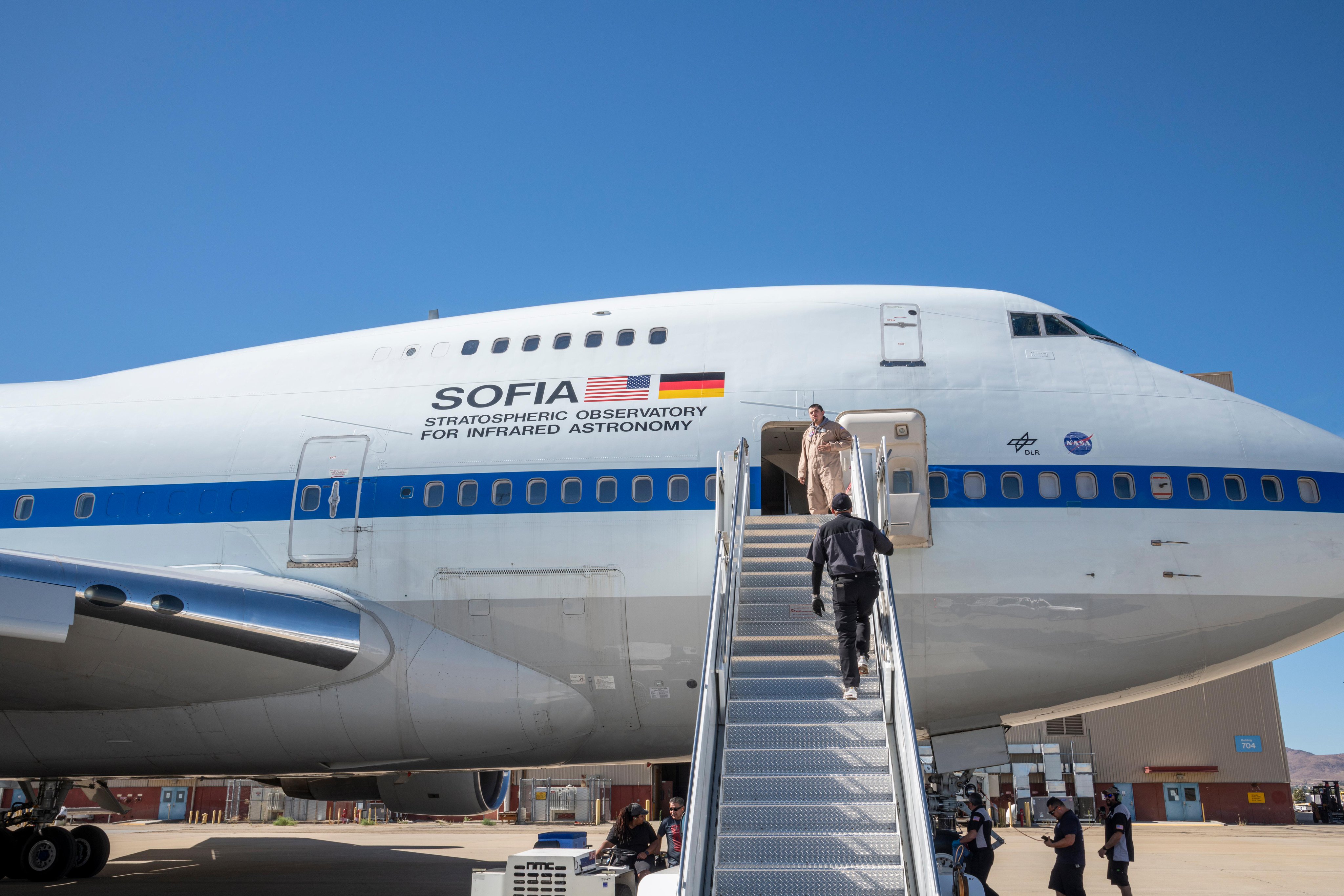
NASA's Stratospheric Observatory for Infrared Astronomy (SOFIA), a Boeing 747SP aircraft modified to carry a 2.7-meter (106-inch) reflecting telescope, has returned home following a productive month of science flights out of Christchurch International Airport in New Zealand.
Last month, the aircraft was damaged by a severe weather event, leading to the cancellation of the remainder of its final southern hemisphere deployment.
The observatory arrived at NASA's Armstrong Flight Research Center Building 703 in Palmdale, California, on Thursday, August 11, and plans to resume science flights Monday, August 22.
During its New Zealand deployment, SOFIA observed and studied a wide range of celestial objects and phenomena, like cosmic magnetic fields, the structure of the Milky Way, and the origin of cosmic rays.
Home, sweet home!We've made it back to Palmdale, and we're looking forward to continuing to study the cosmos from our home base here at @NASAArmstrong. 📷: NASA/Joshua Fisher pic.twitter.com/rsIc93thag
— SOFIAtelescope (@SOFIAtelescope) August 12, 2022
SOFIA is a joint project of NASA and the German Space Agency at DLR. Unlike space-based telescopes, the observatory lands after each flight, so its instruments can be exchanged, serviced or upgraded to harness new technologies.
The observatory completed its five-year prime mission in 2019 and currently is completing a three-year mission extension. The flying telescope will end operations no later than September 30, 2022, at the conclusion of its current mission extension.


 Google News