

New AI-based technique poised to revolutionize planetary study
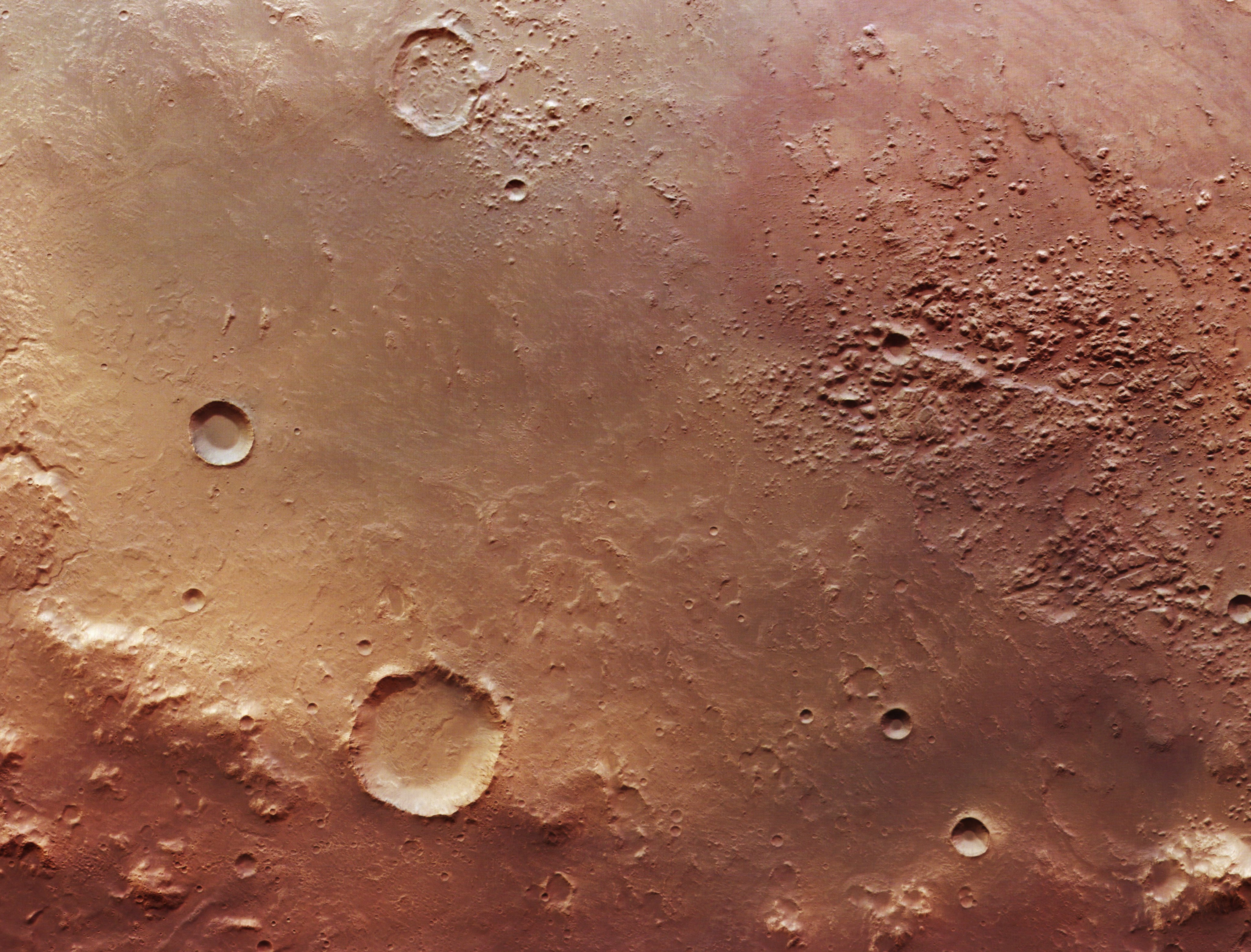
Craters provide important clues about the geological history and surface processes of a celestial body. Their size, shape, and distribution can reveal important information about the frequency and intensity of past impact events, which can provide insight into the formation and evolution of the body.
Researchers from the University of Aberdeen have developed a new technique for detecting planetary craters which will allow scientists to accurately map the surfaces of planets. The universal crater detection algorithm (CDA) was developed using META AI's Segment Anything Model (SAM) - a new artificial intelligence (AI) model that can automatically 'cut out' any object in any image.
By automating the crater mapping process, the new technology eliminated the need for manual detection, which is a time-intensive task. Moreover, the use of diverse data types allows for more precise and flexible surface characterisation.
Thanks to its ability to function with various types of data and celestial bodies, the CDA technique has the potential to become a universal solution for detecting craters on a range of planetary surfaces. In addition, it may aid in pinpointing landing sites for both robotic and human missions, as well as automatic navigation based on terrain observations.
"With its advanced segmentation capabilities, SAM has proven to be a game-changer for CDA, allowing us to accurately identify craters of various sizes, shapes, and orientations – even in challenging terrain conditions. By automatically mapping craters, scientists can identify potential locations where resources may be concentrated, which can be important for future human mission," said Dr Iraklis Giannakis, from the University's School of Geosciences, led the research in collaboration with colleagues from the University.
"Craters can also be potential sources of valuable resources, such as water ice on planetary bodies like the Moon or Mars. By automatically mapping craters, scientists can identify potential locations where resources may be concentrated, which can be important for future human missions and for planning resource utilisation strategies in space exploration scenario," Dr Giannakis added.


 Google News