

European-Japanese spacecraft preps for third close flyby of Mercury
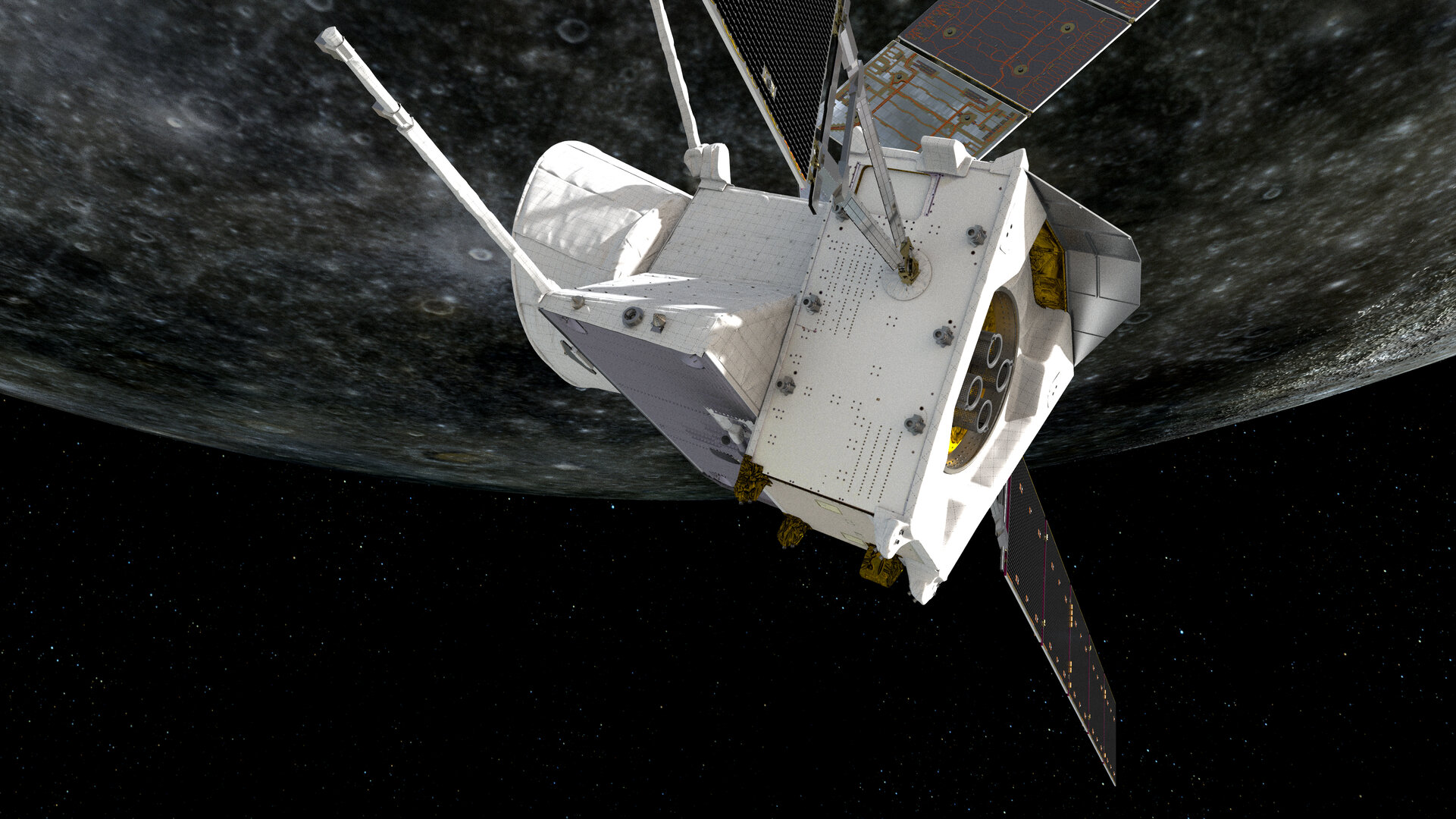
BepiColombo, a joint mission of the European Space Agency (ESA) and the Japan Aerospace Exploration Agency (JAXA), is gearing up for its third close flyby of Mercury on June 19. During this encounter, the spacecraft will pass just 236 kilometers above the planet's surface, marking another crucial step in its mission to enter the planet's orbit by 2025.
This closest approach, scheduled for 19:34 UTC (21:34 CEST), will occur on the night side of Mercury. This positioning allows the spacecraft's monitoring cameras to capture intriguing views of the planet's surface approximately 13 minutes later. The first images are anticipated to be released on June 20.
The upcoming close flyby is one of six gravity assist maneuvers that BepiColombo will undertake at Mercury. These flybys are essential for the spacecraft to combat the immense gravitational pull of the Sun so that it can gradually lose energy to be captured into the planet's orbit.
#BepiColombo teams are gearing up for the third #MercuryFlyby on 19 June! We'll pass the planet's surface within 240 km altitude at 20:34 BST/21:34 CEST #StayTuned🔗 https://t.co/pA00D4jiYO pic.twitter.com/8rswSPHrYV
— BepiColombo (@BepiColombo) June 14, 2023
The BepiColombo mission embarked on its journey to Mercury in October 2018, launching aboard an Ariane 5 rocket from Europe's Spaceport in Kourou. To navigate its way into Mercury's orbit, the mission incorporates nine planetary flybys, including one at Earth, two at Venus, and six at Mercury.
"As BepiColombo starts feeling Mercury's gravitational pull, it will be travelling at 3.6 km/s with respect to the planet. That's just over half the speed it approached with during the previous two Mercury flybys. Our spacecraft began with far too much energy because it launched from Earth and, like our planet, is orbiting the Sun. To be captured by Mercury, we need to slow down, and we're using the gravity of Earth, Venus and Mercury to do just that," explains ESA flight dynamics expert Frank Budnik.
Following the June 19 flyby, the mission will enter a highly challenging phase of its journey - it will steadily increase the utilization of solar electric propulsion through additional propulsion periods called 'thrust arcs' to continually brake against the strong gravitational pull of the Sun.


 Google News