

NASA's most powerful Moon rocket's flight software undergoes testing ahead of first crewed mission
- Country:
- United States
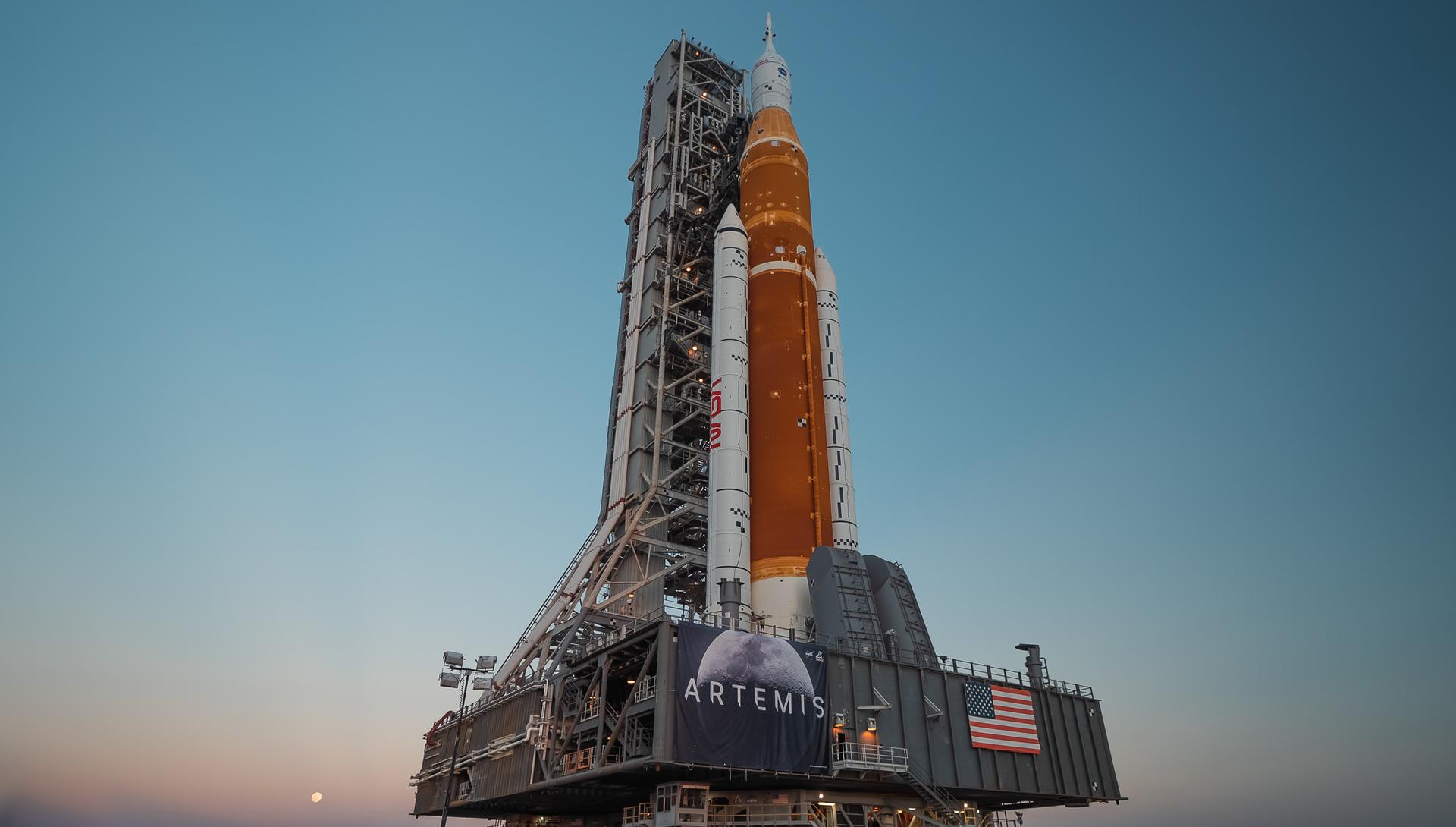
Through its ambitious Artemis program, NASA is preparing to return humans to the Moon. The agency's Artemis II mission will see a crew of astronauts venture around the Moon in preparation for future lunar landings. Meanwhile, teams at NASA's Marshall Space Flight Center in Huntsville, Alabama, are diligently testing and configuring the flight software for the agency's powerful Space Launch System (SLS) rocket, which will fly the astronauts around the Moon.
The SLS rocket, upon launching the Artemis II crew aboard the Orion spacecraft, will unleash an awe-inspiring force of over 8.8 million pounds of thrust. Behind this impressive feat lies the rocket's flight software, referred to as the "brains" of SLS. According to NASA, this software comes into action 48 hours prior to launch, orchestrating the immense power and energy of the rocket throughout the first eight minutes of the mission, leading up to the separation of its in-space propulsion stage.
At the SLS Software Development Facility (SDF) in Marshall, NASA engineers recently concluded the initial phase of formal qualification testing for the Artemis II SLS flight software.
The rocket's flight software is subjected to a rigorous testing process to ensure its reliability and performance before the final launch. A dedicated team simulates a range of normal and off-nominal SLS rocket and environmental scenarios, called test cases, to thoroughly examine the SLS computer systems and flight software. Over a two-week period that concluded on May 15, engineers successfully completed 179 test procedures, encompassing approximately 58,000 test cases.
"The SLS flight software team integrated operational improvements and new test scenarios in preparation for Artemis II based on lessons learned from the successful launch of Artemis I in November 2022," said Dan Mitchell, NASA's lead SLS integrated avionics and software engineer.
What's next?
Engineers will soon begin the second and final phase of formal qualification testing for the SLS flight software in the SDF. Subsequently, engineers will embark on integrated system testing in the SLS System Integration Lab (SIL) in the autumn, employing the complete suite of SLS avionics hardware and flight software.
Together, the test results from the SIL system and the flight software SDF will provide crucial evidence to support the mission readiness for Artemis II. By the time the SLS rocket embarks on the Artemis II mission, flight software engineers will have "flown" the SLS mission more than 100,000 times across various SLS avionics and software development and test facilities.
NASA aims to land the first woman and the first person of color on the lunar surface under Artemis. In addition to the SLS rocket, the Artemis backbone for deep space exploration comprises the Orion spacecraft, advanced spacesuits and rovers, the Gateway orbiting the Moon, and commercial human landing systems.
With each milestone achieved, NASA is paving the way for humanity's triumphant return to our celestial neighbour.


 Google News