

Chandrayaan-3: India's Lunar Quest for Success and Space Science Development
India's third moon mission, Chandrayaan-3, was launched successfully, with improvements made to ensure a fruitful outcome after the previous Chandrayaan-2 mission encountered a software glitch. The mission includes an indigenous propulsion module, lander module, and rover, aiming to develop technologies for future interplanetary missions. A successful landing would place India in an elite group of nations and boost its space science development and global space business. The mission incorporates a failure-based design approach, expanded landing area, increased fuel capability, and additional solar panels for power generation.
 Devdiscourse News Desk
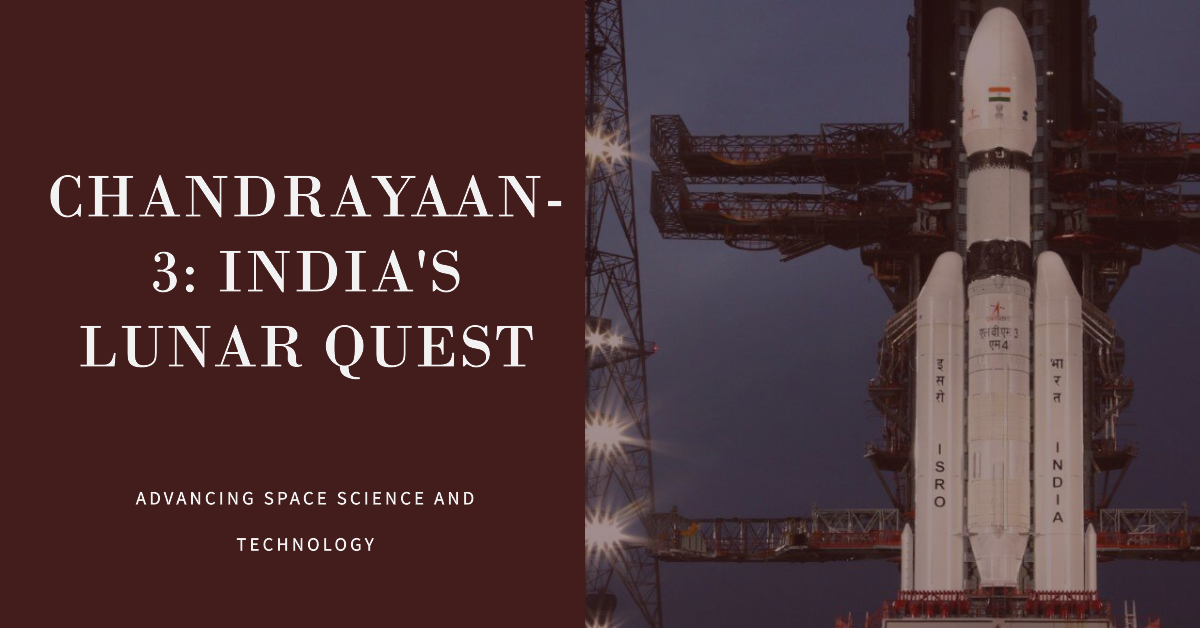
India has launched its third moon mission, known as Chandrayaan-3, today at 2:35 pm from Satish Dhawan Space Centre, Sriharikota. People all over the world, as well as the scientific community, are eagerly awaiting the outcome, hoping for a successful mission.
Here's what you need to know about Chandrayaan-3
-
After the unfortunate crash-landing of Chandrayaan-2 in September 2019 due to a software glitch, Chandrayaan-3 is a follow-up mission aimed at rectifying past mistakes. The Indian Space Research Organisation (ISRO) has made several improvements to ensure a successful mission this time. The expected landing date on the Moon is August 23.
-
Chandrayaan-3 is made up of an indigenous propulsion module, lander module, and rover. Its primary goal is to develop and demonstrate new technologies required for future space missions. The propulsion module will transport the lander and rover from the injection orbit to a lunar orbit of up to 100 km. Additionally, it carries a payload called Spectro-polarimetry of Habitable Planetary Earth (SHAPE) to study Earth from the lunar orbit.
-
A triumphant mission would elevate India to the ranks of distinguished nations, such as the United States, China, and the former Soviet Union, that have accomplished the remarkable feat of a soft lunar landing.
-
Nambi Narayanan, a former ISRO scientist, believes that a successful landing by Chandrayaan-3 will make India the fourth country to accomplish this feat. He also highlights the positive impact it would have on the development of space science in India and the country's share in the global space industry, which is currently only 2%.
-
ISRO Chairman S Somanath explains that Chandrayaan-3 has been designed with a focus on learning from past failures. The mission emphasizes identifying potential issues and implementing measures to overcome them, ensuring a successful landing.
-
Unlike Chandrayaan-2, which included a lander, rover, and orbiter, Chandrayaan-3 will launch with only a lander and a rover. The mission will rely on the orbiter from Chandrayaan-2 for communication and terrain mapping.
-
The lander mission of Chandrayaan-3 is equipped with cameras to detect and avoid potential hazards. These cameras will work in coordination with the orbiter and mission control during the landing process on the lunar surface.
-
The landing area for Chandrayaan-3 has been expanded to provide flexibility in choosing a landing site. This allows the mission to adjust its target based on performance conditions.
-
Chandrayaan-3 carries additional fuel, enhancing its capability for travel, dispersion management, and the ability to move to alternate landing sites. The Vikram lander now features additional solar panels on various surfaces to ensure power generation, regardless of the landing orientation.
These are the key details about India's Chandrayaan-3 mission, which aims to successfully reach the Moon and advance the country's space exploration efforts.


 Google News