

NASA’s Psyche spacecraft is undergoing final preparations; will launch in October to explore metal-rich asteroid
- Country:
- United States
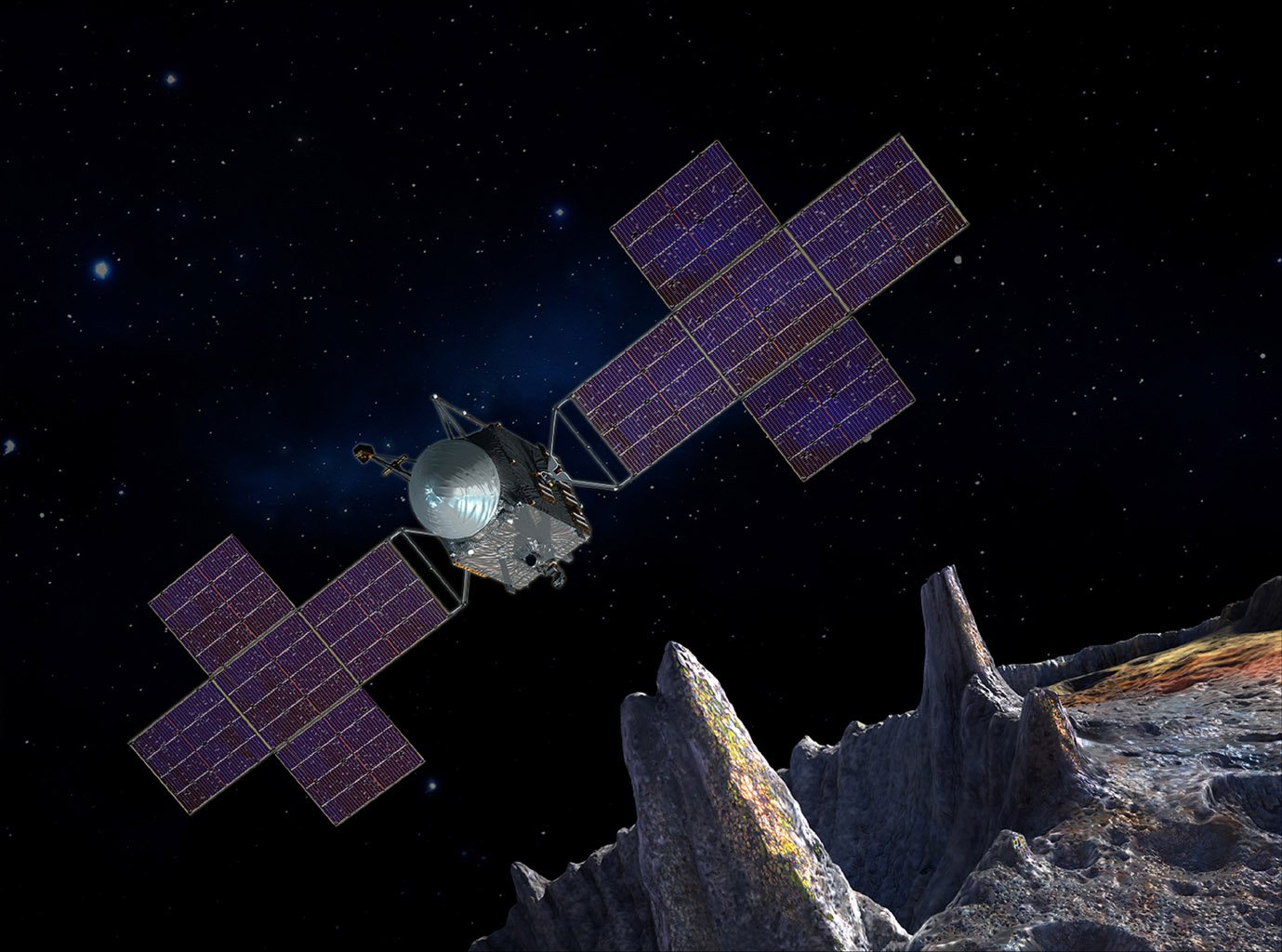
NASA's Psyche spacecraft is in its final stages of preparation at Cape Canaveral, Florida, as it gears up for its highly anticipated launch on October 5. The mission engineers and technicians are working tirelessly to ensure that the spacecraft is ready for its journey to a metal-rich asteroid that lies 2.5 billion miles (4 billion kilometres) away.
The mission team has cleared the hurdles due to which Psyche missed its 2022 original launch date, NASA said on Tuesday. The spacecraft is now scheduled to be launched atop a SpaceX Falcon Heavy rocket from Kennedy Space Center's Space Launch Complex 39A.
"The team is conducting numerous training activities to ensure that we are prepared and ready. It's a very busy time, but everyone is very excited and looking forward to the launch," said Henry Stone, Psyche's project manager at NASA's Jet Propulsion Laboratory in Southern California.
When your spacecraft is less than 100 days from launch...The #MissionToPsyche team is working almost around the clock to ensure the spacecraft is ready for a 2.5-billion-mile (4 billion km) journey to a metal-rich asteroid. https://t.co/MdZ9b3gpw0 pic.twitter.com/2VgVDleABK
— NASA JPL (@NASAJPL) July 18, 2023
Psyche will undertake an extraordinary six-year journey, utilizing solar electric propulsion to reach its destination, an asteroid of the same name in the main asteroid belt between Mars and Jupiter. This metal-rich body may represent the core of a planetesimal, a fundamental building block in the early stages of planet formation.
Upon arriving in the main asteroid belt between Mars and Jupiter, the spacecraft will spend at least 26 months orbiting the asteroid Psyche. During this period, it will gather valuable images and other crucial data that will provide scientists with profound insights into the asteroid's history and composition.
Psyche will orbit the asteroid for at least 26 months to gather images and other data to help scientists learn more about its history and its composition.
Additionally, the mission will also test a sophisticated new laser communication technology that encodes data in photons at near-infrared wavelengths (rather than traditionally used radio waves) to communicate between a probe in deep space and Earth.


 Google News