

Exploring Boundless Energy Possibilities: Scientists Delve into Magma Chamber
In a groundbreaking project, scientists in Iceland are venturing into a magma chamber beneath the Earth's surface, promising unlimited energy potential. Led by Björn Þór Guðmundsson, the team aims to drill into the Earth's core, exploring the mysteries of magma and revolutionizing geothermal energy. The Krafla Magma Testbed (KMT) project, born from a serendipitous discovery in 2009, plans to deploy sensors to measure temperature and advance our understanding of magma, with hopes of unlocking a new era in renewable energy.
 Devdiscourse News Desk
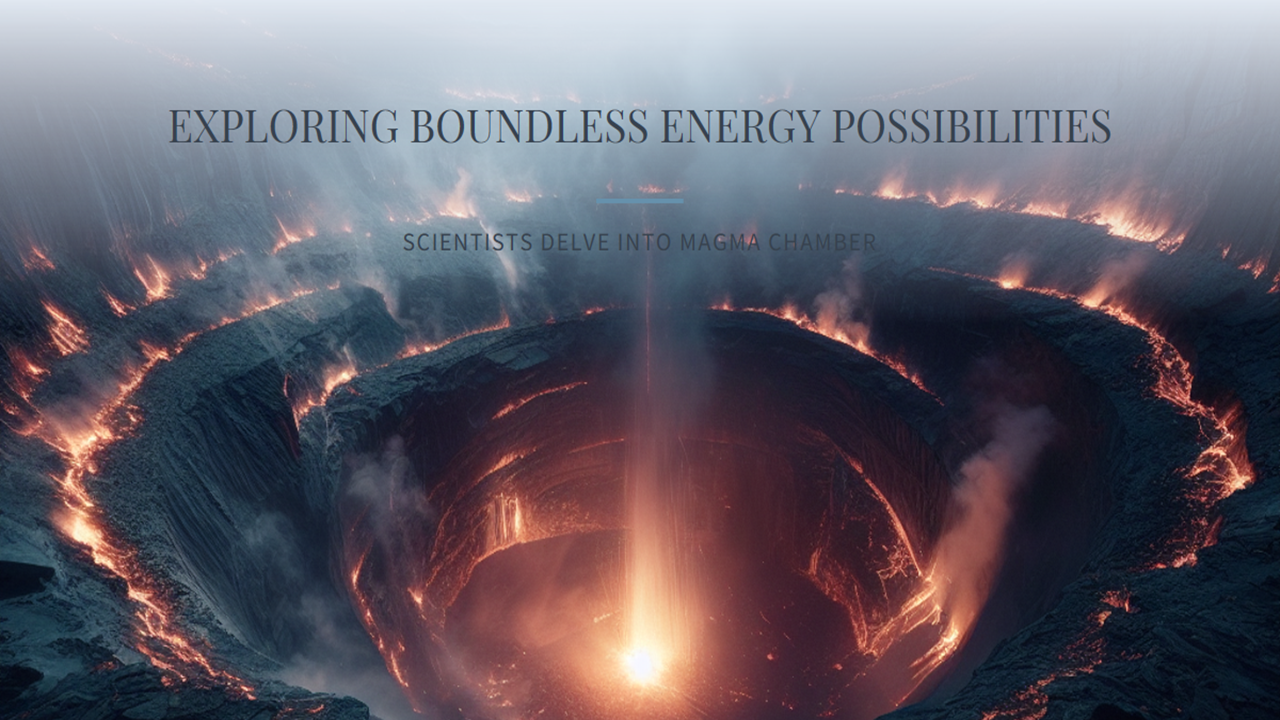
The world of geology and, potentially, renewable energy is buzzing with excitement. In Iceland, scientists are diving headfirst into a groundbreaking project that involves drilling straight into a magma chamber beneath the Earth's surface. This ambitious endeavor not only promises to unveil the mysteries of molten rock deep within the Earth but also holds the potential to revolutionize geothermal energy, making it more efficient and applicable globally.
Described as the "first journey to the center of the Earth," the project is led by Björn Þór Guðmundsson at the Geothermal Research Cluster (GEORG) in Reykjavík. The anticipated outcome is nothing short of "unlimited energy," according to Guðmundsson.
Finding magma is an extraordinary challenge due to its rarity and the difficulty in obtaining direct, solid data about it. Until now, intentionally drilling into a magma chamber had never been attempted. John Eichelberger, a volcanologist at the University of Alaska, notes that proposing such an idea was previously met with skepticism and concerns about triggering an eruption.
However, luck played a crucial role in this venture. In 2009, during a geothermal drilling project for the Iceland energy firm Landsvirkjun, a magma chamber was unexpectedly discovered near the Krafla volcano. The fact that there was no volcanic eruption provided reassuring evidence that drilling into magma could be done safely.
Building on this discovery, the Krafla Magma Testbed (KMT) project was initiated in 2013 by the same team led by Bjarni Pálsson at Landsvirkjun. Scheduled to commence drilling in 2026, the primary goal of KMT is to deepen our understanding of magma, an area where direct knowledge has been lacking.
KMT scientists plan to deploy sensors in the magma to gather measurements on properties such as temperature. The hope is to achieve a direct measurement of temperature, a feat never accomplished before. Observing how rock transforms into magma and searching for indicators of potential volcanic eruptions are also key objectives, given the challenges of predicting such events.
One particularly exciting prospect is the potential impact of renewable energy. KMT aims to pave the way for a new form of geothermal power known as near-magma geothermal. This innovative approach would harness the extreme heat of molten rock to heat water at temperatures higher than current techniques allow.
The success of this clean energy breakthrough hinges on KMT providing insights into reliably locating magma chambers. Nonetheless, by discovering one in the first place, the team has arguably overcome the most challenging obstacle. The journey to the center of the Earth is not only a scientific endeavor but a potential game-changer for sustainable energy solutions.
ALSO READ
-
Carbon Capture Could Cut Solar Power Waste and Battery Needs Across ASEAN
-
€300M Financing Deal Gives Czech and Slovak Businesses Room to Grow Greener
-
EIB Backs Reactive Technologies to Cut Outage Risks and Boost Clean Power
-
Maldives Targets Debt and Fuel Dependence as ADB Sets Out Five-Year Support Plan
-
AfDB selects four green hydrogen projects of $20 million grants in Africa


 Google News