

UNDP Champions Earth-Centered Development: Living in Harmony with Nature
One such initiative is the decision to capitalize “Nature” in all future UNDP publications, aligning with the 2020 UN Secretary-General’s Report on Harmony with Nature.
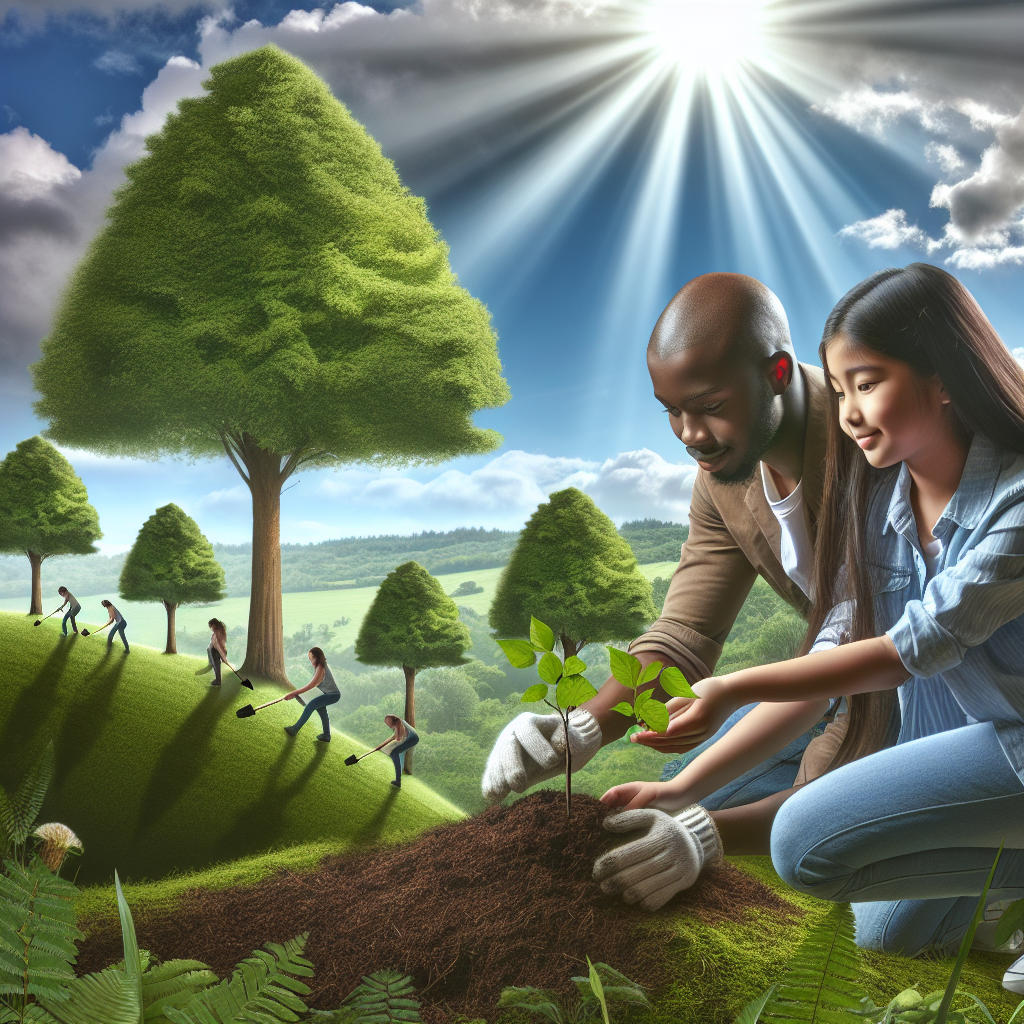
On the occasion of the International Mother Earth Day, the United Nations Development Programme (UNDP) delivered a compelling statement before the Assembly, underscoring its unwavering commitment to reimagining development through an Earth-centered lens. This address reinforced UNDP's leadership in integrating Nature as a central pillar of human progress and sustainable development.
Rooted in the understanding that there can be no sustainable development without a thriving natural world, UNDP emphasized that the climate, biodiversity, and pollution crises must be addressed as a single, interconnected planetary crisis. The statement boldly declared: "There is no 1.5 without Nature. There is no prosperity without Nature."
UNDP's Nature Pledge: A Commitment to Transformational Change
In 2023, UNDP launched its Nature Hub, a platform for driving forward the Nature Pledge—a robust commitment to help countries implement the Kunming-Montreal Global Biodiversity Framework and achieve the 2030 Agenda for Sustainable Development.
The Nature Pledge is a transformative framework built on three foundational shifts:
1. Global Value Shift
This shift aims to reframe the value that society places on Nature. Beyond economic worth, it promotes an intrinsic and cultural recognition of the natural world. UNDP has long supported Indigenous Peoples and Local Communities, amplifying their knowledge systems through initiatives like the Equator Prize, which since 2002 has recognized over 300 grassroots leaders.
2. Economic and Finance Shift
UNDP advocates for financial systems that internalize the value of natural capital and promote nature-positive investments. The Biodiversity Finance Initiative (BIOFIN) supports 133 countries in mobilizing funding aligned with biodiversity objectives and integrating these efforts into the Integrated National Financing Frameworks (INFFs) for the SDGs.
3. Policy and Practice Shift
UNDP collaborates with national governments to align biodiversity, climate, and development policies. By synchronizing Nationally Determined Contributions (NDCs) with National Biodiversity Strategies and Action Plans (NBSAPs), and other sectoral strategies, UNDP ensures comprehensive and cohesive action. Over 120 countries receive direct support, particularly local communities and Indigenous Peoples, via grants financed by the Global Environment Facility (GEF).
A Holistic Vision Rooted in Indigenous Wisdom
UNDP's work is inspired by ancestral knowledge and traditional ecological wisdom. These worldviews regard Earth not as a resource to be exploited, but as a living, relational being—a Mother to whom humanity owes reciprocity. Recognizing this, UNDP is taking symbolic and meaningful steps to shift language and narratives.
One such initiative is the decision to capitalize "Nature" in all future UNDP publications, aligning with the 2020 UN Secretary-General's Report on Harmony with Nature. This act reflects the belief that Nature is not an object, but a subject of rights, worthy of dignity, personhood, and legal standing.
The Human-Nature Relationship: Toward the 2026 Human Development Report
UNDP also announced that the 2026 Human Development Report will focus extensively on the interdependence between human development and planetary systems. This landmark report will explore how reconnecting with Nature can enhance well-being, equity, and resilience, framing human progress within the boundaries of a healthy biosphere.
Supporting Multilateral Earth-Centered Dialogue
In a powerful conclusion, UNDP expressed its full support for the Earth-centred paradigm championed by Bolivia and other nations. This paradigm is not seen as a replacement for human-centered development, but as a complementary and necessary evolution. It acknowledges that social and economic prosperity cannot be sustained without ecological integrity.
UNDP welcomed the annual Assemblies on April 22 and committed to supporting the upcoming Mother Earth Summit in 2030, in accordance with UN Resolution A/79/210. This summit represents a critical milestone in global efforts to foster ecological civilizations and planetary stewardship.
A Call for Unity and Urgency
In closing, UNDP's statement delivered a clear and heartfelt message: the urgency to live in Harmony with Nature is not merely about survival—it is also about nourishing the spiritual and emotional dimensions of humanity. The journey toward a just, inclusive, and ecologically balanced world is a shared responsibility.
UNDP reaffirmed its role as a global partner in this mission, striving to ensure that development pathways honor the interconnectedness of all life on Earth.
"We are Nature. And in remembering this truth, we begin to reimagine our future."


 Google News