

WMO Unveils $100 Million Global Commons to Safeguard Weather Intelligence
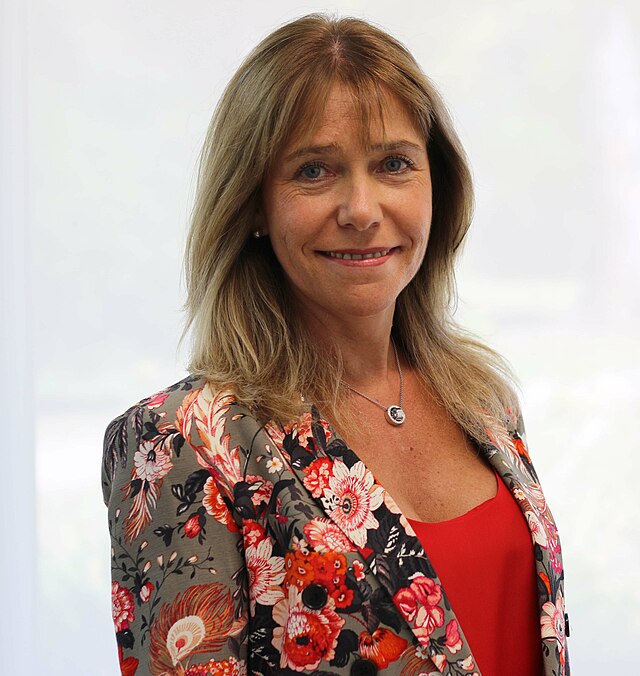
WMO Secretary-General Prof. Celeste Saulo described the initiative as an “investment in continuity and confidence,” emphasizing that the WMO Commons is not a traditional fund but rather a global partnership mechanism.
The World Meteorological Organization (WMO) has announced a groundbreaking global initiative to protect and modernize the public infrastructure that underpins weather forecasting, water monitoring, and climate intelligence—systems that sustain trillions of dollars in economic value and form the backbone of global resilience and security.
Launched at the WMO Investors Forum in Geneva, the new WMO Weather, Climate and Water Intelligence Commons (known as the WMO Commons) aims to mobilize at least US$ 100 million over the next five years to close critical funding gaps in global weather, water, and climate systems. The initiative will pool public, private, and philanthropic investments to ensure that essential data, forecasting systems, and early warning services remain robust, interoperable, and accessible to all.
A New Era for Global Climate Intelligence
WMO Secretary-General Prof. Celeste Saulo described the initiative as an "investment in continuity and confidence," emphasizing that the WMO Commons is not a traditional fund but rather a global partnership mechanism.
"The WMO Commons is an investment in the infrastructure of trust—ensuring that data flows freely, systems remain interoperable, and innovation reaches those who need it most," Saulo said. "Today, climate extremes are accelerating faster than our capacity to manage them. In 2024 alone, global weather-related losses reached $318 billion—half of it uninsured. But for every dollar invested in early warnings and climate intelligence, we save up to fifteen. The logic is simple: resilience pays."
The WMO Commons will be formally launched in 2026, following an initial implementation phase to align partners and financing mechanisms.
Addressing a Critical Global Gap
According to Thomas Asare, WMO Assistant Secretary-General, global public weather, water, and climate infrastructure is critically underfunded and increasingly fragile, despite being indispensable for the functioning of modern economies.
From early warning systems and seasonal forecasts to climate models and risk analytics, the world relies daily on WMO-coordinated data and services. These systems guide everything from aviation and agriculture to shipping, finance, and disaster management.
"Market-driven models cannot ensure full coverage or reliability," Asare said. "Emerging technologies like AI and satellite systems still depend on a strong public backbone of accurate, freely accessible data. Without sustained investment, that foundation is at risk."
The WMO Commons directly responds to this challenge by pooling resources to maintain and modernize the global meteorological network that has evolved over more than 75 years.
Four Pathways to Resilient Global Systems
The Commons will operate through four main pathways designed to strengthen the global meteorological ecosystem:
-
Sustain and Optimize the Global Observing System: Ensuring continuous investment in ground, ocean, and space-based observing networks that feed critical data into global weather models.
-
Strengthen Data Interoperability and Prediction: Harmonizing data formats, standards, and exchange protocols to improve forecasting accuracy and facilitate collaboration across regions and sectors.
-
Expand High-Impact Services and Early Warnings: Supporting national meteorological and hydrological services to deliver multi-hazard early warning systems, particularly in vulnerable developing countries.
-
Capacity and User Co-Creation: Building institutional and human capacity, promoting innovation, and engaging users—from governments to private enterprises and communities—in the co-design of weather and climate services.
Together, these pathways will ensure that weather and climate intelligence remains a trusted global public good, accessible to all and designed to support both sustainable development and economic stability.
A Global Partnership for Resilience
The two-day Investors Forum, held on 27–28 October, brought together a diverse coalition of stakeholders—including governments, multilateral development banks, insurers, technology firms, aviation and shipping companies, commodity traders, philanthropies, and humanitarian agencies.
All participants depend on WMO's data and forecasts to inform daily operations and risk management decisions. From agricultural planners to disaster relief agencies, the benefits of reliable climate intelligence cut across sectors and geographies.
"This initiative aligns science, policy, and finance behind a shared mission," Saulo said. "The WMO Commons is a vehicle to turn dialogue into action—ensuring the sustainability of the global weather, water, and climate backbone that the world depends on."
The Commons is expected to leverage billions of dollars in existing public investments while complementing established climate finance mechanisms such as the Green Climate Fund and the Adaptation Fund, ensuring no duplication of efforts. It will also supplement WMO's own budget, which primarily comes from Member State contributions.
The Economics of Prevention
In her address, Saulo underscored the immense economic cost of inaction compared to the relatively modest investment needed to safeguard global weather systems. She cited the July 2023 supercell storm in La Chaux-de-Fonds, Switzerland, where winds exceeding 200 km/h caused damages of more than 100 million Swiss francs in just six minutes—surpassing WMO's entire annual budget.
"These events remind us that investing in WMO's backbone systems is not charity—it's risk management at planetary scale," she said. "It is the foundation upon which sustainable finance, resilient supply chains, and stable societies depend."
WMO estimates that every dollar invested in early warning systems and risk information can generate up to 15 times the value in avoided losses, increased productivity, and improved resilience.
Building Confidence and Trust in Data
As the climate crisis accelerates, the WMO Commons will also help ensure that the explosion of AI-driven weather and climate applications operates on trusted, authoritative data. By safeguarding interoperability and open access, the initiative aims to prevent data silos and ensure that the benefits of digital innovation are distributed equitably.
For the private sector, contributing to the WMO Commons represents one of the highest leverage investments available, securing the stability of systems that underpin global insurance markets, commodity supply chains, renewable energy planning, and infrastructure resilience.
A Call to Action for Global Partners
The WMO's 75th anniversary year marks a turning point for global cooperation in weather and climate governance. With climate disasters becoming more frequent and severe, the WMO Commons reflects a collective recognition that no single nation or institution can maintain the global system alone.
"Science is not the obstacle—it is our best defense," Saulo concluded. "The WMO Commons will ensure that weather, climate, and water intelligence remains a shared asset for humanity—anchoring trust, saving lives, and powering a more resilient global economy."
The WMO will now engage with Member States, financial institutions, and private partners to operationalize the Commons ahead of its formal launch in 2026.


 Google News