

SA Calls for Unified African Action to Build Sustainable Vaccine Manufacturing
Minister Nzimande stressed that collaboration is not optional—it is foundational to building Africa’s health resilience.
- Country:
- South Africa
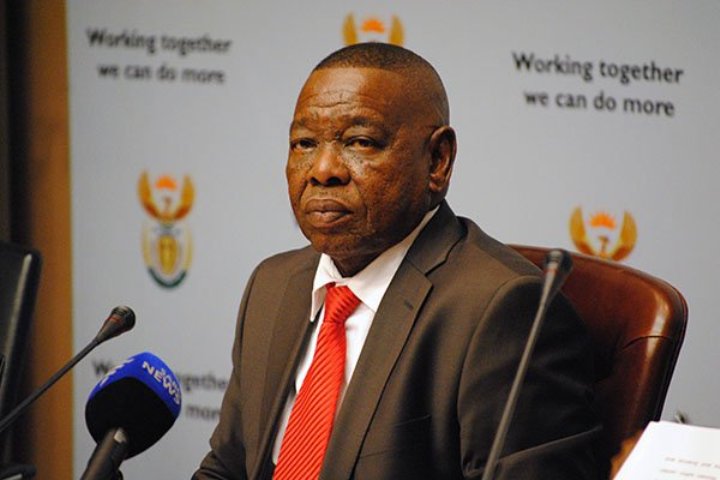
At a landmark Strategic Dialogue on Local Production of Vaccines, held in Johannesburg's Melrose Arch, South Africa's Minister of Science, Technology and Innovation, Professor Blade Nzimande, issued a strong call for collective African action to strengthen vaccine sovereignty, boost scientific capability and build long-term health security across the continent.
The high-level dialogue—attended by global dignitaries, development partners, regulatory authorities and industry leaders—forms part of a robust strategic partnership involving the Biovac Institute, the World Health Organization (WHO), GIZ's Sustainable African Vaccine Manufacturing (SAVax) Programme, and Gavi, the Vaccine Alliance, under the Team Europe Manufacturing Africa Vaccine Plus (MAV+) Initiative.
With the COVID-19 pandemic underscoring Africa's vulnerability to global supply disruptions, the event emphasized the urgent need for regional vaccine manufacturing capacity, integrated regulatory systems and long-term investment to secure Africa's health future.
Collective Action: A Prerequisite for Africa's Health Security
Minister Nzimande stressed that collaboration is not optional—it is foundational to building Africa's health resilience. The pandemic, he said, exposed the consequences of overdependence on external suppliers for critical health technologies.
Key Message from the Minister
-
Sustainable health security demands self-sufficiency, innovation, and regional resilience.
-
Scientific collaboration is essential to solving global challenges.
-
Partnerships with Gavi, WHO, GIZ and Team Europe signal a shared commitment to equitable vaccine access.
He highlighted that Africa's vaccine journey will be defined by shared expertise, pooled capabilities and coordinated strategies across countries and institutions.
Global Partnerships Anchoring Africa's Vaccine Future
The dialogue validated the strength of the continent's partnerships with global organizations.
WHO's Critical Role
The Minister praised the WHO for its leadership in:
-
Technology transfer programmes
-
Strengthening regulatory capacity
-
Coordinating global vaccine development initiatives
He highlighted the mRNA Vaccine Technology Transfer Hub, hosted in South Africa and supported by the European Union, as a transformational milestone that is building Africa's next-generation vaccine R&D capability.
Team Europe's Strategic Support
The Team Europe MAV+ Initiative, a key partner in this dialogue, plays a pivotal role in enabling sustainable vaccine manufacturing by providing:
-
Financial support
-
Technical expertise
-
Infrastructure development assistance
GIZ and Gavi Contributions
The Minister thanked GIZ for supporting skills development, capacity building and institutional strengthening, and appreciated Gavi for its long-standing global leadership in vaccination and health equity.
South Africa's Leadership in Vaccine Manufacturing
Minister Nzimande noted that South Africa is well positioned to lead Africa's charge towards vaccine self-reliance.
Major Milestones Highlighted
-
The establishment of Biovac as a public–private partnership, which has become a central pillar of South Africa's vaccine manufacturing landscape.
-
The development of advanced R&D capacity through the WHO-supported mRNA technology transfer hub, enabling African scientists to develop next-generation vaccines.
-
Strategic investments in skills development, biomanufacturing, and technological innovation that will strengthen local and regional capabilities.
These achievements demonstrate a steadily growing ecosystem that blends scientific excellence, strategic investment and global partnership.
Addressing Challenges: Market Access, Demand and Regulatory Fragmentation
Despite promising progress, significant obstacles remain.
Limited Market Access
Local vaccine producers often struggle with restricted access to domestic and regional markets, which reduces investor confidence and slows industry growth.
Uncertain and Inconsistent Demand
Manufacturers require predictable demand to make large-scale investments. Volatile or uncertain procurement patterns limit long-term stability.
Fragmented Regulatory Systems
The Minister stressed that the existence of multiple, unaligned regulatory frameworks across African countries:
-
Increases production costs
-
Slows time-to-market
-
Hinders regional distribution
He called for a harmonised, continent-wide regulatory system, such as the one being advanced by the African Medicines Agency (AMA), to ensure efficient approval, oversight and circulation of vaccines across Africa.
A Path Toward a Sustainable African Vaccine Ecosystem
The initiatives highlighted during the dialogue form part of a broader strategy to build a self-sustaining vaccine infrastructure for the continent.
Core Pillars of the Ecosystem
-
Robust research and development platforms
-
Technological innovation and digital transformation
-
Skilled scientific and manufacturing workforce
-
Effective regulatory and quality assurance systems
-
Expanded manufacturing capacity
-
Streamlined distribution and equitable market access
These pillars, the Minister said, lay the foundation for a future in which Africa can stand independently in its ability to respond to pandemics and health emergencies.
Minister Blade Nzimande's message at the Strategic Dialogue was clear: Africa must unite to secure its health future. The partnerships with WHO, Gavi, GIZ, and Team Europe reflect a rising momentum toward a resilient, innovative and self-reliant vaccine ecosystem.
With initiatives spanning advanced R&D, mRNA technology, regulatory harmonisation, and skills development, South Africa is poised to play a leading role in driving continental health sovereignty.
As the Minister concluded, these collective investments and partnerships "build a foundation for a sustainable vaccine manufacturing ecosystem" that will ensure Africa is better prepared, better equipped and better empowered for the future.


 Google News