

India’s Space Economy Touches $8.4 Billion, Start-ups Surge to 399
Dr. Jitendra Singh said the space sector—once marginal in economic terms—is now expected to grow four to five times over the next eight to ten years, potentially reaching $40–45 billion.
- Country:
- India
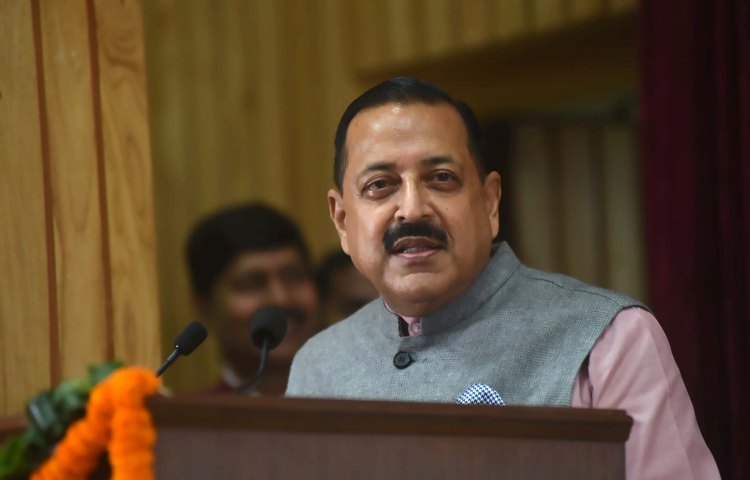
India's space sector has emerged as a fast-growing engine of innovation and enterprise, with the country's space economy now valued at an estimated $8.4 billion and 399 start-ups operating across the value chain, Union Minister of State (Independent Charge) for Science and Technology and Space Dr. Jitendra Singh told the Rajya Sabha on Wednesday.
Replying to a starred question, the Minister said the transformation has been driven by policy reforms introduced after 2019, which opened the space sector to private participation and ended decades of near-exclusive government control.
Policy reforms unlock private participation
Dr. Jitendra Singh said a key institutional reform was the creation of the Indian National Space Promotion and Authorisation Centre (IN-SPACe), which acts as a single-window interface between private industry and government agencies, including the Indian Space Research Organisation (ISRO).
"India never lacked scientific capability or commitment within ISRO. What was missing earlier was an enabling ecosystem for industry participation," the Minister said, adding that recent reforms created the right conditions for private investment, entrepreneurship and innovation.
From single digits to 399 start-ups
The impact of these changes has been dramatic. The number of space start-ups has grown from single-digit levels to 399, spanning launch vehicles, satellite platforms, propulsion systems, space-grade electronics and downstream applications.
Dr. Jitendra Singh said the space sector—once marginal in economic terms—is now expected to grow four to five times over the next eight to ten years, potentially reaching $40–45 billion.
Private players across the space value chain
Private industry is now active across multiple segments of the space ecosystem. The Minister noted that Hindustan Aeronautics Limited (HAL) has signed a technology transfer agreement with ISRO for the Small Satellite Launch Vehicle (SSLV), while several Indian companies are developing launch systems, satellites, propulsion technologies and related applications.
He cited the growing diversity of firms as evidence that India's space reforms have moved the sector beyond research missions into manufacturing, commercial services and entrepreneurship.
Foreign satellite launches boost revenues
India's expanding role in the global space market was also reflected in launch revenues. Of the 434 foreign satellites launched by ISRO to date, 399 were launched after 2014, earning the country approximately €323 million and $233 million.
These figures, the Minister said, underline India's rising credibility as a reliable and cost-effective launch partner internationally.
Space as a future growth pillar
Concluding his reply, Dr Jitendra Singh said space is set to become a significant contributor to India's future economic growth. With private investment accelerating and institutional mechanisms now firmly in place, the sector is moving into previously under-explored areas and positioning itself as a key domain of high-technology manufacturing, innovation and start-up-led growth.


 Google News