

Türkiye Uses Nuclear Science to Protect Citrus Harvests and Tackle Fruit Fly Damage
The Mediterranean fruit fly is one of the most economically damaging agricultural pests along Türkiye’s Aegean and Mediterranean coasts, attacking citrus and other fruit crops.
- Country:
- Turkey
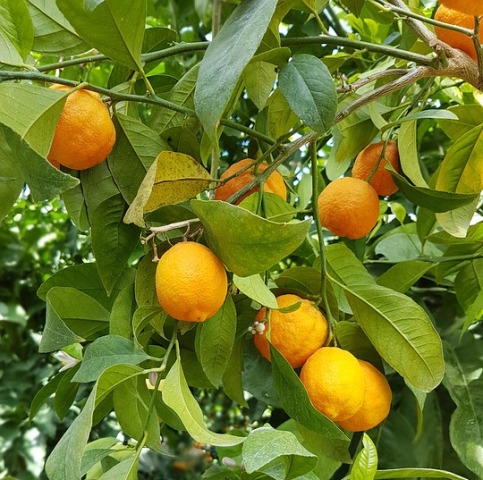
Türkiye's citrus growers produce around five million tonnes of oranges, lemons and grapefruits each year, supporting livelihoods that depend on healthy fruit reaching buyers in good condition. Extreme heat, frost and recurring pest infestations can reduce harvests and damage fruit quality, putting farmers' incomes under pressure. Expertise developed with support from the International Atomic Energy Agency (IAEA) and the Food and Agriculture Organization of the United Nations (FAO) is helping the country tackle these problems through nuclear techniques that control pests and support the development of improved fruit varieties.
Breaking the fruit fly's breeding cycle
The Mediterranean fruit fly is one of the most economically damaging agricultural pests along Türkiye's Aegean and Mediterranean coasts, attacking citrus and other fruit crops. Females lay eggs inside fruit, where the larvae hatch and feed on the pulp, leaving growers with damaged produce. Growing demand for fruit produced with fewer pesticides has added urgency to finding effective pest management methods that reduce dependence on chemical treatments.
Türkiye is adopting the sterile insect technique, or SIT, as part of integrated pest management. The method involves breeding large numbers of male insects, sterilising them and releasing them into affected areas, where mating with wild females produces no offspring and gradually reduces the pest population. This environmentally friendly approach targets a specific species and has demonstrated its value overseas: the Dominican Republic rapidly deployed SIT after detecting Mediterranean fruit flies in December 2023 and eradicated the pest within a year.
Orchard trial delivers a 95% reduction
Türkiye's Bornova Plant Protection Research Institute, working with the IAEA, tested SIT during 2024 and 2025 in a semi-isolated, 25-hectare citrus orchard near İzmir. Scientists released one million sterile males and recorded a 95% reduction in wild females, demonstrating the technique's effectiveness under local climatic conditions. A larger release operation is underway across a 2,000-hectare valley in Menderes, taking the approach beyond the initial trial orchard.
A small mass-rearing facility established at Bornova, with design support from the IAEA and FAO, gives Türkiye greater capacity to supply sterile insects. Its X-ray irradiator sterilises pupae reared on site and has a weekly output capacity of approximately 10 million sterile males; Türkiye's Ministry of Agriculture and Forestry funded the equipment, which the IAEA procured. Training courses, fellowships and expert missions have strengthened national SIT expertise over the past four years. Bornova senior agricultural engineer Ümran Akkan Demirer said wider use could reduce insecticide dependence and pesticide residue risks, strengthen the citrus sector's competitiveness and help protect production and exports.
Radiation helps develop better fruit varieties
Scientists at the Alata Horticultural Research Institute are using mutation breeding to develop fruit varieties with useful characteristics, applying radiation to accelerate the natural process of change in plants. Their progress includes four lemon varieties: Eylül, released in 2009, matures early and offers greater disease resistance; Alata, Gülşen and Uzun, released in 2010, are seedless. These developments show how nuclear techniques can contribute to fruit production through both pest control and improvements to the crops themselves.
Support from the IAEA's technical cooperation programme has helped the Nuclear Energy Research Institute of the Turkish Energy, Nuclear and Mineral Research Agency (TENMAK) advance research in plant mutation breeding and food irradiation. The institute now serves as an IAEA Collaboration Centre, strengthening national and regional expertise in climate-resilient crops, food safety, food security and compliance with export requirements. Jing Zhang, Acting Director of the IAEA's Technical Cooperation Division for Europe and Central Asia, described training as essential to lasting progress, giving Türkiye's scientists and agricultural specialists the skills to address current challenges and support future growth.


 Google News