

Bangkok pollution: Schools closed as govt struggle to enforce crop burning ban
- Country:
- Thailand
HIGHLIGHTS
- Bangkok has ordered over 400 schools to remain closed due to deteriorating levels of air pollution.
- On Tuesday morning, the city was ranked as having the world's ninth-worst air for a major city, according to AirVisual.
- There are doubts about any respite in the near future as farmers continue crop burning despite government ban.
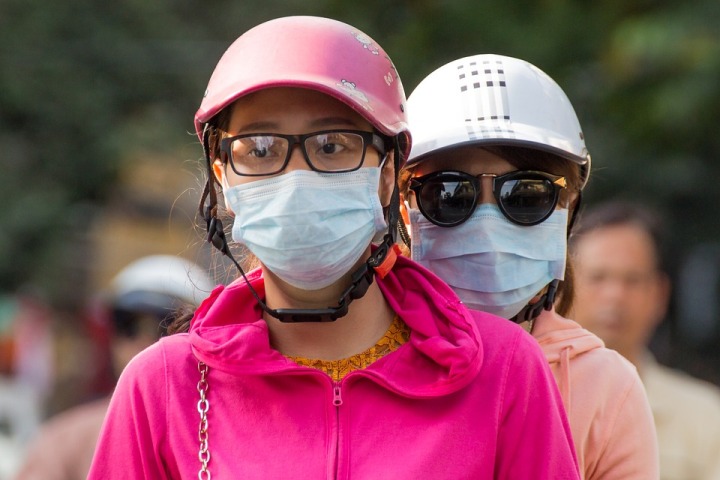
Thailand's capital on Tuesday ordered schools to remain closed due to unhealthy levels of air pollution, and there were doubts about whether the situation would improve in the coming months as farmers burn their sugarcane crop in the harvest season.
The Bangkok air quality index (AQI) climbed to 170 - a reading above 150 is classified as unhealthy - on Tuesday morning and the city was ranked as having the world's ninth-worst air for a major city, according to independent air quality monitor AirVisual.
The Bangkok Metropolitan Administration ordered 437 schools in Bangkok, the most visited city in the world, to close for a day on Wednesday as one of the emergency measures against pollution.
Bangkok's level of PM 2.5 particles was 92.7 pg/m3 on Tuesday, while anything over 35 is considered unhealthy. PM 2.5 particles can include dust, soot, and smoke. The last few years' annual deterioration in air quality early in the new year coincides with the annual sugarcane harvest, which normally runs from November to March.
Sugarcane is typically burned before harvesting to remove the outer leaves, making it easier to collect. After the harvest, the leftover leaves are burned again to prepare the land for re-planting. The government has officially banned burning crops during January and February, according to the Ministry of Agriculture website.
But many farmers still resort to burning as it is cheaper than hiring workmen to cut stalks and collect leaves to prepare fields for the next planting. "Total cost of cultivation rises about 30% to 40% for cutting fresh sugar cane (without burning) ... that makes it necessary to burn," a sugarcane farmer in northeastern Thailand, who only gave his name as Sert, said. "I don't feel good about it," the farmer said when asked how he felt about contributing to the pollution.
For some days in January, Thailand had up to 375 kilometer-wide hot spots indicating fires, satellite data shows, with an average of 100 spots in agriculture land, according to Thailand's Geo-Informatics and Space Technology Development Agency (GISTDA).
While the burning of crops in the first two months of the year is banned, little is being done to enforce it, and Prime Minister Prayuth Chan-ocha has expressed helplessness.
We cannot simply put the blame on people and penalize all the polluters because the outcome of penalty measures will create other serious problems for society
To be sure, crop burning is not the only cause of the smog in Thailand - pollution from cars and trucks, weather patterns and industrial emissions are also blamed. "It's a cocktail of factors," said Surat Bualert, Dean of the Faculty of Environment at Kasetsart University.
ALSO READ
-
From $23 Trillion in Assets to Real Projects: Bangkok Summit Tests Development Finance in Asia
-
Bangkok to Unite Development Banks With $23 Trillion for Sustainable Growth Push
-
Thailand’s Road to High-Income Status Runs Through Bangkok and Smaller Cities
-
Beyond Bangkok: How Thailand’s Secondary Cities Could Power Its High-Income Economy by 2037
-
Thailand’s High-Income Future Will Be Shaped by Smarter Cities


 Google News