

Air pollution exceeds malaria as a global cause of premature death: Study
Notably, the average life expectancy worldwide would increase by just over a year if fossil fuel emissions were eliminated, and by nearly two years if all human-made emissions were removed, the researchers estimated.
- Country:
- France
Air pollution poses a major threat to public health, claiming millions of lives worldwide every year. Exposure to air pollution is also closely linked to chronic respiratory and heart diseases.
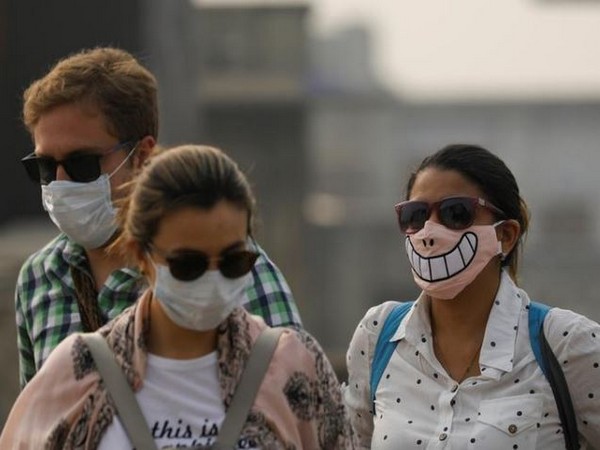
According to a new study published in the Cardiovascular Research, a journal of the European Society of Cardiology, air pollution is responsible for shortening people's lives worldwide on a scale far greater than wars and other forms of violence, parasitic and vector-borne diseases such as malaria, HIV/AIDS and smoking, suggesting that the world is facing an air pollution "pandemic".
Researchers, led by Professors Jos Lelieveld and Thomas Münzel, from the Max Planck Institute for Chemistry and the Department of Cardiology of the University Medical Centre Mainz in Mainz, Germany, used a new method of modeling the effects of various sources of air pollution on death rates. Globally, air pollution caused an extra 8.8 million premature deaths a year in 2015, as per the estimates.
The first-of-its-kind study showing the effects of air pollution on deaths according to age, type of disease and also its effect on life expectancy at the level of individual countries and regions found that the people's lives are shortened by an average of nearly 3 years from different sources of air pollution, which is far greater than tobacco smoking that shortens life expectancy by an average of 2.2 years, HIV/AIDS by 0.7 years and vector-borne diseases such as malaria by 0.6 years.
"It is remarkable that both the number of deaths and the loss in life expectancy from air pollution rival the effect of tobacco smoking and are much higher than other causes of death. Air pollution exceeds malaria as a global cause of premature death by a factor of 19; it exceeds violence by a factor of 16, HIV/AIDS by a factor of 9, alcohol by a factor of 45, and drug abuse by a factor of 60," said Professors Jos Lelieveld from the Cyprus Institute Nicosia, Cyprus.
According to the findings, air pollution had a greater effect on older people, with the exception of deaths in children aged under five in low-income countries, such as Africa and South Asia. Notably, the average life expectancy worldwide would increase by just over a year if fossil fuel emissions were eliminated, and by nearly two years if all human-made emissions were removed, the researchers estimated.
Although the study has limitations including that there is uncertainty surrounding the estimates, therefore, the size of the effect of air pollution on deaths could be larger or smaller.


 Google News