

Beyond Frequencies: Exploring India's Rich Radio Heritage and the Enduring Battle for Sonic Supremacy
"Beyond Frequencies" delves into the captivating saga of India's radio heritage, tracing its evolution from the colonial era to the digital age. The blog explores the golden era of radio, technological challenges, and the ongoing battle for sonic supremacy amidst the changing socio-political landscape. It highlights the adaptation to the digital wave and emphasizes the importance of preserving this rich cultural legacy.
 Devdiscourse News Desk
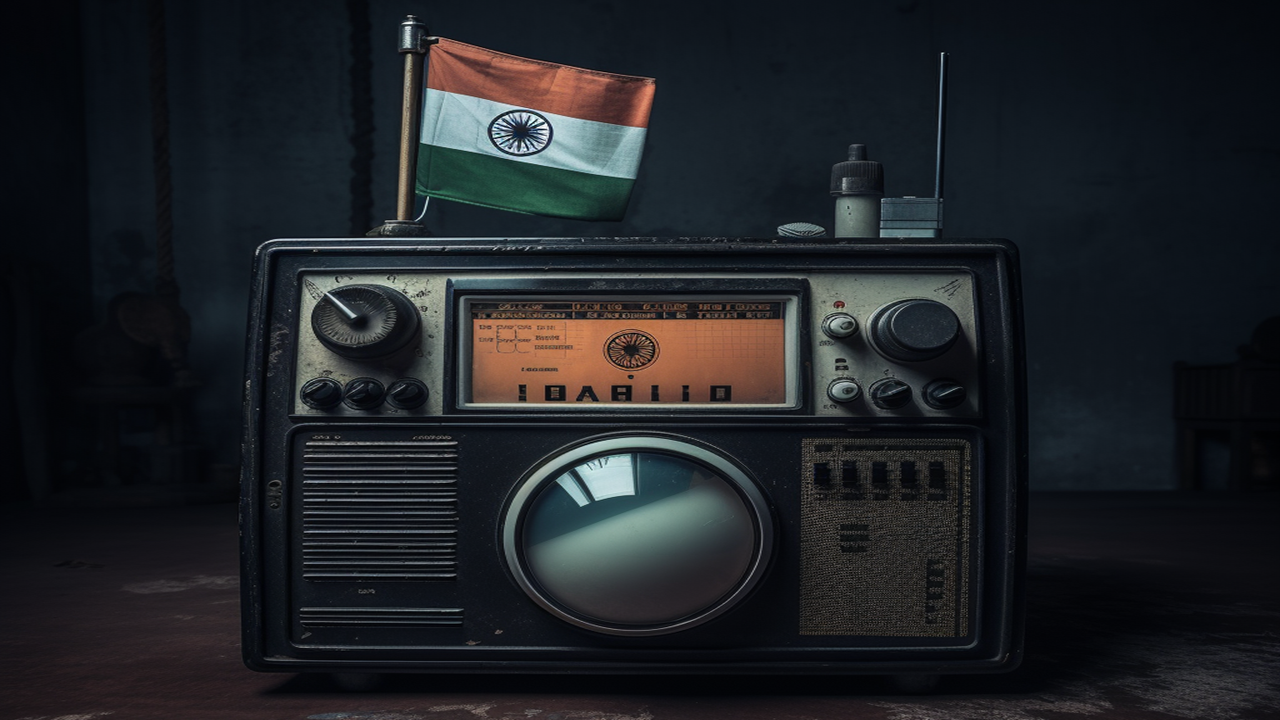
In the vast tapestry of India's cultural heritage, the resonance of its radio waves tells a century-old story of evolution, revolution, and the persistent struggle for sonic supremacy. From the crackling broadcasts of the early 20th century to the digitized frequencies of the present day, India's radio landscape has been witness to a remarkable journey, marked by technological advancements, socio-political changes, and an ongoing battle for dominance in the ever-evolving sonic realm.
The Genesis of India's Radio Heritage
The roots of India's radio heritage can be traced back to the colonial era when the British Broadcasting Corporation (BBC) made its foray into the Indian subcontinent. The airwaves, once dominated by imperial narratives, soon became a tool for communication and cultural expression. In 1927, the Radio Club of Bombay marked a significant milestone by initiating regular broadcasting, setting the stage for India's tryst with radio as a medium of mass communication.
The Golden Era of Radio
The post-independence period ushered in the golden era of Indian radio, characterized by iconic shows like "Binaca Geetmala" and "Vividh Bharati." These broadcasts not only entertained millions but also played a pivotal role in shaping the cultural identity of a newly independent nation. The airwaves became a platform for storytelling, music, news, and societal discourse, forging a deep connection with the diverse population of India.
Technological Evolution and Challenges
As technology advanced, so did the medium of radio. The transition from analog to digital broadcasting marked a significant leap forward, offering clearer signals and a broader spectrum for content delivery. However, this evolution brought its own set of challenges, including spectrum congestion, licensing issues, and the rising competition from emerging digital platforms. The battle for frequencies became more intricate as radio stations vied for their place in the increasingly crowded sonic landscape.
Socio-Political Dynamics and Radio
India's socio-political landscape has always been reflected in its media, and radio is no exception. The airwaves became a powerful tool during times of political upheaval, providing a platform for dissent, expression, and unity. From the emergency period of the 1970s to the liberalization era of the 1990s, radio adapted to the changing times, playing a crucial role in shaping public opinion and fostering social dialogue.
The Ongoing Battle for Sonic Supremacy
In the digital age, the battle for sonic supremacy has taken on new dimensions. Traditional radio broadcasters are grappling with the challenges posed by internet radio, podcasts, and streaming services. The quest for audience attention is now not just about frequencies but also about algorithms, content curation, and interactivity. As the boundaries between traditional and digital broadcasting blur, radio stations are redefining their strategies to stay relevant in an era of information abundance.
Adapting to the Digital Wave
To maintain their relevance, many radio stations in India are embracing the digital wave. Online streaming, podcast production, and interactive social media campaigns have become integral parts of the modern radio experience. This adaptability is not just a survival strategy but a testament to the enduring spirit of India's radio heritage – a spirit that thrives on innovation and connection.
Preserving the Sonic Legacy
As the battle for sonic supremacy continues, there is a growing awareness of the need to preserve India's rich radio legacy. Archival initiatives, digital libraries, and efforts to document the oral history of radio are emerging to ensure that the stories, voices, and melodies of the past are not lost in the whirlwind of technological progress.
Conclusion
India's radio heritage is a living testament to the nation's journey through time. Beyond frequencies, it encapsulates the spirit of a people, their struggles, triumphs, and the ever-evolving dynamics of communication. The ongoing battle for sonic supremacy is not just about wavelengths and signals; it's a narrative that weaves together the threads of technology, culture, and human connection. As we tune in to the echoes of India's radio heritage, we find ourselves immersed in a century-old saga that resonates with the heartbeat of a nation.


 Google News