

US is constantly assessing expansion of export controls on chips that could boost China's military
We have no interest to de-couple our economies, she said, but added, We cannot allow China to have access, for their military advancement, to our more sophisticated technology. Raimondo said she was sent by President Joe Biden to Manila with a delegation of executives from 22 American companies, which she said plan to invest about 1 billion in the Philippines, Washingtons oldest treaty ally in Asia.
- Country:
- Philippines
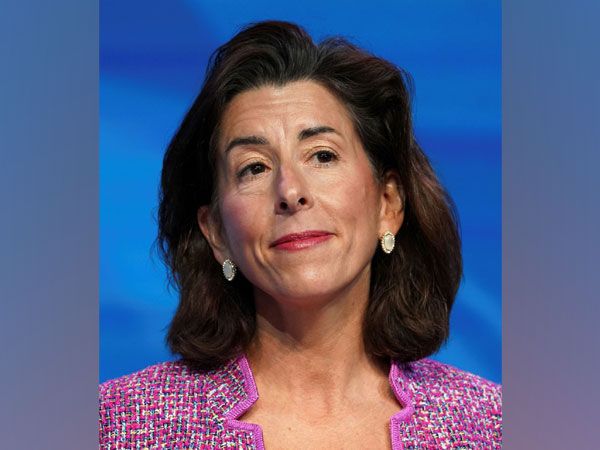
The United States is constantly assessing the need to expand export controls to stop China from acquiring advanced computer chips and manufacturing equipment that could be used to boost its military, U.S. Commerce Secretary Gina Raimondo said Monday.
The U.S. export controls were first launched in 2022 to counter the use of chips for military applications that include the development of hypersonic missiles and artificial intelligence.
Last year, the U.S. Commerce Department broadened the export controls, sparking protests from China's Commerce Ministry that the restrictions violated international trade rules and "seriously threaten the stability of industrial supply chains.'' China said it would take "all necessary measures" to safeguard its rights and interests and urged Washington to lift the export control as soon as possible.
Asked if the U.S. was planning to further broaden the chip export controls to China, Raimondo said in a news conference in the Philippine capital Manila that it was constantly under consideration.
"We look at this every single day," Raimondo said. "Technology is changing faster than ever, which means we have to wake up every day and ask ourselves, `are we doing enough?'" ''My job is to protect the American people and to make sure there is no sophisticated technology, including semiconductor technology, artificial intelligence technology that we have, that China doesn't have, that they can't access it and use it to enable the Chinese military," she said.
The U.S. would continue to sell semiconductors worth billions of dollars to China, Raimondo said.
"I want to be clear. We have no interest to de-couple our economies," she said, but added, "We cannot allow China to have access, for their military advancement, to our more sophisticated technology." Raimondo said she was sent by President Joe Biden to Manila with a delegation of executives from 22 American companies, which she said plan to invest about $1 billion in the Philippines, Washington's oldest treaty ally in Asia. The U.S. investments would include training large numbers of Filipinos to attain high-tech skills that could help them land high-paying jobs, she said.
''The U.S.-Philippine alliance is ironclad. It is sustained over 72 years and we remain steadfast friends and increasingly partners in prosperity, she said.
Raimondo met President Ferdinand Marcos Jr. and quoted him as saying "he cannot imagine the Philippines' future without a close bond with the United States.'' "I want to say here today, the feeling is mutual," Raimondo said. "But President Biden acknowledges we can do more.''
ALSO READ
-
ILO Report Reveals How to Bring Social Security Within Reach of Informal Workers
-
WTO Sets Up Panel on EU Carbon Border Rules as Russia Challenges Restrictions
-
WHO Brings Global Experts Together to Strengthen Herbal Medicine Quality and Safety
-
Human Cost of Faster Work: Chinese Employees Weigh AI’s Promise Against Pay Fears
-
China's August Disasters Yield $5.38 Billion in Losses


 Google News