

Karnataka Inclusive Livelihood Programme: Empowering the Vulnerable
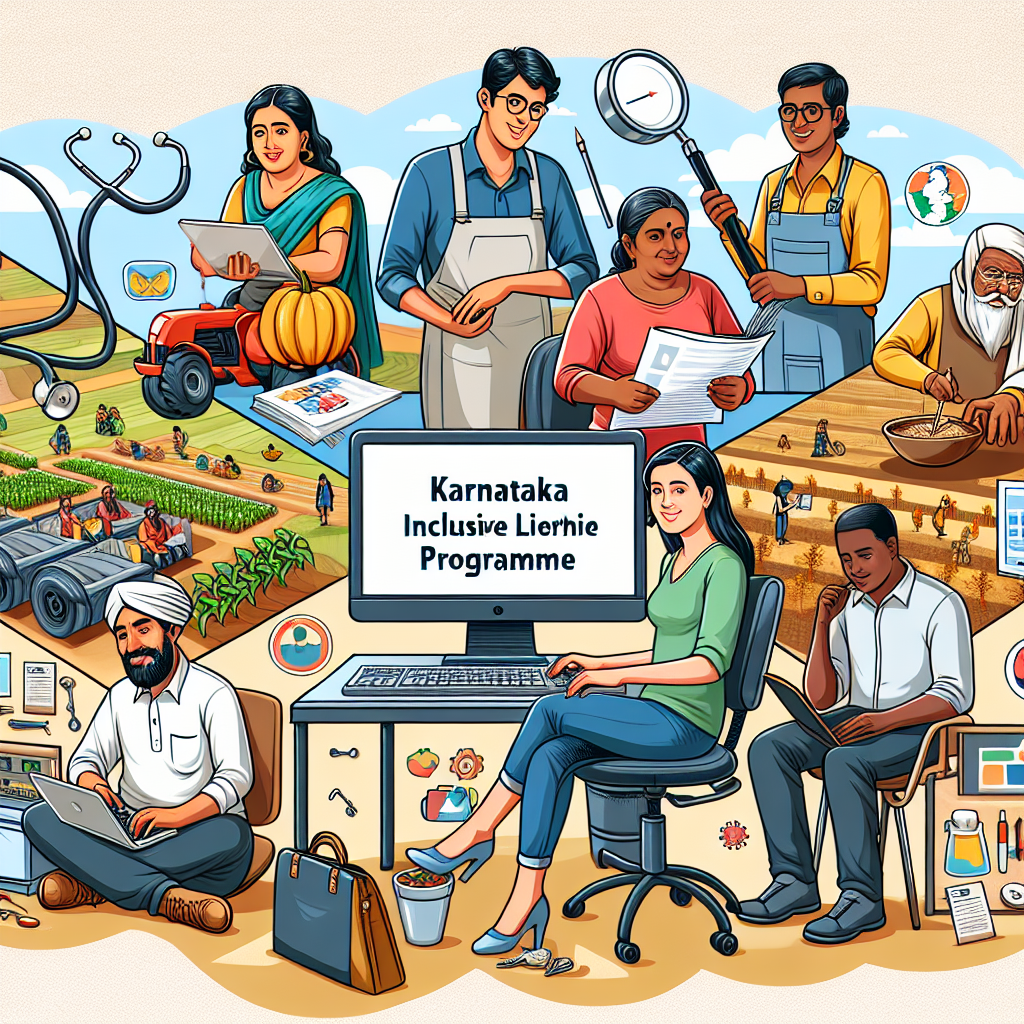
The Karnataka government has launched the Karnataka Inclusive Livelihood Programme (KILP) to enhance livelihoods and empower vulnerable groups across 20 taluks in 10 districts. Aiming to cover 4,000 households initially, KILP focuses on sustainable, gender-equitable, and climate-resilient livelihoods, with plans to expand significantly by 2029.
- Country:
- India
The Karnataka government has initiated the Karnataka Inclusive Livelihood Programme (KILP) to boost livelihoods and support vulnerable sections, officials stated on Tuesday. This initiative by the Department of Skill Development, Entrepreneurship, and Livelihood will initially encompass 20 taluks in 10 districts across the state.
According to an official statement, a Memorandum of Understanding (MoU) for executing the programme was signed by P I Sreevidya, Mission Director of the National Livelihood Mission, and Shweta S Banerjee, country lead - India, at BRAC International, in the presence of Skill Development, Entrepreneurship, and Livelihood Minister Sharan Prakash Patil, and Additional Chief Secretary Uma Mahadevan at Vikasa Soudha.
Launching the pilot phase, slated to target 4,000 households with a Rs 23 crore budget, the minister highlighted that KILP focuses on fostering gender-equitable, climate-resilient, and sustainable livelihoods for extremely poor households in 20 taluks. Aimed at empowering vulnerable groups, particularly women, KILP aspires to instill self-confidence, provide skill training, enhance livelihoods, foster social inclusion, and promote economic prosperity. Uma Mahadevan stated that the scheme would expand to 50,000 households by 2027, and 2,50,000 households by 2029, addressing poverty, inequalities, and regional disparities. The programme’s key objectives include sustainable livelihoods, food security, income enhancement, access to welfare schemes, gender equity, and social empowerment.
BRAC International will offer technical expertise and support for the programme's design and implementation via a State-level Project Management Unit (SPMU) and district-level coordination units through PRADAN, a national NGO. Gram Sabhas, Gram Panchayat level federations, and self-help groups play pivotal roles in beneficiary selection.
The pilot phase covers taluks including Hungund and Badami in Bagalkot, Aurad and Kamalanagar in Bidar, Kalagi and Shahabad in Kalaburagi, Maski and Sirwar in Raichur, Vadagera and Gurmitkal in Yadgir, and several others across the state.


 Google News