

World Bank Warns Nepal’s Growth to Slow to 2.1% in FY26 Amid Instability
While addressing immediate recovery needs is essential, the World Bank stresses that Nepal must significantly improve public investment management to sustain higher growth in the long term.
- Country:
- Nepal
Nepal's economic growth is projected to decline sharply to 2.1 percent in FY26, down from 4.6 percent in FY25, according to the World Bank's latest Nepal Development Update, released today. The slowdown reflects the aftermath of the September 2025 public unrest, political uncertainty, and weakened investor confidence. Despite the downturn, reconstruction efforts are expected to support a rebound to 4.7 percent in FY27, though the overall outlook remains fragile and highly uncertain.
The report — Nepal Development Update: Reforms to Accelerate Public Investment — highlights that Nepal's services sector, which accounts for more than half of the country's GDP, is expected to be the most adversely affected. Tourism, trade, transport, and hospitality have seen significant disruption following the unrest and shifting political landscape.
Political Instability Dampens Outlook, Though Opportunities Remain
The World Bank notes that Nepal's economic prospects depend heavily on political stability. A smooth transition of government, supported by sound policy management, could boost investor confidence and accelerate recovery. Conversely, prolonged uncertainty may deter private investment and slow reconstruction.
The September unrest, which led to widespread property damage and business disruptions, has strained public finances and diverted administrative focus toward crisis response and election preparations. The report also points out that Nepal's private sector has become increasingly cautious, delaying expansion plans and reducing hiring.
Despite these challenges, the World Bank sees potential for stronger-than-expected growth if reforms are implemented effectively and reconstruction accelerates.
Government Launches Integrated Business Recovery Plan
To stabilize the economy and restore business confidence, the Government of Nepal has introduced an Integrated Business Recovery Plan that includes:
-
Grants for affected businesses
-
Tax incentives to support recovery and investment
-
Operational support such as streamlined approvals
-
Reprioritization of public spending toward infrastructure rehabilitation
-
Establishment of a Reconstruction Fund to restore damaged public and private assets
Finance Minister Rameshore Prasad Khanal emphasized the importance of government intervention:
"Public resources have been reprioritized toward infrastructure rehabilitation and election preparations. These initiatives aim to reinvigorate private sector activity while laying the foundation for a more resilient economy."
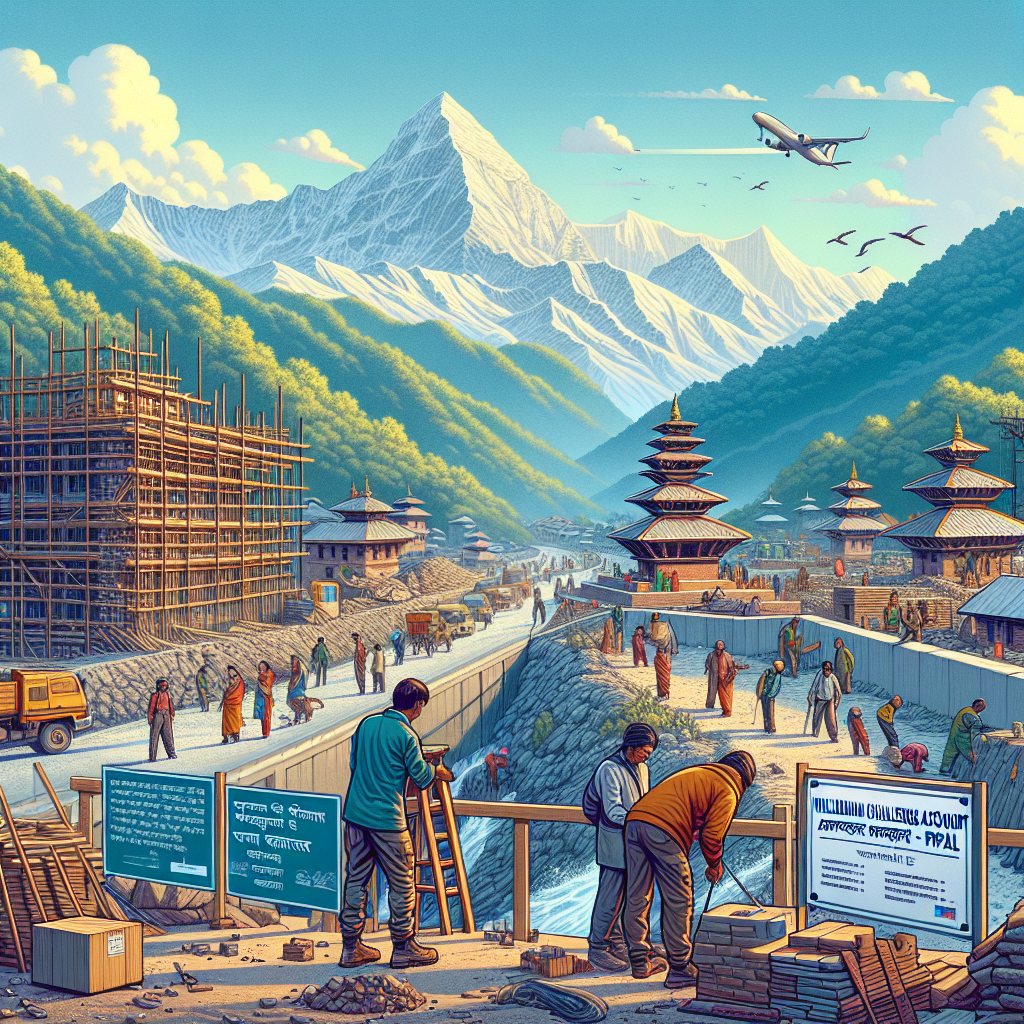
The Reconstruction Fund is expected to play a central role in financing repairs to public infrastructure, supporting rural road connectivity, and helping re-establish electricity, water, and communication services in affected areas.
Public Investment Reform Critical for Long-Term Growth
While addressing immediate recovery needs is essential, the World Bank stresses that Nepal must significantly improve public investment management to sustain higher growth in the long term.
In FY24, combined capital spending across federal, provincial, and local governments totaled 7.9 percent of GDP — far below the 10–15 percent of GDP required annually to meet the country's infrastructure needs.
Key reforms recommended include:
1. Strengthening Project Planning and Budgeting
Many infrastructure projects suffer from delayed approval, cost overruns, and inconsistent budgeting practices. Better preparation and cost estimation are critical.
2. Streamlining Land Acquisition and Environmental Clearances
Slow land acquisition and tree-cutting procedures frequently stall road, hydropower, and urban development projects.
3. Improving Cash Management and Budget Execution
Ensuring timely release of funds and reducing fiscal bottlenecks could accelerate project completion.
4. Reforming Procurement Laws and Regulations
Modernizing procurement processes would reduce delays, improve transparency, and attract more competitive bids.
World Bank Division Director for Maldives, Nepal, and Sri Lanka, David Sislen, stressed the urgency:
"Boosting public investment is critical for improving growth, creating jobs, and building prosperity for Nepalis. Stronger project planning, efficient implementation, and streamlined processes are essential to meet Nepal's infrastructure needs."
Nepal's Economy: A Year in Review
The Nepal Development Update — published twice annually — provides detailed assessments of macroeconomic trends and policy developments. Key observations in the latest edition include:
-
Inflation pressure remains moderate but vulnerable to supply shocks.
-
Remittance inflows remain a strong source of foreign exchange but are insufficient to offset weak domestic investment.
-
Tourism recovery continues but is heavily dependent on political stability and global travel conditions.
-
Export performance remains sluggish due to limited industrial capacity and high logistics costs.
-
Fiscal pressures are increasing as reconstruction and election spending rise.
The report also examines global economic trends, highlighting external risks such as volatile fuel prices, slowing global trade, and geopolitical uncertainty.
Building a Stronger, More Resilient Nepal
The World Bank emphasizes that Nepal is at a pivotal moment. The country's ability to implement meaningful public investment reforms, maintain political stability, and rebuild critical infrastructure will determine the pace and sustainability of its recovery.
A combination of:
-
Strong governance
-
Improved fiscal management
-
Public–private partnerships
-
Strategic infrastructure investments
-
Support for affected businesses and households
will be necessary to regain momentum and place Nepal on a more resilient long-term growth trajectory.
As the country begins the complex task of reconstruction and reform, the World Bank reaffirmed its commitment to supporting Nepal through financial assistance, analytical guidance, and technical expertise.


 Google News