

African Ministers Push for Private Capital to Drive Development at AIF 2025
For decades, African economies grappled with limited private investment flows, constrained by perceptions of high risk, weak regulatory systems, and insufficient project preparation.
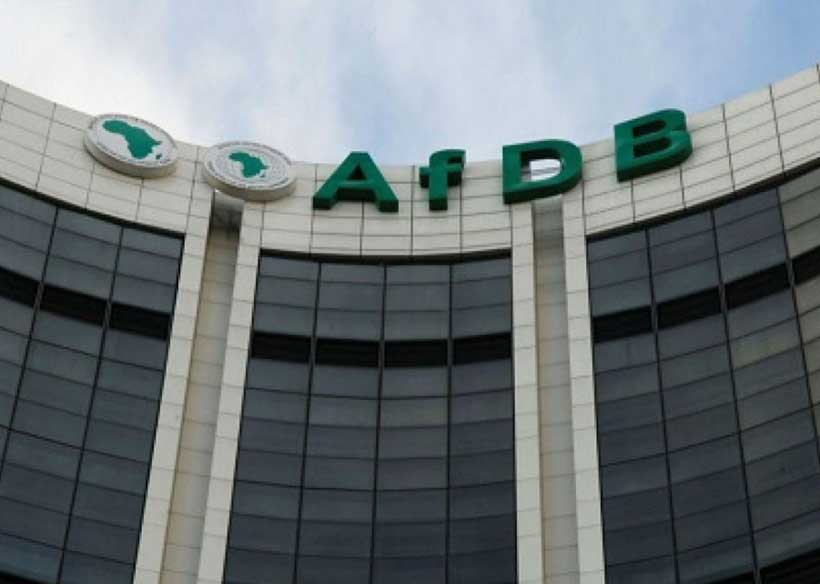
African finance ministers gathered at the 2025 Africa Investment Forum (AIF) issued a strong and unified call for a decisive shift in the continent's development model—moving away from dependence on aid and towards large-scale mobilization of private capital. During a high-level Ministerial Dialogue on "Accelerating Private Investment Through Conducive Enabling Environments," ministers emphasized that Africa's future hinges not on showcasing potential, but on delivering bankable, execution-ready projects capable of attracting global investors.
Representing Côte d'Ivoire, Ethiopia, Guinea, Mauritania, Morocco, and Zambia, the ministers outlined a forward-looking vision grounded in structural reforms, regional integration, and investor confidence-building, marking one of the clearest articulations yet of Africa's transition to a private-sector-driven growth model.
A New Era: From Aid Dependence to Private Capital Mobilization
For decades, African economies grappled with limited private investment flows, constrained by perceptions of high risk, weak regulatory systems, and insufficient project preparation. But ministers meeting in Rabat said this model is no longer sustainable—especially as Africa faces rising demographic pressures, climate vulnerabilities, and major infrastructure demands.
Mauritania's Minister of Economic Affairs and Development, Abdullah Suleiman Sheikh Sidiya, reflected on Africa's transformation since the 1990s:
"Africa is becoming a sought-after destination—not only for cooperation but increasingly for investment."
He noted that Africa's narrative has shifted dramatically, with investors now seeking long-term partnerships in energy, logistics, agriculture, and digital industries.
Côte d'Ivoire: Strengthening Project Maturity to Attract Capital
Côte d'Ivoire's Minister of Economic Planning and Development, Nialé Kaba, said Africa's biggest challenge remains the immaturity of projects, which discourages investors seeking well-prepared, risk-mitigated opportunities.
Côte d'Ivoire has introduced a suite of reforms—including streamlined investment codes, simplified regulatory procedures, and single-window investment platforms—that have seen private investment rise from 12% of GDP in 2020 to 20% today.
Kaba stressed that adopting similar reforms across the continent would significantly raise Africa's competitiveness in global capital markets.
Zambia: Post-Debt-Crisis Recovery and Regional Connectivity
Zambia's Minister of Finance and National Planning, Situmbeko Musokotwane, shared the country's progress emerging from its debt crisis, including a recent sovereign credit rating upgrade. Zambia has secured nearly $2 billion in public-private partnership (PPP) deals and attracted over $7 billion in new mining investment in just three years.
Musokotwane highlighted two major priorities:
-
Mobilizing private investment in energy to address the country's severe power shortages
-
Accelerating project approvals, now reduced to fewer than 45 days
He also pointed to the transformative potential of the Lobito Corridor—a privately financed transcontinental rail network connecting Zambia and the Democratic Republic of Congo to Angola's Atlantic coast. The corridor is expected to revolutionize export routes, strengthen mineral supply chains, and boost trade competitiveness across Southern Africa.
Morocco: Investors Want Ready Projects, Not Promises
Morocco's Minister of Economy and Finance, Nadia Fettah, offered a candid assessment of investor expectations:
"We are being asked for ready projects, delivered with speed and strong execution capacity."
She emphasized Morocco's success in developing year-round project pipelines and highlighted high-growth sectors such as rail transport, aviation, renewable energy, and data centres. Fettah urged African countries to pool resources and leverage regional markets to scale up infrastructure that individual countries cannot undertake alone.
Guinea: Replicating Success Through Regional Inspiration
Guinea's Minister of Planning and International Cooperation, Ismael Nabe, said that strong partnerships and robust project preparation are essential for reducing investment risk.
He showcased the Administrative City project, backed by the UK's Export Finance agency and inspired by successful public infrastructure models in Benin. Nabe described the AIF as a strategic "compass" guiding countries toward co-financing and innovation-oriented development.
By replicating successful initiatives from Côte d'Ivoire, Benin and Morocco, he said Guinea aims to empower its fast-growing, predominantly young population through job creation, infrastructure expansion, and cross-border cooperation.
Ethiopia: Financing Reform and Ambition Through Innovation
Ethiopian Finance Minister Ahmed Shide detailed an ambitious reform agenda aimed at transforming Ethiopia's state-led economy into a dynamic, competitive marketplace. Among the key reforms are:
-
Foreign exchange liberalisation
-
Modernisation of customs systems
-
Establishment of a securities exchange to deepen capital markets
To finance large-scale projects such as the Bishoftu International Airport—set to become one of Africa's largest aviation hubs—Ethiopia is increasingly deploying securitisation, blended finance, and credit-enhancement instruments capable of attracting global investors.
The Common Message: Private Sector-Led Growth Is the Future
The Ministerial Dialogue concluded with a clear consensus that Africa's economic transformation hinges on mobilizing private capital at scale, and that governments must:
-
Build strong business and regulatory environments
-
Prepare investment-ready project pipelines
-
Accelerate approval and permitting processes
-
Strengthen regional integration to expand market size
-
Enhance financial innovation through PPPs, securitisation, blended finance, and infrastructure platforms
The AIF 2025 discussions underscored that Africa is not short of opportunity—what is needed now is a deliberate focus on bankability, execution, and investor readiness.
As global capital increasingly looks towards emerging markets for long-term growth, ministers emphasized that Africa must seize the moment by implementing reforms that convert its vast potential into transformative, investable projects.
ALSO READ
-
Bangkok to Unite Development Banks With $23 Trillion for Sustainable Growth Push
-
ADB’s New Malaysia Office to Drive ASEAN Power Links and Unlock Private Investment
-
AfDB Explores Korea’s Economic Transformation for Lessons on Africa’s Growth
-
Mali’s Savings and Local Enterprise Could Unlock Development Finance: AfDB Report
-
World Bank Group Mobilizes Record $112 Billion as Developing Economies Need Jobs


 Google News