

Germany eyes fiscal U-turn to finance climate protection plan -official
- Country:
- Germany
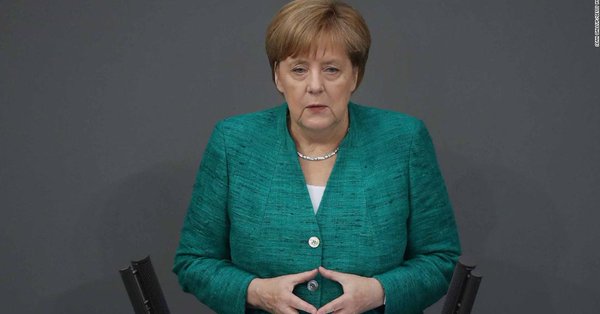
Germany is considering ditching its long-cherished balanced budget policy to help finance a costly climate protection program with new debt, a senior government official said. Chancellor Angela Merkel's government has managed to increase public spending without incurring new debt since 2014 thanks to an unusually long growth cycle.
But as the country's borrowing costs sink to new lows almost daily and its economy cools, domestic and international calls to provide extra fiscal stimulus by running a small deficit again are becoming louder. "The challenge now is how to shape such a fundamental shift in fiscal policy without opening the floodgates for the federal budget," the official, with knowledge of internal discussions in the finance ministry, told Reuters on condition of anonymity.
"Because once it is clear that new debt is no longer taboo, everyone raises a hand and wants more money." For that reason, Berlin would link and limit any new debt strictly to the climate protection package which Merkel's cabinet is expected to seal next month, the official said.
Merkel's coalition government wants to cushion the effects of a planned exit from coal over the next two decades by pouring at least 40 billion euros ($45 billion) into affected regions and help them manage the shift away from fossil fuels. The coalition's junior partner, the center-left Social Democrats (SPD) and their Finance Minister Olaf Scholz, are also advocating introducing payouts to cushion the social effects on low-income families of a new carbon emissions pricing system.
"FULL FORCE"
A finance ministry spokesman declined to comment.
But he pointed to a ministry statement saying the fight against climate change was a huge challenge that the government wanted to tackle with "full force". Coalition parties want to agree to the next steps at the climate cabinet's next meeting, on Sept. 20, and a lot of money is available to finance the measures, the ministry added in the statement.
The statement did not rule out the issuance of new debt after German media also reported that such a move was an option. "The black zero (balanced budget) is no longer tenable," a senior SPD member told Reuters. He pointed to additional costs of planned climate protection measures which had already added up to more than 30 billion euros until 2024.
"We need to invest more, especially into infrastructure and climate protection," the senior SPD member said. Under a constitutional amendment, the federal government is allowed to borrow new debt up to the equivalent of 0.35 percent of gross domestic product - equivalent to roughly 5-10 billion euros per year.
Merkel and Scholz have repeatedly defended the goal of a balanced budget, arguing that it is important to reduce public debt in economic good times and not to burden future generations with even more debt in light of Germany's rapidly aging society. A source close to Merkel cautioned that the issue of new debt had not been on the agenda.
Eckhardt Rehberg and Hans Michelbach, senior lawmakers of Merkel's conservatives, both said they would stick to the goal of incurring no new debt.
"NO FETISH"
While SPD budget lawmaker Johannes Kahrs also distanced himself from the idea, members of the party's left-wing called on Scholz to boost investments with new debt. "The (balanced budget) should not be an end in itself or even a fetish," SPD finance lawmaker Cancel Kiziltepe told Reuters.
"We should go for economically wise policy. And that means we need to invest in economic downturns." The move comes after yields turned negative even for 30-year German bonds, meaning investors actually pay the German state a premium to lend it money over a long period. It also chimes with international efforts to limit the effects of global warming.
A United Nations report on the effects of climate change concluded on Thursday that global meat consumption must fall to curb global warming, reduce growing strains on land and water and improve food security, health and biodiversity. ($1 = 0.8930 euros)


 Google News