

PTI Fact Check: Qutub Minar has nothing to do with Mughals, built 300 years before Babur arrived
The construction of the Qutub Minar began in 1193 by Qutab-ud-din Aibak -- the founder of the Slave Dynasty in India -- and the Mughals arrived in India after Babur defeated the last Lodhi king Ibrahim Khan Lodhi in the First Battle of Panipat in 1526, said historians.
- Country:
- India
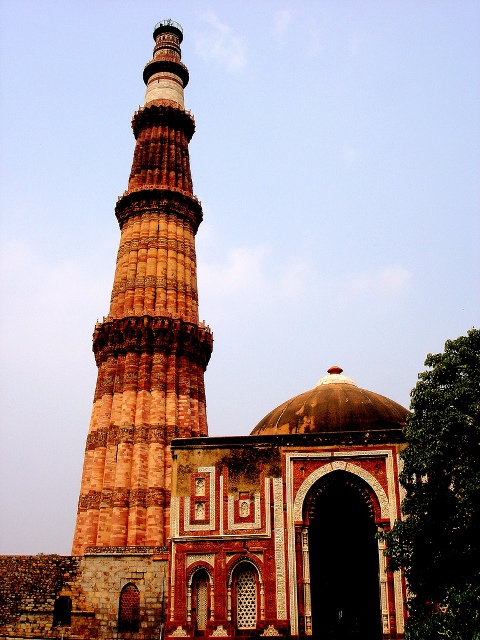
The imposing Qutub Minar in the Indian capital was built 300 odd years before the first Mughal set foot in India and has nothing at all to do with the Mughal era, say, historians, debunking claims in a section of the media. The country's tallest minaret, standing at 72.5 meters and completed in the 13th century, was described as a Mughal-era structure by a television channel and a news website, prompting multiple social media posts with many hundred retweets endorsing the false claim. The construction of the Qutub Minar began in 1193 by Qutab-ud-din Aibak -- the founder of the Slave Dynasty in India -- and the Mughals arrived in India after Babur defeated the last Lodhi King Ibrahim Khan Lodhi in the First Battle of Panipat in 1526, said historians. While Qutub-ud-din Aibak finished the base of the structure, it was completed in the early 13th century by his son-in-law Shams ud-Din Iltutmish who added three more floors to the structure, said historian S Irfan Habib. The Slave Dynasty, which lasted from 1206 to 1290, was the first dynasty to rule as the Delhi Sultanate. The Dynasty, also called the Mamluk Dynasty, was established by Qutub-ud-din Aibak, who was born in a Turkish family and then sold as a slave to Muhammad Ghori, Afghanistan's Ghor ruler. ''After that came the Khiljis, the Tughlaqs, the Sayyid dynasty, the Lodhis, and then came the Mughals. So, so many dynasties came in between before the arrival of the Mughals. That way those calling it a Mughal monument are wrong by over 300 years...,'' Habib added. According to writer and historian Sohail Hashmi, a section of people confuse Muslims with Mughals. ''Mughals have got nothing to do with the Qutub Minar. And those calling it a Mughal-era structure have no idea of our past and no sense of time. When they say Mughals, they mean Muslims. They use the two words interchangeably,'' Hashmi said. Giving details of the red and buff sandstone structure, he explained that the top floor of the three floors built by Iltutmish was damaged by lightning twice in the 14th century and was restored by Tughlaq dynasty ruler Firoz Shah Tughlaq in the latter half of the century.
While the first three stories are made of red sandstone, the fourth and fifth stories are of marble and sandstone.
''The last of the Tughlaq kings rebuilt the top floor into two instead of one. That is why the top two floors that you see now have a lot of marble, unlike the lower floors which have no marble. Even the shape of the minaret is different in the top two floors as compared to the first three floors,'' Hashmi said. ''Sequentially, major repair works were carried out by the British,'' he added. The Mughals, he stressed, had nothing to do with either the construction of the Qutub Minar or its repair. The five-story monument, with a base diameter of 14.3 meters that narrows down to 2.7 meters at the top, is adorned by floral motifs and fine arabesque decorations -- main verses from the Quran. It was recognized as a UNESCO world heritage site in 1993.
The other important constructions in the Qutub Minar complex are the Quwwat-ul-Islam mosque, the Ala-I-Darwaza, and the Alai Minar.
The claim that the Qutub Minar is a Mughal-era monument is 'false'.


 Google News