

Baltics would switch to European grid in a day if Russia cuts power - Lithuania
Concern about depending on Moscow for any form of energy has mounted across Europe after Russia reduced gas supplies to some countries following its invasion of Ukraine. Masiulis said Lithuania was aiming for an agreement to decouple the Baltic States from the Russian power grid in early 2024, compared to a previous plan for end-2025.
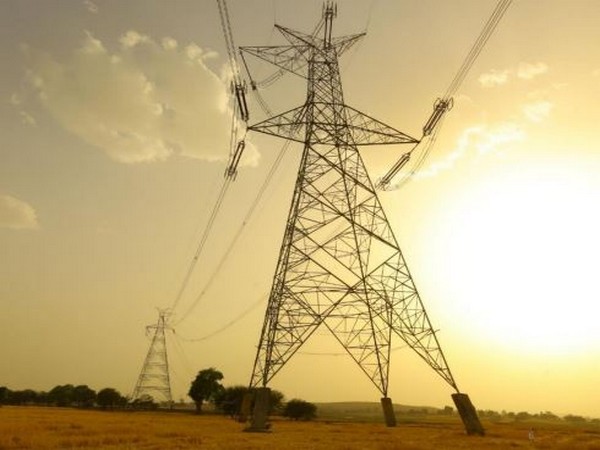
European power grid network ENTSO-E will connect to the Baltic states' grids within 24 hours if the countries were to be disconnected by Russia, Lithuanian power grid operator Litgrid said. "If Russia disconnects us, even today, we would be ready. Our analysis shows that power supply would not be rationed, no serious disruptions expected," Litgrid Chief Executive Rokas Masiulis told a news conference on Wednesday.
"Our agreement with European operators is that we get synchronized within 24 hours," he said. ENTSO-E did not immediately reply to a request for comment.
In June, sources told Reuters that European grid operators were ready to implement immediately a long-term plan to bring the Baltic states, which rely on the Russian grid for electricity, into the European Union system if Moscow cuts them off. Concern about depending on Moscow for any form of energy has mounted across Europe after Russia reduced gas supplies to some countries following its invasion of Ukraine.
Masiulis said Lithuania was aiming for an agreement to decouple the Baltic States from the Russian power grid in early 2024, compared to a previous plan for end-2025. He said governmental discussions with Estonia and Latvia on the matter had started, and that the European Commission was also involved. The Latvian and Estonian governments did not immediately comment.
Masiulis also said an underwater power link between Poland and Lithuania can only be completed in 2027-2028, not in 2025 as previously planned, due to a shortage of materials. Three decades after splitting from the former Soviet Union and 17 years since joining the European Union, the Baltic states of Estonia, Latvia, and Lithuania still depend on Russia to ensure stable power supplies.
A project backed by 1.6 billion euros ($1.61 billion) of EU funding to upgrade their infrastructure is in place to disconnect them from the grid by 2025. The Russian and Continental European systems both operate at a frequency of 50 Hertz, but while the Russian system is run from Moscow, the continental European grids are decentralized, meaning each national grid operator is responsible for maintaining the stability of its system.
($1 = 0.9958 euros)
ALSO READ
-
Middle Corridor Could Create 2 Million Jobs and Transform Trade in Nine Nations
-
Colombia Bets on Vaccine Manufacturing to Build Health Security and Cut Import Dependence
-
Colombia Gets €15 Million Boost to Build Vaccine Capacity and Cut Import Dependence
-
France Plans Housing Hub to Unlock European Funding and Technical Expertise
-
EU and EIB Launch Investor Pact to Help European Tech Firms Compete on Global Stage


 Google News