

Transcript of PTI's exclusive interview with Prime Minister Narendra Modi
- Country:
- India
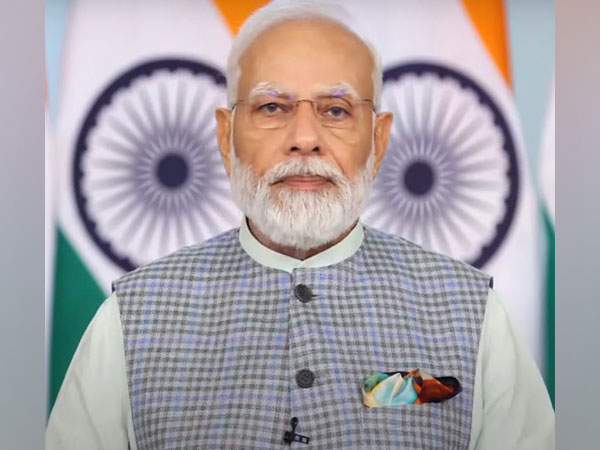
Following is the transcript of PTI's exclusive interview with Prime Minister Narendra Modi by Editor-in-Chief Vijay Joshi and senior editors late last week at his Lok Kalyan Marg residence.
Q: More than 200 sectoral meetings took place in India during 2023 ranging from tourism to health, climate change to health, women empowerment to energy transition. How many of them have produced concrete outcomes to your satisfaction. Are there some areas where you see we could have done more.
A: There are two aspects to this answer. The first is that you must ask me the question about outcomes in December, after our term ends. Moreover, in keeping with the sanctity of the upcoming Summit, it would not be correct on my part to spell out details right now.
But there is another aspect that I would certainly like to speak about. Many important issues have been taken up over the last year.
In the spirit of taking the entire One Earth along as One Family towards One Future that is sustainable and equitable, several issues have been discussed and taken forward.
There are various levels at which meetings have happened in the G20.
An important kind is the Ministerial meeting since it is high-profile and has a great chance of immediate policy impact. Let me give you some examples from the Ministerial meetings.
Over 13 Ministerial meetings have been organised and several successful outcomes have been adopted.
One of the priorities of our Presidency was to accelerate climate action by democratizing it. Focusing on lifestyle impact on climate, through Mission LiFE, is a way of truly democratizing this issue because the power to make a positive impact on the planet is there with every individual. At the Development Ministers Meeting, G20 adopted the Action Plan to accelerate progress on SDGs and Lifestyles for Sustainable Development.
Similarly, the Agriculture Ministers successfully adopted Deccan High Level Principles on Food Security and Nutrition. These will help alleviate global hunger and malnutrition. Given our passion for our sustainable superfood, Shree Anna, the Agriculture Ministers also launched the international initiative for research on millets and other ancient grains while also bringing focus on the importance of climatesmart and digital approach to agriculture.
The Ministerial Conference on Women's Empowerment built consensus on bridging the gender digital divide, reducing gaps in labour force participation and enabling a larger role for women in positions of leadership and decision-making.
The Energy Ministers have also delivered consensus on the high-level principles for hydrogen and have laid a foundation for establishing the Global Biofuels Alliance, amongst several other outcomes.
The Environment and Climate Ministers have made progress on the launch of an industry-led Resource Efficiency and Circular Economy Industry Coalition while setting an ambitious target of achieving a 50 per cent reduction in land degradation by 2040.
The Labour and Employment ministers also achieved consensus for developing an international reference for the classification of occupations to enable mutual recognition of skills across borders. This will help demand to meet supply, and help industries find human capital.
The Trade and Investment Ministers have also adopted high-level principles for the digitalisation of trade documents, which will boost trade and contribute to Ease of Doing Business.
These are just some of the important developments. Across domains, there are many more. In the coming years, these will prove to be pivotal for the direction that the world takes.
Q: Some of our neighbours raised objections to the venues of some of the meetings. What message did we send by hosting foreign leaders at G-20 in Kashmir and Arunachal Pradesh, notwithstanding objection by Pakistan and China.
A: I am surprised that PTI is asking such a question. Such a question would be valid if we had refrained from conducting meetings in those venues.
Ours is such a vast, beautiful and diverse nation. When G20 meetings are happening, isn't it natural that meetings will be held in every part of our country? Q: India assumed the G20 Presidency when most member nations were facing a threat of recession while India was the only bright spot. How has India leveraged its position as the fastest growing economy to forge a consensus on credit flow, inflation control and global tax deals.
A: In the three decades before 2014, our country saw many governments that were unstable and therefore, unable to get much done.
But in the last few years, the people have given a decisive mandate, which has led to a stable government, predictable policies and clarity in the overall direction.
This stability is the reason that over the past nine years, several reforms were brought in. These reforms, related to the economy, education, financial sector, banks, digitalization, welfare, inclusion and social sector, have laid a strong foundation and growth is a natural by-product.
The rapid and sustained progress made by India naturally evoked interest across the world and many countries have been watching our growth story very closely. They are convinced that this progress is not an accident but is happening as a result of a clear, action-oriented roadmap of 'Reform, Perform, Transform'.
For a long time, India was perceived as a nation of over 1 billion hungry stomachs. But now, India is being seen as a nation of over 1 billion aspirational minds, more than 2 billion skilled hands, and hundreds of millions of young people. We are not only the most populous country in the world but also the nation with the largest youth population. So, perspectives about India have changed.
Further, India's calibrated and measured fiscal and monetary response to the pandemic ensured macroeconomic stability while addressing the needs of the people. At the same time, every rupee that was meant for the poor reached them immediately, without any leakages or delays, due to our impressive digital public infrastructure.
Several such factors provided a strong credible foundation upon which we could build our G20 Presidency agenda. This is the reason we have been able to bring nations of the world together to discuss, deliberate and deliver on various issues.
ALSO READ
-
Japanese Lawmakers Visit India to See Worker Protection and Skills Projects in Action
-
Indian Unions Push for Fair Recruitment and Rights for Care Workers in Germany
-
Cleaner Kitchens, Polluted Skies: Hidden Health Cost of India’s Electricity Boom
-
Japan-Backed ILO Projects Help 23,000 Workers Gain Rights and Fight Child Labour
-
India's Delicate Balancing Act: Navigating Energy Security Amid Middle Eastern Tensions


 Google News