

EU supports WFP's response to disaster preparedness and refugees assistance in Mauritania
Since 2018, WFP has benefited from essential financial support from the EU to the Disaster Preparedness Programme dedicated to setting up a national disaster response body (DCAN).
The UN World Food Programme (WFP) thanks the European Union (EU) for its long-term support to the people of Mauritania. The major contribution of €2,3 million, made through the EU's Humanitarian Aid Operations department (ECHO), supported the National Disaster Preparedness Programme for the past 6 years. In addition, its crucial contribution of €1,45 million allowed WFP to provide cash assistance to 82,000 Malian refugees in the Mbera camp in 2023.
"For the past five years, the European Union has been decisive in our efforts to strengthen people's resilience in a country affected by climate impact and the influx of Malian refugees. In a context where needs grow and funds are stretched, we thank the EU for not forgetting the people of Mauritania," said Ms Kinday Samba, Country Representative and Director of WFP Mauritania.
Since 2018, WFP has benefited from essential financial support from the EU to the Disaster Preparedness Programme dedicated to setting up a national disaster response body (DCAN). This has helped WFP strengthen Mauritania's national disaster risk management capacities and significantly improve the resilience of vulnerable communities throughout the country. These efforts have contributed to increasing Mauritania's state capacity to lead and coordinate the multi-actor lean season response through the DCAN, leading to the Government having a scaled-up response, covering 63% of the total lean season assistance in 2022.
The EU's support for disaster preparedness is a strategic shift from the usual collaboration between WFP and the EU in the country, going beyond ad hoc responses and investing in long-term support that strengthens national systems and institutions.
In 2023, WFP drew up a transition strategy that focused on further strengthening the institutional capacities, while also commencing the gradual transfer of responsibilities to the government while ensuring the continuity of activities, with the close collaboration of the World Bank.
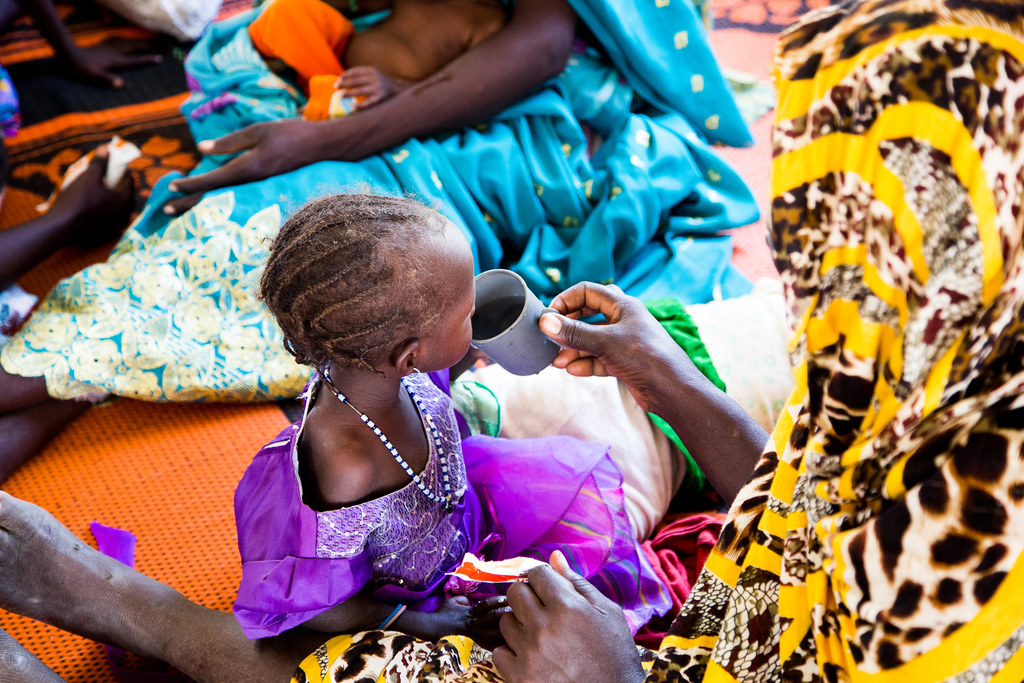
In addition to the investments made in disaster preparedness, the EU's contributions in 2023 also allowed WFP to provide cash assistance to 82,000 of the 97,000 Malian refugees living in the Mbera camp. This support was crucial to address food insecurity among Malian refugees, as well as address malnutrition among children living in Mbera.
The WFP programmes in the Mbera camp have been a lifeline for vulnerable Malian refugees for over ten years. This assistance is made up of cash transfers and in-kind food assistance. In addition, WFP provides emergency school feeding as well as malnutrition treatment and management services, specifically targeting children aged 6 to 59 months, as well as pregnant and breastfeeding women and girls.
"Long-term partnerships, like the one we share with the EU, are essential to creating a lasting impact. Together, we are forging a future where hunger and vulnerability do not dictate destiny. For 2024, our goal is clear: work hand in hand with our partners to eradicate hunger and build resilient communities. Thanks to the EU, we're turning solidarity into concrete action, ensuring a brighter future for those who need it most," added Ms. Kinday Samba.
(With Inputs from APO)
ALSO READ
-
€40m Boost Opens New Doors for Cultural and Creative Businesses in Belgium
-
Belize Communities Take the Lead in New Push for Jobs, Skills and Stronger Futures
-
Hotter Years, More Cavities? Understanding Link Between Climate and Dental Health
-
Europe’s Rare Earth Wake-Up Call: Turning Years of Research Into Factories That Last
-
Lebanon’s Small Business Owners Build Skills and Market Links With EU and ILO Support


 Google News