

Sri Lanka Easter Day blasts: How celebrations turned in ruthless bloodshed, who did it
- Country:
- Sri Lanka
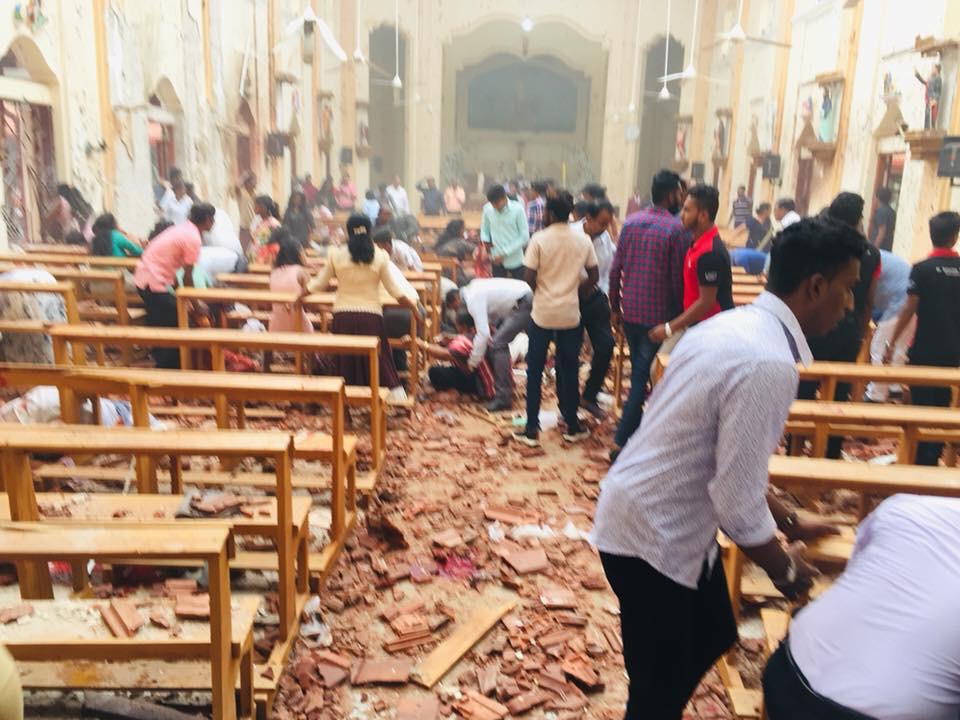
Bomb blasts during Easter celebrations at three Sri Lankan churches and three luxury hotels have killed 290 people and wounded more than 400, according to officials. Nine foreigners were among the dead, the officials said.
The blasts targeted St Anthony's Church in Colombo, St Sebastian's Church in the western coastal town of Negombo and another church in the eastern town of Batticaloa around 8.45 a.m. (local time) as the Easter Sunday mass were in progress, police spokesman Ruwan Gunasekera said.
The three hotels hit were the Shangri-La Colombo, Kingsbury Hotel in Colombo and the Cinnamon Grand Colombo. It was unclear whether there were any casualties in the hotels.
The Sri Lankan government has now summoned an emergency meeting. All necessary emergency steps have been taken by the government, a minister said, adding that an official statement will be issued soon.
The riot police and the Special Task Force, extra police security has been deployed around the airport, state-run Daily Times reported.
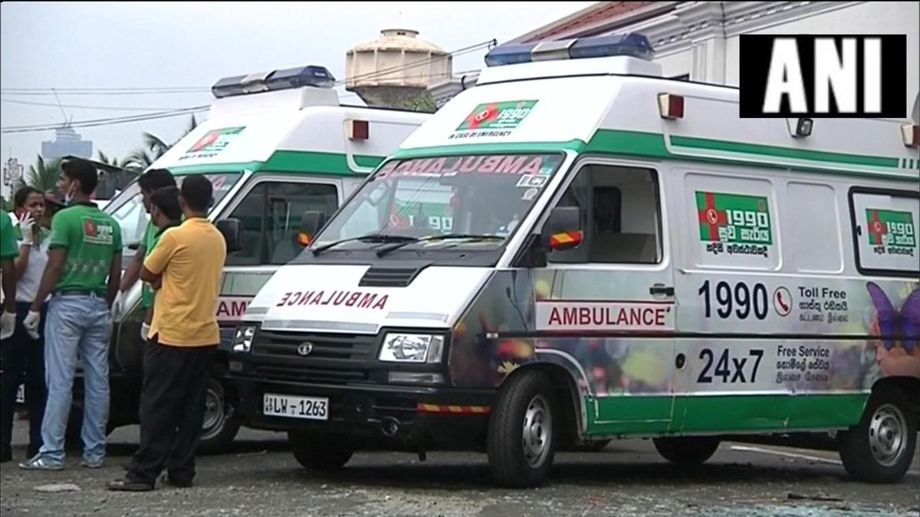
Leave of all police personnel has been cancelled in the wake of blasts. Doctors, nurses and health officials who were on leave have been asked to report to work, Health Ministry sources said. The government schools have been closed for Monday and Tuesday.
No group or individual has claimed the responsibility for the attack.
Warning Ignored?
As per Ruwan Wijewardena, Defence Minister, the blasts are a terrorist attack by religious extremists, though there was no immediate claim of responsibility. Police have arrested 24 suspects. An intelligence alert to top officers was issued 10 days ago, warning that suicide bomber planning to hit churches. "A foreign intelligence agency has reported that the NTJ (National Thowheeth Jama'ath) is planning to carry out suicide attacks targeting prominent churches as well as the Indian high commission in Colombo," the alert said.
The NTJ is a radical Muslim group in Sri Lanka that was linked last year to the vandalism of Buddhist statues. Key intelligence on a possible terrorist attack was not passed onto the Sri Lankan government weeks before the attack. Prime Minister Ranil Wickremesinghe acknowledged late on Sunday that "information was there" about possible attacks, adding that "we must also look into why adequate precautions were not taken."
Attacks on Minorities
Out of Sri Lanka's total population of around 22 million, 70 percent are Buddhist, 12.6 percent Hindu, 9.7 percent Muslim and 7.6 percent Christian, according to the country's 2012 census. Sri Lanka has regularly witnessed various crimes against minorities in past, last year alone, there were 86 verified incidents of discrimination, threats, and violence against Christians, according to the National Christian Evangelical Alliance of Sri Lanka (NCEASL), which represents more than 200 churches and other Christian organisations.
U.S. State Department, in its 2018 report on Sri Lanka's human rights, had said that Buddhist monks regularly tried to close down Christian and Muslim places of worship, citing unidentified sources.
President calls a meeting of National Security Council
A government source said President Maithripala Sirisena, who was abroad when the attacks happened, had called a meeting of the National Security Council early on Monday. Prime Minister Ranil Wickremesinghe would attend the meeting, the source said. There were fears the attacks could spark a renewal of communal violence, with police reporting late on Sunday there had been a petrol bomb attack on a mosque in the northwest and arson attacks on two shops owned by Muslims in the west.
Sri Lanka had been at war for decades with Tamil separatists but extremist violence had been on the wane since the civil war ended 10 years ago. The South Asian nation of about 22 million people has Christian, Muslim and Hindu populations of between about eight and 12 percent.
The island-wide curfew imposed by the government was lifted early on Monday, although there was uncharacteristically thin traffic in the normally bustling capital. Soldiers armed with automatic weapons stood guard outside major hotels and the World Trade Centre in the business district, where the four hotels were targeted on Easter Sunday, according to a Reuters witness.
Scores of people who were stranded overnight at the main airport began making their way home as restrictions were lifted. The government also blocked access to social media and messaging sites, including Facebook and WhatsApp, making information hard to come by.
Wickremesinghe acknowledged on Sunday that the government had some prior information about possible attacks on churches involving a little-known Islamist group, but said ministers had not been told. Sri Lankans accounted for the bulk of the 290 people killed and 500 wounded, although government officials said 32 foreigners were also killed. These included British, U.S., Turkish, Indian, Chinese, Danish, Dutch and Portuguese nations.
A British mother and son eating breakfast at the luxury Shangri-La hotel were among those killed, Britain's The Telegraph newspaper reported. One Australian survivor, identified only as Sam, told Australia's 3AW radio the hotel was a scene of "absolute carnage".
He said he and a travel partner were also having breakfast at the Shangri-La when two blasts went off. He said he had seen two men wearing backpacks seconds before the blasts. "There were people screaming and dead bodies all around," he said. "Kids crying, kids on the ground, I don't know if they were dead or not, just crazy."
There were similar scenes of carnage at two churches in or near Colombo, and a third church in the northeast town of Batticaloa, where worshippers had gathered for Easter Sunday services. Pictures from the scene showed bodies on the ground and blood-spattered pews and statues. Dozens were killed in one of the blasts at the Gothic-style St. Sebastian church in Katuwapitiya, north of Colombo. Police said they suspected that blast was a suicide attack. Three police officers were also killed when security forces raided a house in Colombo several hours after the attacks. Police reported an explosion at the house.


 Google News