

Virus outbreak could spin 'out of control' in South Sudan
Days later, hardly able to breathe, the 33-year-old doctor discovered just how poorly equipped his country is for the coronavirus pandemic: None of the public facilities he tried in the capital, Juba, had oxygen supplies available until he reached South Sudan's only permanent infectious disease unit, which has fewer than 100 beds for a country of 12 million people. It took more than an hour to admit him.
- Country:
- South Sudan
It began with a dry cough, weakness, and back pain. For Reagan Taban Augustino, part of South Sudan's small corps of health workers trained in treating COVID-19 patients, there was little doubt what he had. Days later, hardly able to breathe, the 33-year-old doctor discovered just how poorly equipped his country is for the coronavirus pandemic: None of the public facilities he tried in the capital, Juba, had oxygen supplies available until he reached South Sudan's only permanent infectious disease unit, which has fewer than 100 beds for a country of 12 million people.
It took more than an hour to admit him. "I was almost dying at the gate," he told The Associated Press from the unit last week. The pandemic is now accelerating in Africa, the World Health Organization says. While the continent had more time than Europe and the United States to prepare before its first case was confirmed on February 14, experts feared many of its health systems would eventually become overwhelmed.
South Sudan, a nation with more military generals than doctors, never had a fighting chance. Five years of civil war and corruption stripped away much of its health system, and today nongovernmental organizations provide the majority of care. Nearly half of the population was hungry before the pandemic. Deadly insecurity continues, and a locust outbreak arrived just weeks before the virus.
When world leaders talk about the pandemic not being over until it's over everywhere, they are talking about places like South Sudan. The United Nations says the country's outbreak is growing rapidly, with nearly 1,900 cases, including more than 50 health workers infected, more than 30 deaths, and no way to know the true number of infections. At one point several members of the COVID-19 task force tested positive, including Vice President Riek Machar.
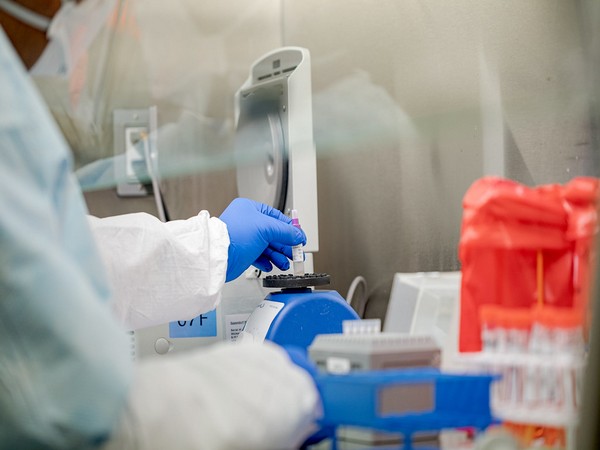
"It can be out of control at any time," said David Gai Zakayo, a doctor with the aid group Action Against Hunger. "The groups we are treating are malnourished," Zakayo said. "My big worry is if the virus begins spreading to those groups we are treating, it will be a disaster." At South Sudan's only laboratory that tests for the virus, supervisor Simon Deng Nyichar said the team of 16 works up to 16-hour days slogging through a backlog of more than 5,000 tests. Around 9,000 samples have been tested since early April when the country became one of the last in Africa to confirm a coronavirus case.
With materials in short supply, testing is largely limited to people with symptoms of COVID-19. It can take weeks to receive results, "creating mistrust in communities and resentment toward contact tracers," the Health Ministry said last week. Three lab workers have been infected and recovered, Nyichar told the AP. "This is the nature of our work. We are not scared of the disease." With long hours, they work in pairs to stay sharp. "It's a must for everybody to have a buddy as a helper to monitor all the steps on the dos and don'ts, otherwise we would have infected all of us," he said.


 Google News