

What you need to know about the coronavirus right now
High infection rates also give the virus more opportunities to mutate. South Korea to deploy Pfizer COVID-19 pills South Korea will begin treating coronavirus patients with Pfizer's antiviral pills on Friday, health officials said, as concern mounts over the spread of the highly contagious Omicron variant.
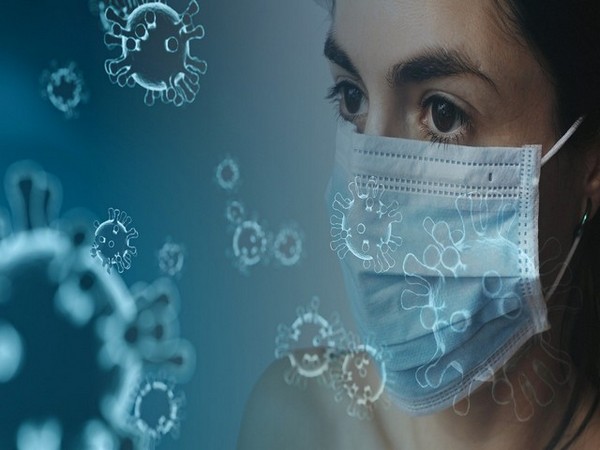
Here's what you need to know about the coronavirus right now: Another Chinese city detects Omicron case
The Chinese port city of Tianjin reported an increase in COVID-19 infections on Thursday as it stepped up efforts to rein in an outbreak that has spread the highly transmissible Omicron variant to another Chinese city, Dalian in the northeast. Across China, several cities have ordered quarantine for anyone who has recently visited Tianjin or Anyang in central Henan province. Many cities, including Beijing, are encouraging people to stay put during the Lunar New Year holiday, typically the busiest time of year for travel.
Why you should still try to avoid catching Omicron Here is why experts say it is not time to be complacent about Omicron: The extraordinary spread of Omicron in many countries means that in absolute numbers, more people will experience severe disease. You might become only mildly ill, but you could pass the virus to someone else at risk for critical illness.
"People who underestimate Omicron as 'mild' are putting themselves at risk of a debilitating disease that can linger for months or years," said Akiko Iwasaki, who studies viral immunology at Yale University. Omicron treatments are so limited that doctors must ration them. Due to record numbers of infected patients, hospitals have had to postpone elective surgeries and cancer treatments. High infection rates also give the virus more opportunities to mutate.
South Korea to deploy Pfizer COVID-19 pills South Korea will begin treating coronavirus patients with Pfizer's antiviral pills on Friday, health officials said, as concern mounts over the spread of the highly contagious Omicron variant. At least 21,000 of the pills, called Paxlovid, will arrive on Thursday and be sent out to some 280 pharmacies and 90 residential treatment centers, the Korea Disease Control and Prevention Agency (KDCA) said.
Paxlovid was nearly 90% effective in preventing hospitalizations and deaths in patients at high risk of severe illness, and data suggested it retains its effectiveness against Omicron, Pfizer has said. Americans grapple with prolonged testing woes
Long lines snake around entire city blocks as Americans scramble to get tested for COVID-19. At-home testing kits fly off the shelves at pharmacies and drug stores. Demand that surged before the holidays has yet to subside in the new year. Due in part to increased demand, some labs have said that tests are taking longer to process. Staffing has been an issue at some labs. "Laboratory scientists are getting sick, like everyone else," said Scott Becker, chief executive of the Association of Public Health Laboratories (APHL), representing 150 state and local public health laboratories.
The experimental clip-on device finds virus particles in the air A small experimental device designed to be attached to clothing may be able to tell whether the wearer has been exposed to SARS-CoV-2 particles in the air, researchers said.
The device, called the Fresh Air Clip, continually collects airborne aerosols, including droplets carrying the virus, on a silicone surface, according to a report published on Tuesday in Environmental Science & Technology Letters. More research is needed to confirm its effectiveness before the device can be sold commercially, the researchers noted. But it could prove useful in "real-world high-risk settings".


 Google News