

UNHCR Warns of Rising Ebola Risk for Displaced Families
Health workers and aid agencies are facing additional challenges as fear and misinformation spread among communities already dealing with trauma, insecurity, and limited access to basic services.
The UN Refugee Agency (UNHCR) has expressed growing concern over the rapid spread of Bundibugyo Ebola virus disease in eastern Democratic Republic of the Congo (DRC), warning that displaced communities face increasing risks as the outbreak expands.
As of mid-June, nearly 900 confirmed cases and more than 230 deaths had been reported across 31 health zones in the DRC. Uganda has also recorded cases and fatalities linked to the outbreak. While no refugees have been infected so far, humanitarian agencies fear the situation could worsen as population movements continue across affected areas.
The outbreak is unfolding in regions already struggling with armed conflict and large-scale displacement. More than two million forcibly displaced people, including over 320,000 refugees, live in areas considered at risk. Ongoing insecurity is forcing families to move frequently, creating conditions that can complicate disease surveillance and containment efforts.
Fear and Misinformation Hamper Response Efforts
Health workers and aid agencies are facing additional challenges as fear and misinformation spread among communities already dealing with trauma, insecurity, and limited access to basic services.
In early June, more than 2,000 people fled from areas near Beni, one of the outbreak's main hotspots, after armed group activity triggered panic. Many sought refuge in locations that are themselves affected by Ebola, increasing concerns about potential transmission.
Distrust of health authorities has also created obstacles for response teams. Following two Ebola-related deaths at a displacement site in Ituri Province, some displaced residents temporarily blocked access for health workers. Humanitarian officials say incidents like these highlight the importance of community engagement and trust-building during public health emergencies.
UNHCR warns that delays in seeking treatment, reluctance to cooperate with health teams, and the spread of false information can significantly increase the risks associated with the outbreak.
Regional Preparedness Efforts Intensify
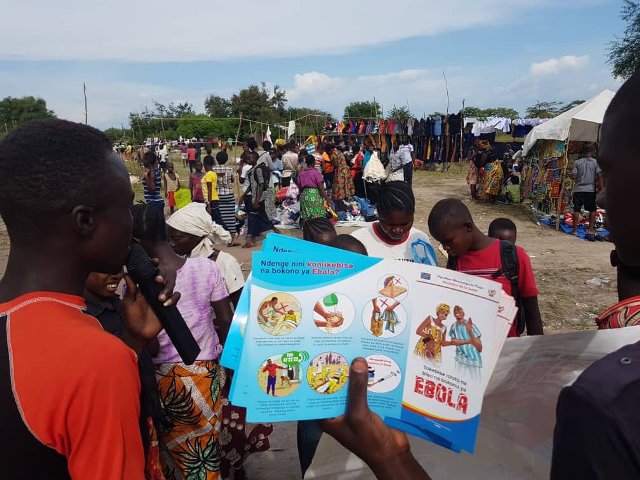
To help contain the disease, UNHCR is supporting government-led response plans and working closely with local communities. In recent days, more than 100 community leaders received training on Ebola prevention and awareness, enabling them to share health information in local languages and through trusted community networks.
Refugees have also played an active role in prevention efforts. In areas near the South Sudan border, trained refugee volunteers have helped install chlorinated handwashing stations in communities hosting displaced populations.
The threat extends beyond the DRC. Eastern Congo is closely connected to neighboring countries through trade routes, family networks, and refugee movements. As a result, UNHCR is strengthening preparedness efforts in Uganda, Rwanda, Burundi, South Sudan, and Tanzania by supporting health screening, surveillance systems, sanitation programs, and public awareness campaigns.
The agency cautions against border closures as a response to the outbreak, arguing that such measures can push people toward unofficial crossing points where health monitoring becomes far more difficult. Instead, UNHCR is advocating for effective screening, referral systems, and continued access to asylum for those seeking protection.
To support these efforts, UNHCR is seeking $14 million in funding for Ebola preparedness and response activities between July and November. The resources would help strengthen health services, improve sanitation infrastructure, support frontline workers, expand isolation and referral capacity, and ensure displaced communities remain fully included in national public health responses.
UNHCR says the response must grow alongside the outbreak while continuing to protect access to essential services such as healthcare, education, and support for survivors of gender-based violence.


 Google News