

Cyclone Kenneth leaves thousands in need of health aid in Mozambique
The World Health Organization (WHO) is conducting evaluations, alongside the Ministry of Health, to generate the most up-to-date health information.
- Country:
- Mozambique
A week after bringing havoc to Mozambique, Cyclone Kenneth has left drastic aftermath in the north-eastern province of Cabo Delgado. Cyclone Kenneth struck at highly populated areas of Pemba on 25th April which led to widespread destruction and displacement. Already fragile health system of Mozambique is in extreme pressure as the number of patients is continuously on increasing.
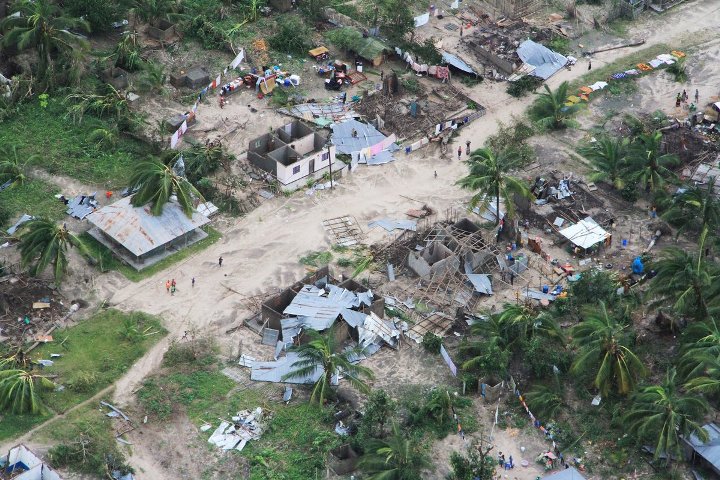
At least 188,676 people are in need of health assistance or are at risk of disease. At least 17 health facilities are damaged and the number is expected to increase as inaccessible areas open up. In the worst-affected districts of Quissanga, Macomia and Ibo, entire villages are reportedly devastated with up to 4,199 houses destroyed and over 38,000 partially damaged.
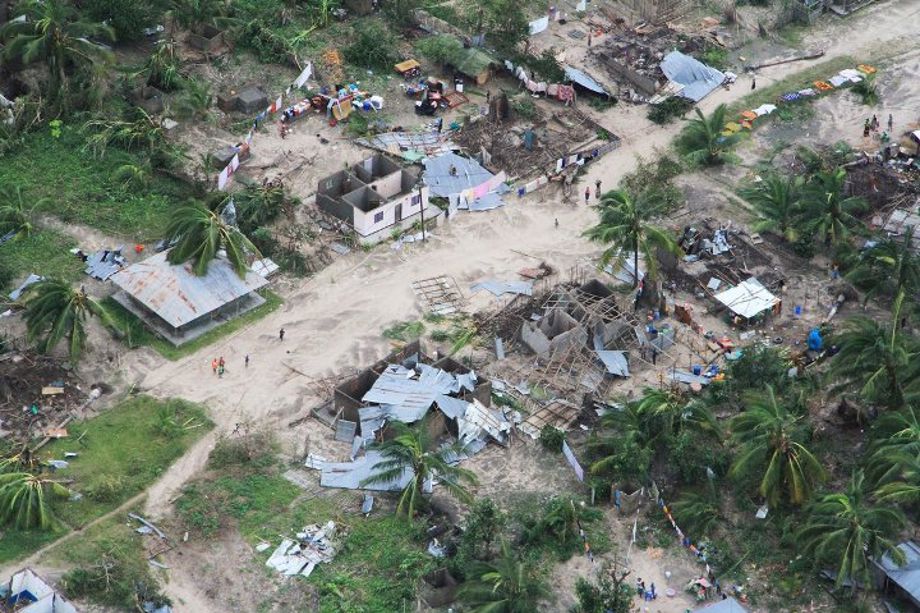
Cyclone Kenneth Sway away entire villages in Pemba region.
The situation of people in villages along the coast is similar, such as Ponta Pangane and Mucojo, which are also beach attractions. The deluge of rains over the past three days has flooded many parts of Pemba city and the districts of Mecuge and Mecufi.
Due to the lack of accessibility, the full extent of damage to the health system and the heightened health risks is not yet known. The World Health Organization (WHO) is conducting evaluations, alongside the Ministry of Health, to generate the most up-to-date health information.
While heavy rains and flooding continued, WHO and UNICEF sent tents, a water purification unit, body bags, disposable gloves and water purification powder, enough to purify 1,000,000 litres of drinking water.
A WHO team of epidemiologists, public health specialists and logisticians originally deployed to Beira in response to Cyclone Idai, which left more than 1,000 people dead, have been re-deployed to Cabo Delgado to assess cyclone Kenneth's impact on people's health.
Due to the heavy rains and latrine exposure, the Provincial Health Directorate is stepping up efforts for a cholera treatment centre in Pemba and Macomia as a preparatory measure. They will also set up a field hospital in Macomia with support from Medecins Sans Frontieres (MSF), equipped with one month of supplies.
"There is still time to manage the risk of cholera, but we need to act now," says Dr Djamila Cabral, WHO Representative in Mozambique. "We had an incredibly quick response in Beira, and we need to do the same work in Cabo Delgado."
A cholera risk assessment will be conducted for Cabo Delgado Province and the priority districts to determine urgent needs for medical supplies, where cholera treatment centres and oral rehydration posts are needed and which populations to target for vaccinations in case of need.
WHO and the Provincial Health Directorate have created disaster response subcommittees for epidemiological surveillance, logistics, management of medicines and health supplies, communication, immunization, human resources, endemic diseases and data management.
Unlike Cyclone Idai - which claimed hundreds of lives and flooded vast swathes of southern Mozambique six weeks ago - the latest storm hit a mainly rural region north of the city of Pemba. Cyclone Idai killed 493 people in Mozambique in which 1.85 million people were affected. UN humanitarian chief Mark Lowcock has urged for more funds to help victims.


 Google News