

UNSC reform process slow as nations holding "very powerful positions" yet to agree to "cede power": PGA Muhammad-Bande
Progress in the UN Security Council reform process has been slow as those nations holding "very powerful positions" still have to agree to "cede power" and the process has been further slowed due to the COVID-19 pandemic, UN General Assembly President Tijjani Muhammad-Bande has said.
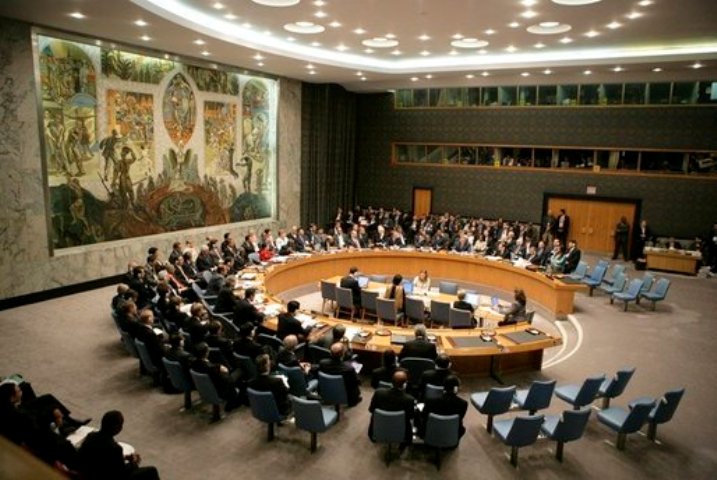
Progress in the UN Security Council reform process has been slow as those nations holding "very powerful positions" still have to agree to "cede power" and the process has been further slowed due to the COVID-19 pandemic, UN General Assembly President Tijjani Muhammad-Bande has said. Security Council reform has been deemed necessary for decades as the structure of the most powerful organ of the UN has remained largely unchanged since the UN was founded in 1945.
India has been at the forefront of the years-long efforts to reform the Security Council saying it rightly deserves a place as a permanent member of the Council, which in its current form does not represent the geo-political realities of the 21st Century. "I think progress has been slow because the undertaking itself is not an easy one. Those who are holding very powerful positions through the construct of 1945 still have to agree to cede power and this has not appeared to be something that they want to do, even though everybody says let us reform. So it is difficult in that regard," Muhammad-Bande told PTI in an interview here. He said there are also all kinds of new divisions that are making it even more difficult, but while progress has been slow, it's not like no progress has been made. The UN General Assembly President was responding to a question on the slow pace of the Security Council reforms. He said that in the 74th session of the General Assembly, there have been some movement in terms of clusters.
However due to the COVID-19 pandemic, most work of the UN moved to a virtual platform. "Now the issue is that negotiations are always difficult but they're even more difficult when they have to be conducted virtually and the kind of negotiations we are talking about by a common agreement cannot really be advanced through virtual meetings. So that has slowed the work for this year," he said in the interview last week. Muhammad-Bande said President of the 75th session of the General Assembly Volkan Bozkir is "committed" and member states are very keen to make progress on UN reforms. "It is not something that can be concluded within a year from now but I can tell you the current efforts building from the (previous) efforts, I think some progress has been made. Unfortunately, the (COVID19) situation did not allow for further progress." India overwhelmingly won its election to the powerful Security Council as a non-permanent member for a two-year term that will begin in January 2021. It garnered 184 votes out of the 192 ballots cast in the UN General Assembly last month.
Meetings of the Intergovernmental Negotiations to discuss UN Security Council reforms were postponed in May "until further notice" as in-person meetings at the UN headquarters remain suspended due to COVID-19, dealing a huge blow to the already long-stalled process of reforming and expanding the powerful UN organ. In a letter to Muhammad-Bande, IGN co-chairs Permanent Representative of the United Arab Emirates to the United Nations Ambassador Lana Nusseibeh and Polish Ambassador to the UN Joanna Wronecka said Member States preferred in-person meetings for IGN. "In light of this, and having considered the pros and cons of other options, we have decided to postpone our scheduled meetings until further notice." Muhammad-Bande stressed that like any other organisation, the UN can improve and there have been long conversations concerning its improvement in terms of its legitimacy, effectiveness, value for money issues. "But it has taken on this conversation very seriously. There are reforms going on in the various organs of the UN system," he said.
He said in terms of leading the response, the UN has been a very early supporter of connecting with others to reduce vulnerabilities and the UN has led the call to action naturally, whether it is to deal with conflicts or support the idea of availability of vaccines when they are produced. Muhammad-Bande, whose tenure as General Assembly President will end in September after a year that has been overshadowed by the COVID-19 pandemic, said that he commends the UN officers and heads of the various principal organs who insisted that "we must continue to work. And that is the expectation. When there is a problem we don't just disappear. And I think, difficult as it has been, we have been able to adapt, where possible, to allow work to continue. But of course, it is not exactly as we have done before naturally." The pandemic has also brought to the fore both the challenges and promise of technology. Having focussed on issues of education, poverty and inclusion, he said in some countries school children and university students were able to continue their education and instruction with minimal disruption amid the COVID -19 pandemic but in some nations there is absolutely no capacity for virtual learning, "which is unfortunate." Muhammad-Bande has been a preeminent scholar and was Vice-Chancellor of Usmanu Danfodiyo University, Nigeria in 2004. During his tenure as Vice Chancellor, the University, with about 20,000 full-time students in various faculties, ranked first in the accreditation of academic programmes in Nigerian universities (2007).
"So it brings to the fore my other element of education and inclusion. And I think again this reality has dawned heavily on us," amid the pandemic and "this is a remarkable time to help steer responses of the system given the reality we have faced since February." PTI YAS RUP RUP RUP.
ALSO READ
-
Clean Cooking Takes Centre Stage as Africa Pushes to Protect Nearly a Billion Lives
-
Aid Under Pressure: Global Leaders Call for Local Control and Recovery From Day One
-
AfDB and GCERF Join Forces to Link Community Peace Efforts With Investment in Africa
-
EIB- UNDP €15 Million Partnership Backs Recovery for Communities in Crisis
-
Women’s Power Is Being Cut Back: UN Warns Gender Equality Remains 171 Years Away


 Google News