

Quad Ministers Affirm India's Hosting of Summit Amid Rising Tensions in Indo-Pacific
The foreign ministers of Quad countries reaffirmed India's hosting of the Quad Summit later this year, expressing concerns over security in the Indo-Pacific region amid tensions involving China. They outlined cooperation on maritime security, emerging technologies, and humanitarian efforts to support regional stability and prosperity.
- Country:
- Japan
The foreign ministers of Quad countries—Australia, India, Japan, and the US—reaffirmed on Monday that India will host the Summit later this year. A joint statement issued after the Tokyo meeting said, 'We look forward to India hosting the next Quad Leaders' Summit later this year, and to the United States hosting the next Quad Foreign Ministers' meeting in 2025.'
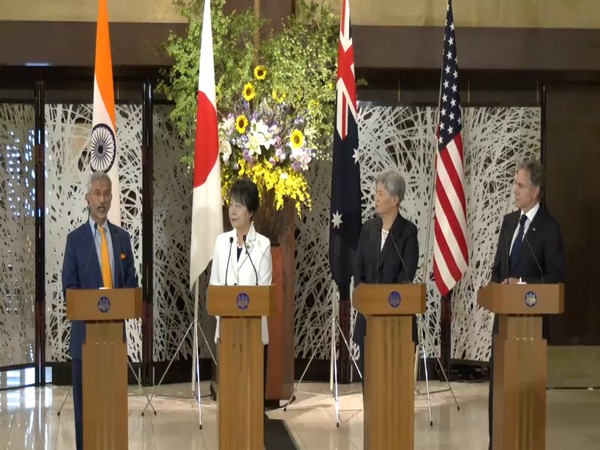
External Affairs Minister S. Jaishankar, Japan’s Foreign Minister Yoko Kamikawa, Australia’s Foreign Affairs Minister Penny Wong, and US Secretary of State Antony Blinken attended the Quad foreign ministers' meeting on July 29 in Tokyo. During a White House briefing on July 25, US National Security Communications Advisor John Kirby reiterated President Joe Biden's commitment to the Quad Summit in India, though he noted that no dates have been scheduled yet.
With the US presidential elections slated for November, Biden has been influential in elevating the Quad's status by including national leaders in the discussions. The first in-person Quad summit was hosted by the White House on September 24, 2021, following an online meeting in March 2021 due to the Covid-19 pandemic.
The joint statement expressed concerns over China's actions in Taiwan and the South China Sea, reaffirming their opposition to any unilateral attempts to alter the status quo by force. The Quad foreign ministers also announced the launch of a maritime legal dialogue and committed to upholding international maritime law.
Highlighting their focus on regional cooperation, the Quad aims to address challenges like maritime security, cyber security, climate change, and health issues. They emphasized their commitment to a free and open Indo-Pacific, respecting international law and promoting regional stability.


 Google News