

US Supreme Court scrutinizes anti-camping laws used against the homeless
The justices heard arguments in an appeal by Grants Pass, Oregon of a lower court's ruling that enforcing the city's anti-camping ordinances against homeless people when there is no shelter space available violates the U.S. Constitution's Eighth Amendment prohibition on cruel and unusual punishments. The nine justices waded into the complex societal problem of homelessness that continues to vex public officials nationwide as municipalities face chronic shortages of affordable housing.
- Country:
- United States
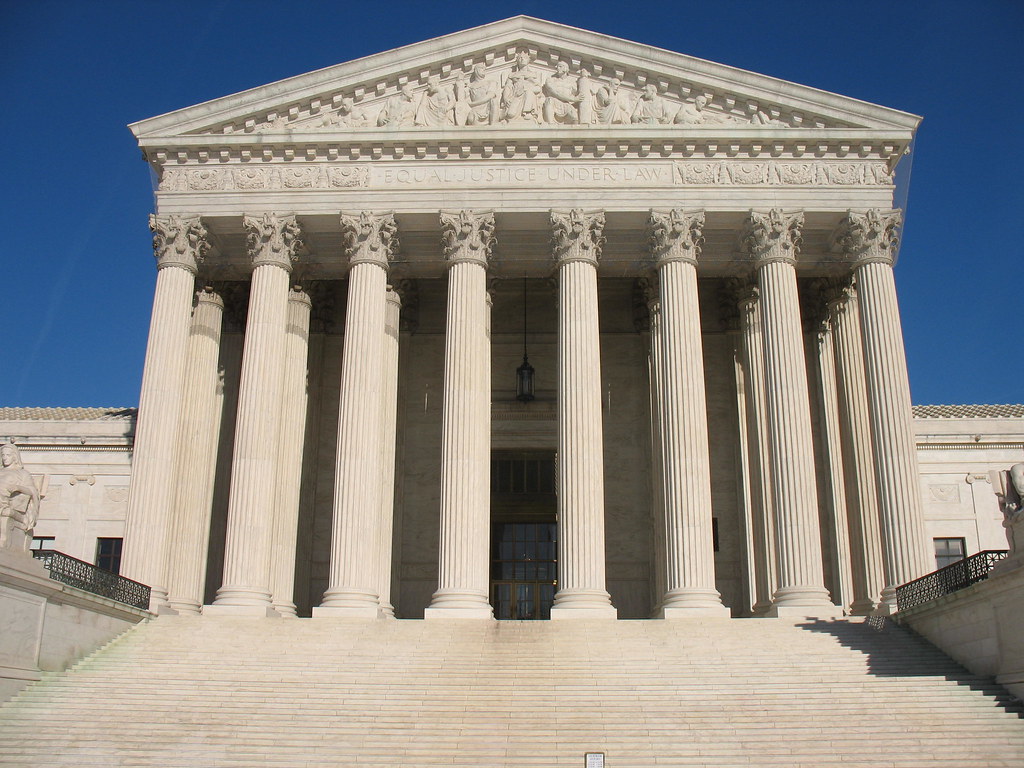
The U.S. Supreme Court on Monday confronted the nation's homelessness crisis, wrestling with the legality of local laws that are used against people camping on public streets and parks in a case involving a southwest Oregon city's vagrancy policy. The justices heard arguments in an appeal by Grants Pass, Oregon of a lower court's ruling that enforcing the city's anti-camping ordinances against homeless people when there is no shelter space available violates the U.S. Constitution's Eighth Amendment prohibition on cruel and unusual punishments.
The nine justices waded into the complex societal problem of homelessness that continues to vex public officials nationwide as municipalities face chronic shortages of affordable housing. On any given night in the United States, more than 600,000 people are homeless, according to U.S. government estimates. The case is focused on three ordinances in Grants Pass, a city of roughly 38,000 people, that target sleeping and camping in public streets, alleyways and parks. Violators are fined $295, and repeat offenders can be criminally prosecuted for trespass, punishable by up to 30 days in jail.
"Where do we put them if every city, every village, every town lacks compassion and passes a law identical to this? Where are they supposed to sleep? Are they supposed to kill themselves, not sleeping?" liberal Justice Sonia Sotomayor asked Theane Evangelis, a lawyer for Grants Pass. "This is a complicated policy question," Evangelis responded.
Sotomayor interrupted her, asking, "What's so complicated about letting someone, somewhere, sleep with a blanket in the outside if they have nowhere to sleep?" Liberal Justice Elena Kagan told Evangelis that the city's ordinance "goes way beyond" seeking to address encampments and public safety and makes it so a homeless person "can't take a blanket and sleep some place without it being a crime."
"It seems like you are criminalizing a status," Kagan added. Advocates for the homeless, various liberal legal groups and other critics have said laws like these criminalize people simply for being homeless and for actions thee cannot avoid, such as sleeping in public. They point to a 1962 Supreme Court ruling that the Eighth Amendment barred punishing individuals based on their status.
Conservative Chief Justice John Roberts told Kelsi Corkran, the lawyer arguing for the plaintiffs: "A number of us, I think, are having difficulty with the distinction between status and conduct." "You can remove the homeless status in an instant if you move to a shelter, or situations otherwise change. And, of course, it can moved the other way as well, if you're kicked out of the shelter or whatever," Roberts added.
Corkran told the justices that the ordinances "make people with the status (of homelessness) endlessly and unavoidably punishable if they don't leave Grants Pass. Indeed, all the ordinances do is turn the city's homelessness problem into someone else's problem by forcing its homeless residents into other jurisdictions." Proponents including various government officials have said the laws are a needed tool for maintaining public safety.
'FAILED EXPERIMENT' Evangelis asked the justices to overturn the lower court's ruling, which she called a "failed experiment which has fueled the spread of encampments while harming those it purports to protect."
Roberts asked Evangelis what would happen in Grants Pass if its ordinances remain blocked. "The city's hands will be tied. It will be forced to surrender its public spaces, as it (already) has been," Evangelis said.
Conservative Justice Samuel Alito wondered what police officers would have to do on a day-to-day basis in dealing with homeless people in cities where there is a finite number of beds in shelters available for them. The case, which began in 2018, involved three homeless people who filed a class-action lawsuit seeking to block the measures impacting them in Grants Pass. One of the plaintiffs has since died.
U.S. Magistrate Judge Mark Clarke in Medford, Oregon ruled that the Grants Pass "policy and practice of punishing homelessness" by prohibiting sleeping outside while using a blanket or bedding, violates the Eighth Amendment. The city had defended itself in the case in part by noting that homeless people have alternatives outside the city, including nearby undeveloped federal land, county campsites or state rest stops.
The San Francisco-based 9th U.S. Circuit Court of Appeals in 2022 upheld Clarke's injunction against enforcing the anti-camping ordinances "for the mere act of sleeping outside with rudimentary protection from the elements, or for sleeping in their car at night, when there is no other place in the city for them to go." President Joe Biden's administration agreed with the plaintiffs that Grants Pass cannot enforce an "absolute ban" on sleeping in the city - which effectively criminalizes homelessness - but suggested that the injunction imposed in the case was too broad and should be reconsidered.
Justice Department lawyer Edwin Kneedler, arguing for the administration, said, "Not only is it (sleep) something that everybody engages in, but it's something that everybody has to engage in to be alive. So if you can't sleep, you can't live. And, therefore, by prohibiting sleeping, the city is basically saying, 'You cannot live in Grants Pass.' It's the equivalent of banishment." A ruling is due by the end of June.


 Google News