

Museveni Calls for African Leaders to Address Bottlenecks in Socio-Economic Transformation at 8th ALF
In his address, President Museveni highlighted the importance of adding value to Africa’s raw materials as a means of generating wealth and job opportunities within the continent.
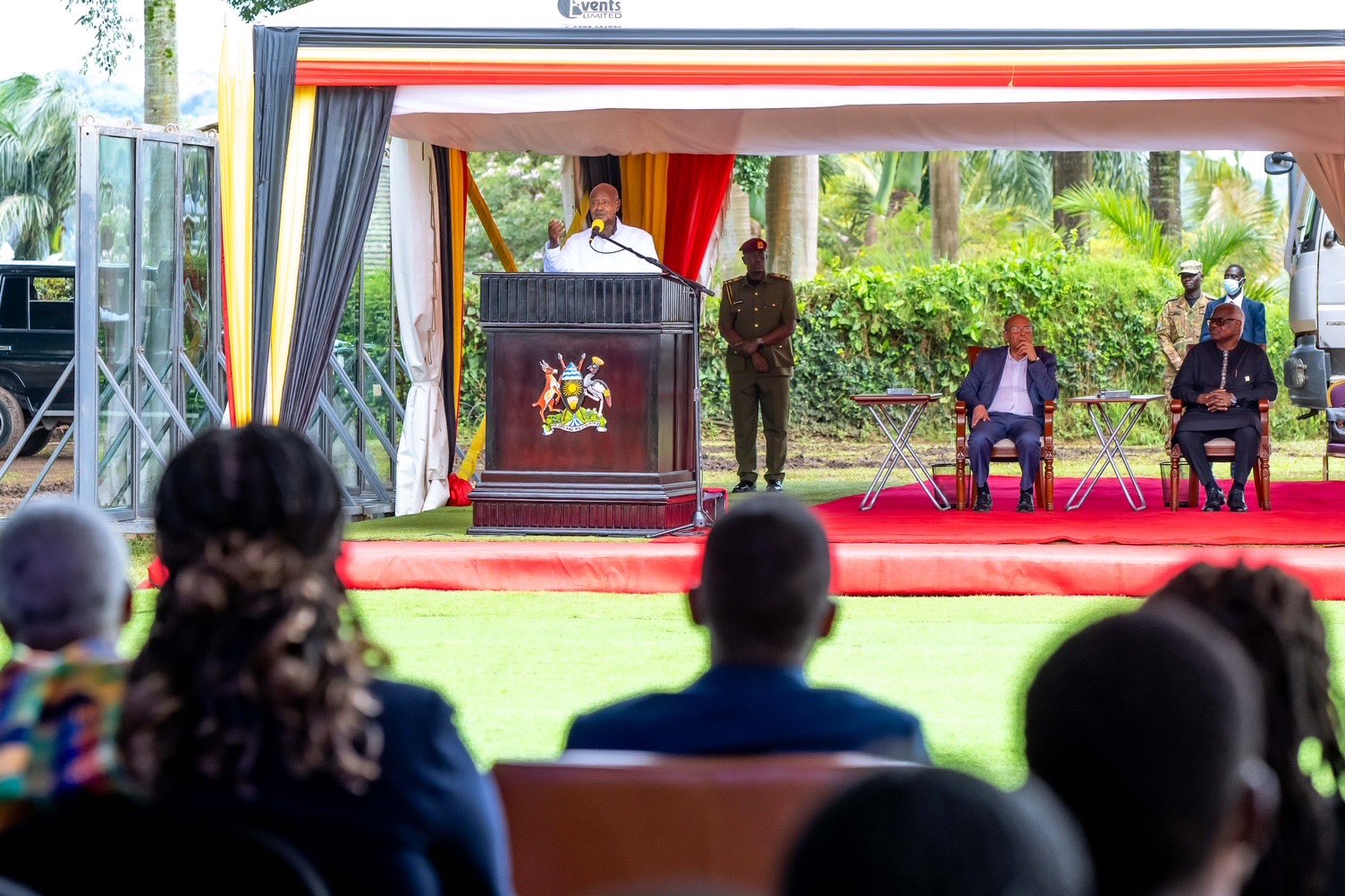
- Country:
- Uganda
At the 8th African Leadership Forum (ALF) held alongside the Eleventh African Regional Forum on Sustainable Development (ARFSD-11), Ugandan President Yoweri Kaguta Museveni urged African leaders to dismantle the continent's socio-economic bottlenecks to pave the way for sustainable development. The forum's theme, "Realizing Sustainable Development Goals in Africa: Progress and Way Forward," highlights the urgency to accelerate efforts toward the UN's 2030 Agenda and the African Union's Agenda 2063.
Co-convened by former Tanzanian President Jakaya Kikwete and former Ethiopian Prime Minister Hailemariam Desalegn, the ALF serves as a platform for leaders to deliberate on Africa's developmental challenges and mobilize action. President Museveni's opening address underscored the need for African nations to focus on value addition, enhancing regional markets, and improving infrastructure as key strategies for socio-economic transformation.
Value Addition: A Path to Wealth Creation
In his address, President Museveni highlighted the importance of adding value to Africa's raw materials as a means of generating wealth and job opportunities within the continent. Using Uganda's coffee exports as an example, he pointed out the significant price difference between raw and processed coffee. While raw coffee fetches only around $2.5 per kilogram, processed coffee can earn up to $40 per kilogram. "Africa donates over $20 to the world for every kilogram," Museveni remarked, emphasizing that the continent loses out on substantial income and job creation by exporting raw materials.
He also cited the example of iron ore, warning against the export of raw minerals like iron ore, recalling an offer to sell Uganda's iron ore to India for a mere $47 per tonne. "Why export raw iron ore? Let it stay in the ground until we're ready to add value here," he stressed.
Expanding Regional Markets and Improving Infrastructure
On the topic of regional markets, Museveni pointed out Uganda's annual milk production of 5.3 billion litres, but only 200 million litres are consumed locally. "We need bigger markets," he said, stressing the importance of improving regional trade networks to ensure local products can reach wider markets across the continent.
The President also underscored the need for improved infrastructure to support regional integration, highlighting the abundance of water resources and potential for rail transport systems. Affordable and efficient transport networks are key to lowering the cost of goods and promoting intra-Africa trade.
Human Capital Development
For Uganda and Africa as a whole to achieve true transformation, Museveni emphasized the importance of developing human capital. "A country cannot transform if its population remains uneducated, unhealthy, and unskilled," he stated. He referenced Uganda's initiatives, such as Entandikwa and Operation Wealth Creation, aimed at moving citizens from subsistence to commercial production.
Challenges Facing African Youth Employment
In a sobering address, Mr. Antonio Pedro, Deputy Executive Secretary of the Economic Commission for Africa (ECA), highlighted the continent's youth unemployment crisis. An estimated 10 to 12 million young Africans enter the workforce each year, but only about 3 million formal jobs are created annually. As a result, over 76 million young Africans are left neither employed nor engaged in education or training.
"Unemployment is not just an economic issue; it threatens peace, social cohesion, and the legitimacy of our development model," Pedro warned. He emphasized that addressing youth unemployment must be a top priority for African governments, as failing to do so could undermine both economic and political stability.
Pedro urged leaders to focus on job creation within their policy agendas, stressing that "without jobs, hope fades. Without hope, stability weakens. And without stability, development becomes impossible."
The Importance of Inclusive Growth
Pedro also advocated for a new social compact that places women and youth at the forefront of Africa's economic transformation. He called on leaders to ensure that these groups are not only included in labor markets but are central to policy design. "Empowering them is not charity; it is a necessity," he remarked.
In his speech, Pedro highlighted the need for structural transformation in Africa's economy. He called for a shift from reliance on raw commodity exports to a model focused on value addition, regional integration, and industrialization. He commended initiatives like the transboundary Special Economic Zone for electric vehicle batteries between the Democratic Republic of the Congo and Zambia, which exemplifies Africa's potential to leverage its mineral resources for regional industrialization.
Advancing Regional Trade and Investment
Pedro underscored the need for Africa to boost intra-regional trade and investment, citing ECA's analysis that reducing tariffs and non-tariff barriers could increase intra-African trade by 45% by 2045, particularly in agro-processing and industrial goods. He called for the full ratification of the African Continental Free Trade Area (AfCFTA) protocols to help unlock the continent's economic potential.
Moreover, Pedro pointed out that Africa must invest in the transport corridors necessary for economic integration. He called for more investments in infrastructure that would facilitate trade between African nations.
Education and Training for Future Markets
Pedro stressed the need for African countries to align their education systems with current and future labor market demands. He advocated for more emphasis on vocational training, public-private partnerships, and entrepreneurship. He also highlighted emerging technologies such as AI and robotics as vital tools for leapfrogging outdated development models.
The Deputy Executive Secretary emphasized that the care economy, particularly in sectors like healthcare and education, offers vast opportunities for creating jobs, especially for women. Countries like Rwanda and Ghana are already pioneering models that integrate healthcare delivery with entrepreneurship, creating numerous employment opportunities.
Overcoming External Challenges
In addressing external challenges, Pedro noted the potential barriers posed by the Environmental, Social, and Governance (ESG) frameworks, which might hinder African producers from accessing global markets. He called for a recalibrated ESG model that takes into account the continent's unique challenges, such as energy access, food security, and job creation, while also promoting African-led sustainability frameworks.
A Call to Action
Finally, both President Museveni and Mr. Pedro stressed the need for immediate action. "At this moment, we are not short of declarations; what we need now is implementation—with urgency and courage," Pedro concluded.
The ALF brought together key Ugandan leaders, including Prime Minister Robinah Nabbanja and former Prime Ministers Ruhakana Rugunda and Amama Mbabazi. The forum served as a vital platform for addressing Africa's developmental challenges and charting a course for a more prosperous and sustainable future.
As Africa continues to grapple with pressing issues like youth unemployment, poor infrastructure, and reliance on raw material exports, leaders like Museveni and Pedro urge action. With political will and regional cooperation, Africa has the potential to overcome its socio-economic bottlenecks and pave the way for a future of inclusive and sustainable growth.


 Google News