

South Africa Positions Itself as Africa’s Digital and Investment Powerhouse
Morolong highlighted South Africa’s enduring economic strength despite global uncertainties, describing the nation as “forging ahead, breaking new ground, and inspiring new ways.”
- Country:
- South Africa
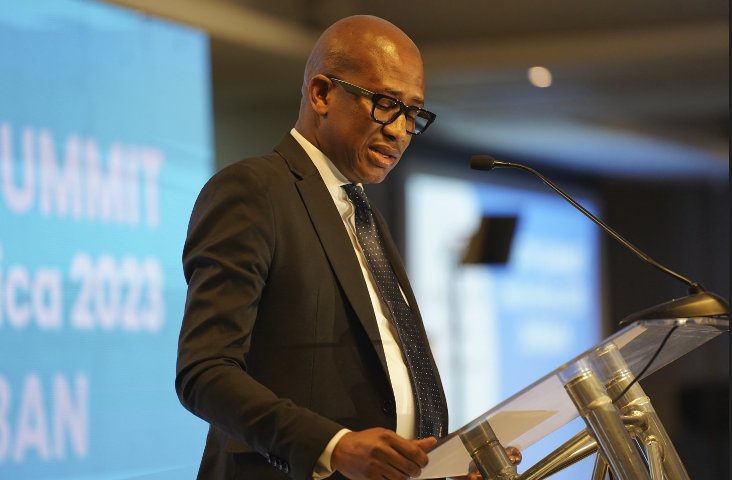
South Africa is emerging as a key driver of Africa's digital and investment future, leveraging its resilient economy, advanced infrastructure, and growing innovation ecosystem to attract global capital and anchor the continent's digital transformation. Speaking at the AFSIC – South Africa Investment Summit in London, Deputy Minister in the Presidency Kenny Morolong underscored the country's growing role as a "gateway and growth engine" for Africa.
Resilience Amid Global Headwinds
Morolong highlighted South Africa's enduring economic strength despite global uncertainties, describing the nation as "forging ahead, breaking new ground, and inspiring new ways." He said the country continues to reform, diversify, and digitise its economy to unlock sustainable growth and create opportunities across multiple sectors.
"Resilience, reinvention and opportunity are the hallmarks of the South African story. We continue to reform, diversify, and digitise our economy, while driving investment into sectors that power inclusive and sustainable growth," Morolong said.
Africa's Most Diversified and Globally Integrated Economy
With a gross domestic product (GDP) of approximately R7 trillion (€348.5 billion), South Africa remains the most industrially diverse and globally integrated economy in Africa. Its robust governance structures, modern transport and energy infrastructure, and sophisticated financial sector continue to attract investors worldwide.
The country hosts over 180 Fortune Global 500 companies, offering a mix of advanced manufacturing, mining, agriculture, finance, and technology industries. Its digital economy is projected to reach 20% of GDP by 2025, nearly double its 2020 contribution, driven by accelerated growth in fintech, cloud computing, e-commerce, and artificial intelligence.
In 2024, South Africa's exports reached R2.04 trillion (€101.7 billion), slightly exceeding imports of R1.94 trillion (€97.1 billion), demonstrating the country's industrial depth and competitive manufacturing base.
A Regional Hub for Digital Connectivity
Morolong noted that digital infrastructure lies at the heart of South Africa's growth strategy, positioning the nation as a continental hub for data traffic and innovation. Massive investments in submarine cable systems — including Seacom 2.0, Equiano, 2Africa, and WACS — now connect South Africa with Europe, Asia, and the Americas, facilitating faster data exchange and improved global connectivity.
At the same time, 4G and 5G networks are rapidly expanding across the country, supported by a booming data centre industry led by firms such as Teraco, Equinix, Africa Data Centres, Vantage, and NTT. These facilities are powering cloud computing, artificial intelligence, and advanced analytics — sectors that form the foundation of the Fourth Industrial Revolution in Africa.
"Our infrastructure investments are laying the foundations of a continental digital corridor that powers innovation, trade, and job creation," Morolong said.
Expanding Investment Horizons
The Deputy Minister invited international investors to take advantage of a range of emerging opportunities within South Africa's digital and green economies. Key focus areas include:
-
Data centres and cloud services
-
Broadband and last-mile connectivity
-
5G-enabled smart infrastructure
-
E-commerce logistics networks
-
Fintech and digital payments
-
Renewable energy for ICT operations
-
Digital skills training and innovation hubs
He noted that South Africa's R900 billion infrastructure pipeline through 2027 — coupled with regulatory reforms and policy stability — has created a predictable, innovation-friendly investment environment.
Gateway to the African Market
Morolong also emphasized South Africa's strategic role within the African Continental Free Trade Area (AfCFTA), which offers investors access to a market of 1.3 billion consumers with a combined GDP exceeding $3 trillion. He described South Africa's advanced banking system, fintech leadership, and ICT networks as critical enablers for cross-border trade and digital commerce.
"South Africa's position allows investors to expand not just into one country, but into the entire African continent," he said. "Our fintech hubs and digital infrastructure form the backbone of Africa's next-generation economy."
A Call for Global Partnerships
In his closing remarks, Morolong reiterated that South Africa's democratic stability, infrastructure renewal, and digital ambitions make it one of the most reliable and forward-looking investment destinations in the developing world.
"South Africa is not merely open for business — we are open and ready for sustainable partnerships," he said. "Together, we can shape a future where South Africa is not just the gateway to Africa, but the driving force of its digital and industrial renaissance."
The Road Ahead
As global investors increasingly look to Africa for growth opportunities, South Africa's blend of economic maturity, digital readiness, and continental access positions it as a natural investment hub. Through its continued focus on technology, skills, and sustainability, the nation is not only transforming its own economy but also helping shape the future of Africa's digital revolution.


 Google News