

NPC Research Focuses on Safeguarding South Africa’s Agricultural Future Amid Climate Threats
As the current NPC Commissioners approach the end of their term in 2026, Pheko reflected on what she hopes to leave behind.
- Country:
- South Africa
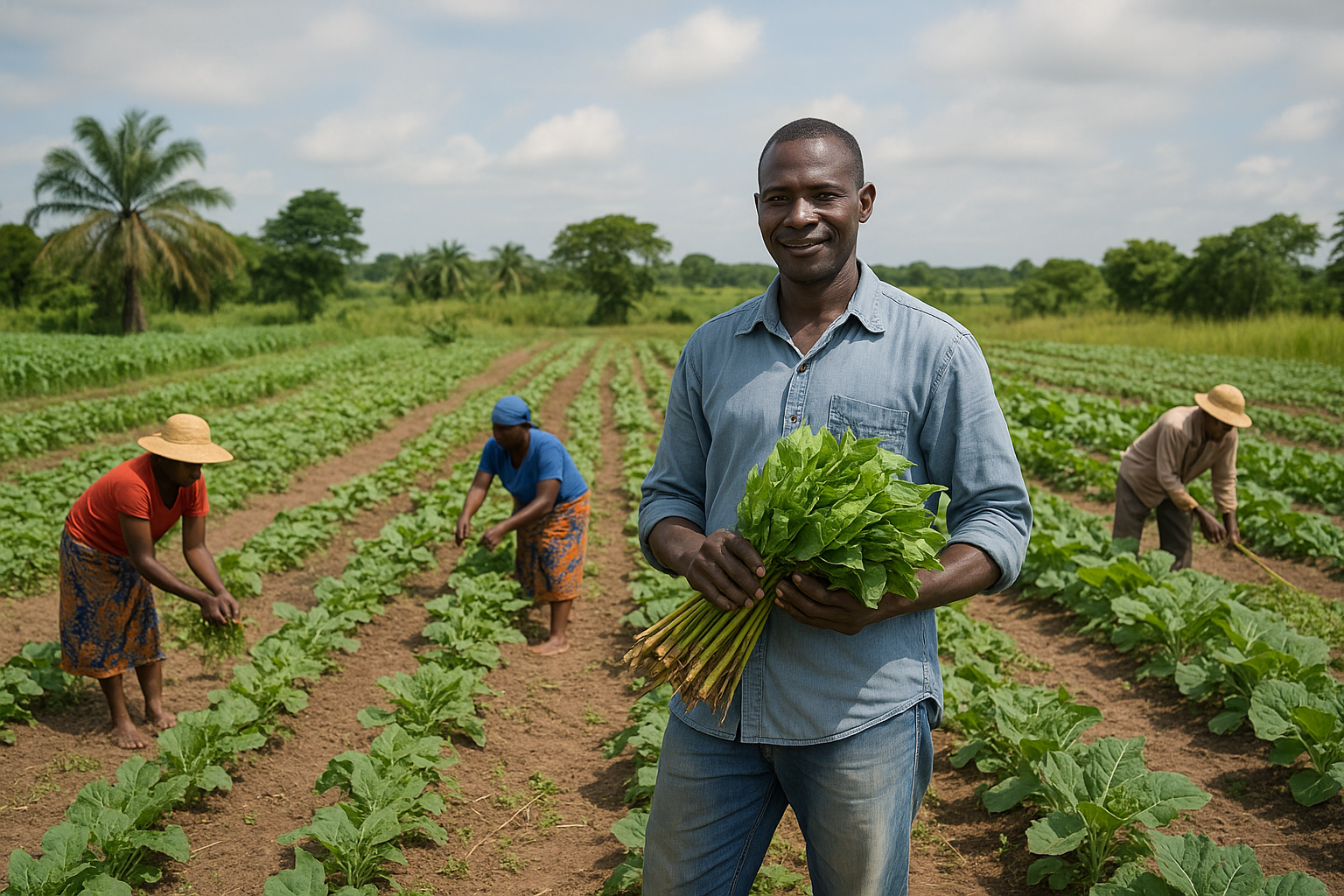
Many South Africans can recall being told to eat their vegetables as children — a simple lesson about nourishment that, in hindsight, carries far deeper meaning today. As climate change continues to reshape the global food landscape, the National Planning Commission (NPC) is emerging as one of the real-world "heroes" working to protect the very food systems that sustain the nation.
Through its research into agriculture, irrigation, and climate resilience, the NPC is tackling the daunting question of what South Africa's dinner plate might look like in decades to come — and how the nation can secure food, water, and livelihoods for future generations.
Researching a Resilient Future
In an interview with SAnews, Dr Lebogang Pheko, an NPC Commissioner, senior researcher, and political economist, discussed the Commission's ongoing agricultural research projects. She described how the studies explore a series of "what if" scenarios — such as what would happen if staple crops like wheat or maize became unaffordable or unavailable due to climate disruption.
"What would it look like if certain crops are no longer available? What if we can't access wheat at the price we are used to? What would that mean for the cost of pap, for our cultural legacy, and for how food shapes our communal ways of being?" Pheko asked.
The NPC's research, she explained, goes beyond the economics of agriculture to examine the social and cultural implications of food insecurity — a reminder that cuisine and tradition are intertwined with national identity.
The NPC's Mandate: Long-Term Planning for a Changing Economy
Appointed by the President, the NPC functions as an independent advisory body and think tank that oversees the implementation of South Africa's National Development Plan (NDP) 2030. The NDP seeks to eliminate poverty and reduce inequality through economic growth, job creation, and sustainable development.
As one of 26 Commissioners, Pheko contributes to advancing the NDP's Chapter 6, which highlights agriculture as a vital driver of rural employment and sustainable livelihoods. The chapter estimates that agriculture could create one million jobs by 2030, particularly if the vegetable and agro-processing industries are expanded.
Pheko said the Commission is currently commissioning targeted research into irrigation, water resource management, small business development, and red tape reduction — all key enablers of agricultural growth.
"We are in the midst of climate change and increasing water scarcity," she said. "Harvesting seasons may change, and the foods we've always known may become less available. That affects not just prices, but our traditions and our way of life."
Youth, Climate, and the Future of Agriculture
A major concern raised by Pheko is the declining interest of young people in agricultural careers. She stressed that revitalising the sector requires not just modernisation, but reimagining agriculture as a central part of nation-building.
"We must rethink how we make agriculture appealing to young people. It's not about rebranding; it's about embedding agricultural and irrigation studies into a broader discourse of sustainability, innovation, and national purpose," she said.
Agriculture's Economic Backbone
President Cyril Ramaphosa, in his March 2025 newsletter to the nation, reinforced the centrality of agriculture to South Africa's economy. He noted that agricultural exports reached a record $13.7 billion in 2024, with 44% destined for African markets. Since 1994, the sector's value has more than doubled, employing over 924,000 people directly and another 200,000 in related value chains.
"The health and growth of our farming sector is vital to supporting small towns and keeping rural South Africa vibrant," the President said.
The NDP calls for greater investment in irrigation infrastructure and a refocused commitment to agricultural research and development, both of which are central to the NPC's ongoing studies.
Planning for Climate Realities
Pheko warned that climate change is no longer a distant threat but a daily reality. She pointed to KwaZulu-Natal's recurring floods as evidence of the urgent need for integrated water, agriculture, and spatial planning.
"We must plan cities in the context of rural areas. Urban and rural planning are interconnected. People move to cities because they no longer see a life for themselves in rural areas. To change that, we must build self-sufficient, sustainable rural communities," she said.
Her research advocates for climate adaptation strategies that address both urban resilience and rural revitalisation, ensuring that water, food, and energy systems are jointly planned.
Beyond 2030: Planning Across Generations
The NPC's agricultural and climate work looks beyond the NDP's 2030 target, focusing on intergenerational sustainability.
"This is long-term, forward-looking research. We're trying to project what socio-agricultural and energy scenarios could look like decades from now, and what policies need to be in place to prepare for them," Pheko said.
She acknowledged South Africa's complex economic landscape, still shaped by a legacy of extractive industries and inequality.
"Our economy is complex — historically extractive and still labour-intensive. We haven't fully shifted toward a knowledge-driven, technology-based model. To build a STEM-oriented economy, our education system must better prepare learners in literacy, mathematics, and science," she added.
The Global Context: South Africa's Role in the G20
Ahead of the G20 Leaders' Summit in November 2025, the NPC has been actively participating in preparatory policy discussions. Pheko said the G20 offers a critical platform for African advocacy and global cooperation.
"We're leveraging our participation to amplify the voices of the dispossessed across Africa," she said. "Since the African Union became a G20 member in 2023, it's vital to ensure that this representation translates into real influence."
Pheko also highlighted the global challenges of climate change, food security, and economic instability, urging a collective response rooted in interdependence and justice.
Legacy and the Next Chapter
As the current NPC Commissioners approach the end of their term in 2026, Pheko reflected on what she hopes to leave behind.
"My biggest fear is that we might fail to look our descendants in the eye if inequality continues to grow and hope fades. But my aspiration is to leave behind a foundation of policy and foresight that future governments can build on — a legacy of collaboration and strategic vision," she said.
She added that the NPC's work is not about reinventing the wheel but about building enduring legacy projects that strengthen the nation's planning capacity.
In many ways, the NPC's efforts resemble those of unsung superheroes — not the kind who wear capes, but those who protect the essentials of life: food, water, and hope. Their mission is clear — to ensure that South Africa's greens stay on the plate, its farmlands stay fertile, and its people thrive in a sustainable future.


 Google News