

Seitlholo Demands Urgent Action on Sanitation and Water Issues in Setlagole
In response to the situation, the Deputy Minister has issued a directive to conduct an audit of both functional and non-functional toilets in Setlagole.
- Country:
- South Africa
In a determined push for immediate service delivery improvements, Deputy Minister of Water and Sanitation, Sello Seitlholo, has sounded the alarm over critical sanitation failures and prolonged water infrastructure delays in Setlagole Village, situated in the Ratlou Local Municipality, Ngaka Modiri Molema District, in South Africa's North West Province.
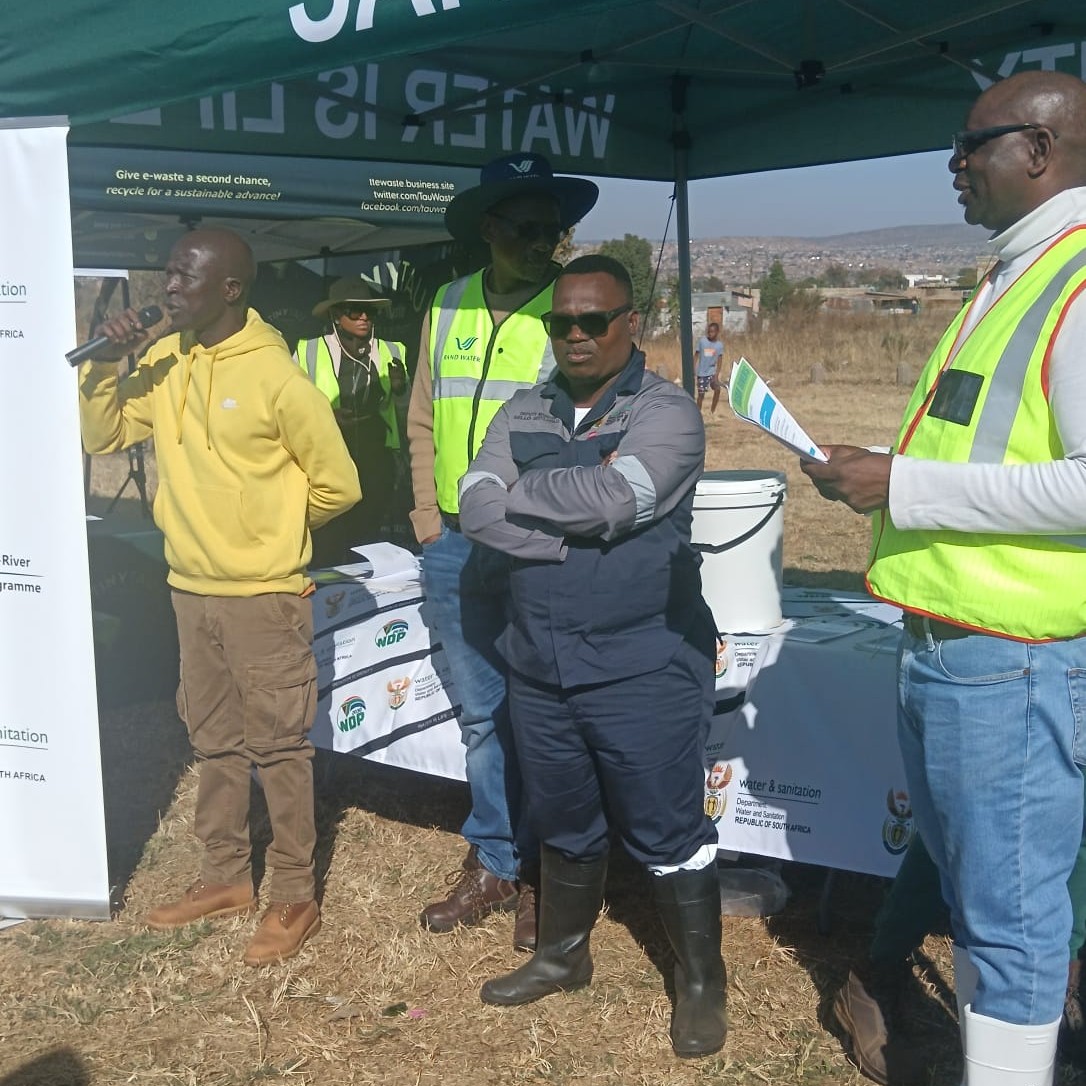
The Deputy Minister conducted a site visit to the village as part of national activities marking Sanitation Month—commemorated annually between 15 October (Global Handwashing Day) and 19 November (World Toilet Day)—to raise awareness about safe sanitation and access to clean water. He was joined by District Executive Mayor Khumalo Molefe and MMC for Infrastructure Development Thabo Motlapele, as well as local stakeholders and municipal officials.
Sanitation in Crisis: Full Pit Latrines Left Unmanaged Since 2015
Deputy Minister Seitlholo expressed grave concern over the dire sanitation situation in Setlagole's RDP housing section, where many households are still using pit latrines constructed in 2015—which have not been serviced or emptied since installation.
"This status quo poses a serious health risk for the community and needs an urgent intervention by all three spheres of government," he warned.
Seitlholo emphasized that this situation violates national norms and standards for basic sanitation, which require that every household have access to a toilet with proper hygiene facilities, safe construction, environmental soundness, and functional privacy.
Norms and Obligations: What the Law Says
Citing the Water Services Act 108 of 1997 and the 2023 Water and Sanitation Policy on Privately Owned Land, Seitlholo reiterated that municipalities, as designated Water Services Authorities (WSAs), are legally obligated to provide basic sanitation to all residents—including those on privately held land.
The Department's Norms and Standards define basic sanitation as:
-
Access to a functional toilet in the yard
-
Availability of handwashing facilities
-
Safe and environmentally sustainable infrastructure
-
Privacy and weather protection
-
Effective sanitation technology and maintenance systems
Directive for an Audit and Faecal Sludge Management
In response to the situation, the Deputy Minister has issued a directive to conduct an audit of both functional and non-functional toilets in Setlagole. This assessment will inform the development of a targeted intervention plan, including implementation of a Faecal Sludge Management (FSM) system.
"We are calling on both the municipalities, with support from the Department of Water and Sanitation, to implement faecal sludge management systems that comply with existing standards," Seitlholo said.
FSM is considered crucial for ensuring ongoing sanitation services for the 51% of households in North West that still rely on onsite sanitation systems, such as pit latrines or septic tanks.
Municipal Accountability and Capacity Building
Executive Mayor Khumalo Molefe acknowledged the municipality's failure to maintain sanitation infrastructure in Setlagole since its installation nearly a decade ago. He cited the absence of a long-term plan for sludge removal and management.
"There was indeed a vacuum to service the toilets once they were full," Molefe admitted.
In light of departmental involvement, Molefe has now directed technical experts to work with Ratlou Local Municipality to initiate immediate solutions. These efforts are expected to be aligned with resolutions made at the Water and Sanitation Indaba held earlier in the year.
Promoting Circular Sanitation Economy
Seitlholo highlighted the potential of sustainable sanitation solutions, calling for the use of treated faecal sludge to produce beneficial by-products such as:
-
Organic manure
-
Fertilisers
-
Biogas for energy generation
This approach is central to the department's broader vision of environmental responsibility, economic reuse, and resilience in water-scarce communities.
Reviving the Setlagole Bulk Water Supply Scheme
In addition to sanitation issues, Seitlholo turned attention to the long-stalled Setlagole Bulk Water Supply Scheme, which has remained incomplete for over 10 years. The infrastructure project, intended to supply 2.4 megalitres of treated water daily to Setlagole and neighbouring villages, has been non-operational, further exacerbating service delivery challenges.
"We are calling on Magalies Water to expedite the completion of the project," Seitlholo stated.
He noted that unlocking this bulk water scheme is critical to improving access to safe drinking water in the region, which continues to grapple with periodic water shortages and delivery gaps.
Mayor Molefe echoed these sentiments and welcomed the Department's support in unblocking stalled water infrastructure projects.
"We are hopeful that all the projects will be completed so that the water supply challenges in the district are resolved," he said.
Sanitation Month: A Time for Action, Not Just Awareness
Seitlholo's intervention is part of a broader national campaign during Sanitation Month, which seeks to break the stigma around sanitation, educate communities about hygiene, and advocate for improved service delivery.
World Toilet Day, marked globally on 19 November, raises awareness of the 3.4 billion people without access to safe toilets and reinforces the urgency of achieving the UN Sustainable Development Goal 6 (SDG 6): Clean Water and Sanitation for All by 2030.
The Road Ahead: Integrated, Urgent and Sustainable Solutions
The case of Setlagole exemplifies the challenges faced by many semi-rural and peri-urban communities across South Africa, where infrastructure projects are delayed, and sanitation facilities are often built without long-term maintenance plans.
Through coordinated action across national, provincial, and local governments, the Department of Water and Sanitation hopes to create lasting improvements. The community of Setlagole is now poised to become a test case for accelerated delivery, demonstrating what can be achieved when political will meets technical capacity.


 Google News