

SA Commissions High-Capacity Water Infrastructure to Secure Future Supply
- Country:
- South Africa
In a major step toward strengthening water security and climate resilience, the Department of Water and Sanitation (DWS) has commissioned upgraded, high-capacity water infrastructure designed to meet rising demand across the North West and Limpopo provinces.
Water and Sanitation Minister Pemmy Majodina officially handed over the newly upgraded Vaalkop Water Treatment Works Raw Water Pumpstation and associated Bulk Water Pipeline, a strategic investment aimed at ensuring long-term, sustainable water supply for fast-growing urban and rural communities.
The commissioning marks a significant milestone in South Africa's shift toward modernised, demand-responsive water systems capable of supporting population growth, economic activity, and regional development.
High-Performance Water Systems for a Growing Region
The Vaalkop Raw Water Pumpstation, implemented by Magalies Water between February 2023 and November 2025, has been upgraded to increase abstraction capacity from 240 megalitres per day (ML/day) to 360 ML/day. The facility now operates with ten high-efficiency pump sets that directly abstract water from Vaalkop Dam, enhancing operational reliability, reducing water losses, and improving system redundancy.
The upgraded pumpstation will support sustainable water supply for Moses Kotane and Rustenburg Local Municipalities in the North West, as well as the Thabazimbi Local Municipality in Limpopo — forming a critical backbone for cross-provincial water security.
Replacing Ageing Infrastructure With Future-Ready Design
Minister Majodina also commissioned the upgraded Bulk Water Supply Scheme, developed in response to increasing demand in the rural communities of Bethanie, Modikoe, and Berseba within Rustenburg Local Municipality.
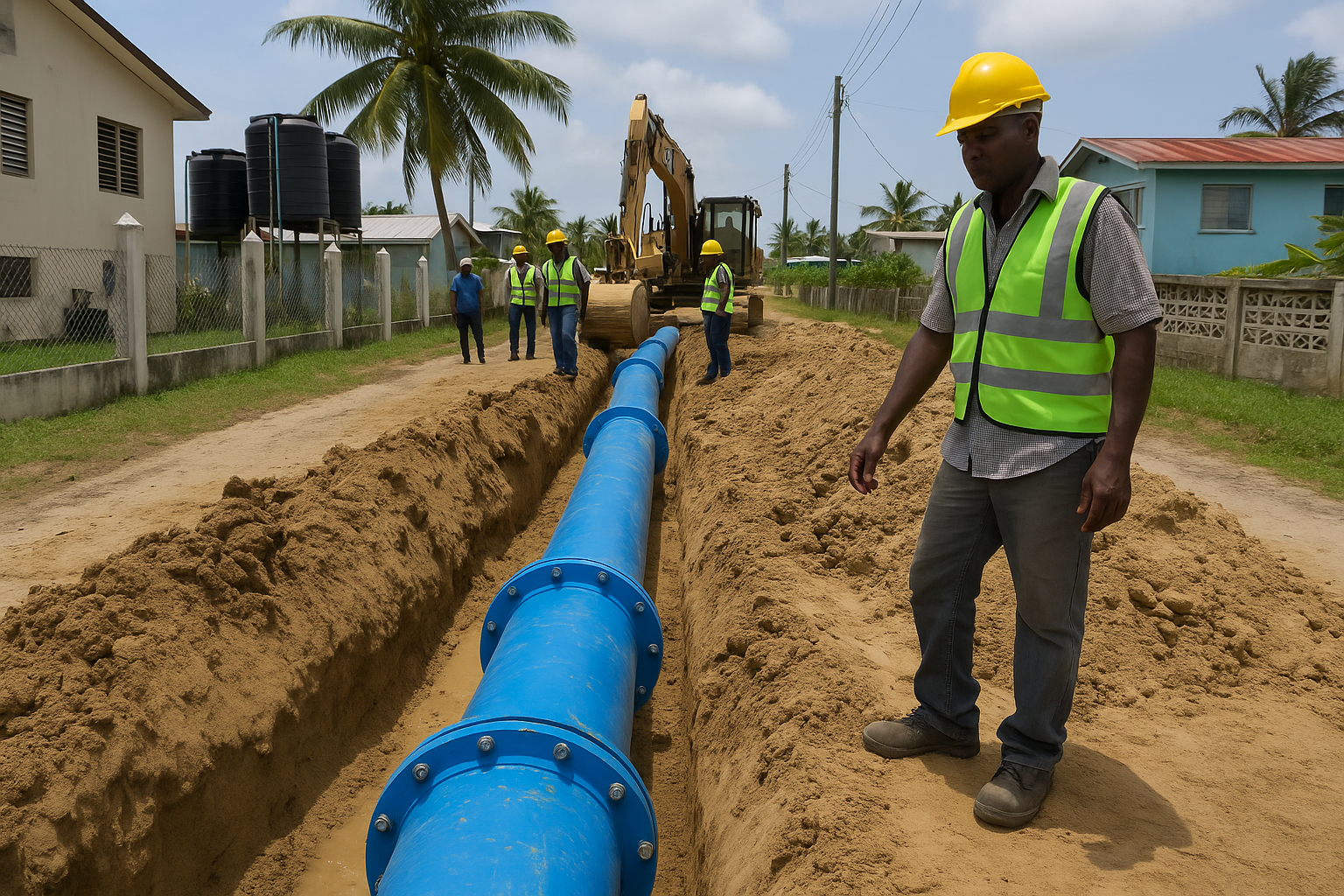
Delivered through a public-private partnership between Magalies Water and Glencore Rhovan PSV Mine, the project includes a newly constructed 23.4-kilometre bulk potable water pipeline, featuring 560mm and 400mm diameter pipes with modern valve systems. The pipeline runs from the Kortbegrip Reservoir to the Bethanie and Modikoe Reservoirs.
The new system replaces ageing asbestos fibre-cement pipelines that had reached the end of their operational lifespan and were prone to frequent failures — a move that significantly improves safety, efficiency, and system resilience.
The upgrade increases bulk water supply capacity to meet current demand of 7.05 ML/day, with scalability built in for future demand projected at 12.60 ML/day.
Expanding Access to Underserved Communities
Crucially, the project will enable additional water volumes to reach Makolokwe Village, where water access remains critically limited and residents currently depend on underperforming boreholes.
The second phase of the project — a bulk pipeline linking Bethanie to Makolokwe — is scheduled to commence in March 2026 and will include the construction of a booster pumpstation at the Bethanie Reservoir.
Once fully completed, the expanded system will provide reliable water supply to an estimated 144 133 residents, serving households, schools, clinics, businesses, and community institutions across the region.
Public-Private Partnerships Accelerating Service Delivery
Minister Majodina highlighted the partnership between Rustenburg Local Municipality and Glencore Rhovan PSV Mine as a model for accelerating infrastructure delivery through collaboration.
"Today's handover represents progress, but more importantly, it represents partnership," she said. "When government, communities and stakeholders work together, we can overcome scarcity and deliver sustainable services."
The investment strengthens municipal service delivery capacity while providing certainty for businesses, industries, and emerging enterprises that depend on reliable water supply to operate, expand, and create jobs.
Protecting Critical Infrastructure in the Digital Age
The Minister also issued a strong warning against vandalism and illegal water trading syndicates, describing them as a direct threat to public dignity, economic stability, and development.
"Water infrastructure is not a playground for criminals," she said. "The vandalism of pipelines and manipulation of water systems by so-called water mafias is a direct attack on our people."
Law enforcement agencies are working closely with DWS, municipalities, and water boards to pursue arrests and prosecutions against those undermining service delivery.
Call to Action: Innovating for Water Security
As water stress intensifies across Southern Africa, the Vaalkop and Rustenburg upgrades demonstrate how modern engineering, scalable infrastructure, and public-private collaboration can future-proof essential services.
Technology providers, infrastructure innovators, water-tech startups, and smart-city partners are encouraged to engage with municipalities and water boards to support digital monitoring, predictive maintenance, leak detection, and climate-resilient water solutions.
South Africa's water future will be shaped not only by infrastructure — but by innovation, partnerships, and proactive protection of critical assets.


 Google News