

Govt, Business Launch Phase Three to Drive Inclusive Growth, Jobs and Confidence
Building on this foundation, government and business agreed that the focus must now shift decisively from crisis management to the implementation of structural reforms.
- Country:
- South Africa
Government and business have jointly committed to placing inclusive growth, job creation and confidence at the centre of Phase Three of the Government–Business Partnership, as South Africa seeks to consolidate economic recovery and accelerate long-term reform.
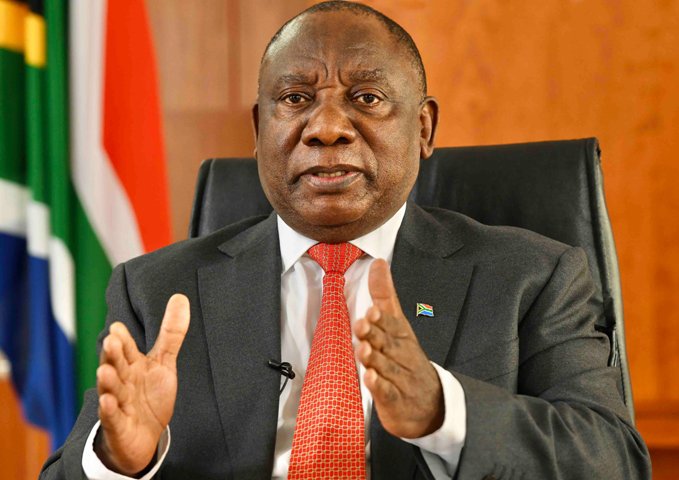
President Cyril Ramaphosa on Tuesday met with Ministers and senior business leaders to formally commence the Partnership's 2026 programme of work, with economic growth identified as the central and unifying focus. The meeting reviewed progress achieved during Phase Two, which delivered tangible improvements in the energy and logistics systems, helping to stabilise the economy and restore confidence.
These gains, together with broader reforms, contributed to a marked improvement in economic sentiment towards the end of 2025. Investors have increasingly responded positively to South Africa's policy credibility and economic direction, reflected in a series of significant milestones. These include South Africa's removal from the Financial Action Task Force (FATF) grey list, a steady decline in inflation towards the 3 per cent target, a successful and oversubscribed sovereign Eurobond issuance, a firmer Rand, and an upgrade of the country's sovereign credit rating by S&P—the first in over two decades.
The Government–Business Partnership, established in 2023 and led by President Ramaphosa alongside business leadership represented by Business Unity South Africa (BUSA), brings together more than 130 companies and CEOs through BUSA, Business for South Africa (B4SA) and Business Leadership South Africa (BLSA). The partnership focuses on improving outcomes in three priority areas: energy, transport and logistics, and crime and corruption.
Phase One of the partnership demonstrated the power of collaboration, delivering concrete progress in stabilising the energy system and contributing to the dramatic reduction in load shedding. Phase Two, launched on 1 October 2024, further strengthened operational performance at Eskom, advanced reforms in logistics through the Durban Pier 2 terminal concession, and opened the rail network to private operators.
Building on this foundation, government and business agreed that the focus must now shift decisively from crisis management to the implementation of structural reforms. Phase Three will be anchored in the framework of "Inclusive Growth, Jobs and Confidence," with all actions assessed against their ability to grow the economy, support employment and strengthen investor and public confidence in a rapidly changing global environment.
Key priorities for Phase Three include advancing energy market reform, including the launch of a competitive wholesale electricity market, expansion of the electricity grid, and the publication of a clear roadmap for Eskom's unbundling, including the establishment of an independent Transmission System Operator in line with the Electricity Regulation Act. Accelerating reforms in transport and logistics, with increased private sector participation, was also identified as critical to improving efficiency and competitiveness.
Crime and corruption were highlighted as major deterrents to confidence, investment and growth. While progress has been made in strengthening institutional capacity, the partnership agreed that a more ambitious and coordinated effort is required to tackle organised crime, corruption and weaknesses in the criminal justice system, given their direct impact on economic growth and the rule of law.
Youth employment remains a cross-cutting priority, with successful collaboration models—such as the rollout of the Electronic Travel Authorisation (ETA) system—demonstrating how targeted reforms can remove bottlenecks, boost tourism and support job creation.
Across all areas, the emphasis will be on execution and delivery. Government and business agreed that 2026 should mark a decisive turning point in South Africa's economic trajectory, creating the conditions for sustained growth and shared prosperity.
"After two years of hard work, we can definitively say this partnership has been a success," President Ramaphosa said. "While we have achieved much, there is much more to do. As this partnership evolves, we remain firmly committed to acting together and with purpose to serve the needs of our country."
Adrian Gore, Group CEO of Discovery and co-convener of the business delegation, said South Africa is turning a corner. "We must act decisively to convert this momentum into investment and jobs. Growth, Jobs, Confidence must be the filter for every decision in 2026. Business is fully committed to supporting this," he said.
ALSO READ
-
ADB Approves $100 Million to Build Job Skills for Young Sri Lankans
-
Philippines Could Unlock Billions Through Smarter Taxes and Public Spending
-
Benin’s Growth Surges as $2.43 Billion Annual Funding Need Shapes Its Economic Future
-
South Africa’s Investment Slump Is Exposing a Deeper Structural Growth Problem
-
Tripoli Entrepreneurs Need Better Funding, Skills and Support to Help Businesses Grow


 Google News