

UN Experts Urge Justice for WWII ‘Comfort Women’ Survivors
Nearly 80 years after the end of the war, victims and their families are still being denied their rights to truth, justice, reparations and historical recognition, the experts warned.
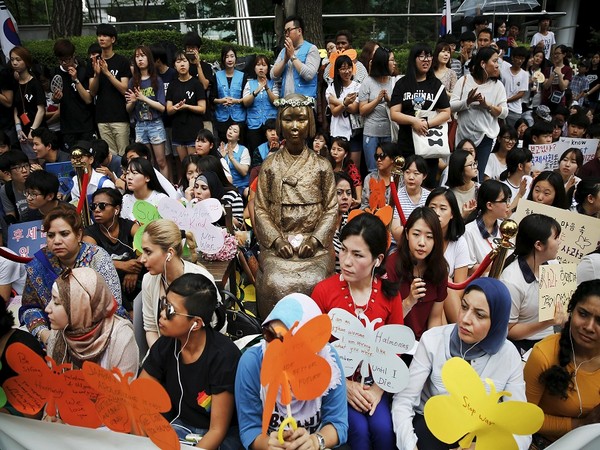
United Nations human rights experts have expressed grave concern over the continued lack of justice and accountability for survivors of the so-called "comfort women" system run by the Japanese Imperial Army during the Second World War.
Nearly 80 years after the end of the war, victims and their families are still being denied their rights to truth, justice, reparations and historical recognition, the experts warned.
"Nearly 80 years on, victims and their families continue to face the denial of their right to truth, justice, reparation and memorialisation," the experts said.
Up to 200,000 Women Enslaved
Historians and international investigations estimate that up to 200,000 women and girls were subjected to sexual slavery under the military-run system established by Japan during the war.
Victims—often referred to as "comfort women"—were reportedly subjected to trafficking, rape, sexual slavery, arbitrary detention and, in some cases, enforced disappearance.
Survivors came from several countries and territories including the Republic of Korea, China, the Philippines, Indonesia, Timor-Leste and the Netherlands, among others.
Today, only a small number of survivors remain alive, most of whom are elderly.
"The passage of time makes justice even more urgent," the experts said, noting that many survivors have died without receiving full recognition or remedy.
Past Agreements Failed to Deliver Justice
The UN experts said previous diplomatic attempts to resolve the issue have fallen short of delivering survivor-centred justice.
They pointed specifically to the 2015 bilateral agreement between Japan and the Republic of Korea, which was intended to settle the dispute but was widely criticised by survivors and civil society groups for excluding victims from meaningful consultation.
"Previous efforts to address this issue have failed to deliver survivor-centered justice," the experts said.
"States have an obligation to ensure access to justice and reparations for victims, and diplomatic agreements should not substitute or preclude individual pursuits of accountability."
Legal Claims Continue in National Courts
Despite the challenges, several survivors and their families have continued to pursue justice through legal action in domestic courts, both in their home countries and in Japan.
The UN experts stressed that such legal efforts should be recognised as legitimate avenues to obtain acknowledgement and reparations for grave human rights violations.
"Sovereign immunity should not serve as grounds to waive accountability for war crimes and crimes against humanity," the experts said.
Shared Responsibility Among States
The experts also emphasised that responsibility for justice does not lie solely with Japan.
Countries where victims originated have a duty to assist survivors in accessing justice and reparations, including through legal support and diplomatic engagement.
They urged governments to:
-
Provide legal aid and practical support to survivors and their families
-
Preserve and declassify historical records related to the abuses
-
Support diplomatic initiatives aimed at securing accountability and reparations
While welcoming responses from several governments regarding the issue, the experts said sustained political commitment remains necessary.
Preserving Historical Memory
Beyond legal accountability, the UN experts stressed the importance of preserving the historical record and ensuring future generations understand the scale of the abuses.
They called for the development of educational materials, memorials and public commemorations that acknowledge the experiences of the victims.
The experts also warned that denial of wartime atrocities by political leaders, as well as harassment of survivors, researchers, journalists and civil society organisations, undermines efforts toward justice and reconciliation.
"The denial of atrocities by high-level officials and the harassment of victims, survivor-led organisations, academics and journalists seriously undermine efforts towards accountability and redress," they said.
Call for Immediate Action
The experts urged Japan to recognise and fulfil survivors' rights to justice, reparations and effective remedy.
This should include official apologies, adequate compensation and guarantees that such crimes will never be repeated, they said.
"Victims and survivors have waited decades for recognition, apologies and remedy," the experts said. "We urge all relevant States to act without further delay."
The UN experts confirmed that they have been in contact with the governments of Japan, the Republic of Korea, China, Indonesia, Timor-Leste, the Netherlands and the Philippines regarding the matter.


 Google News