

Grain Reserves Reimagined: A Blueprint for Tackling Global Hunger and Supply Shocks
The 2025 World Bank, FAO, and WFP report emphasizes that Strategic Grain Reserves (SGRs) are vital tools for managing food crises caused by conflict, climate, and economic shocks. It urges countries to adopt small, efficient, and well-governed reserves integrated with broader food security strategies.
 CO-EDP, VisionRI
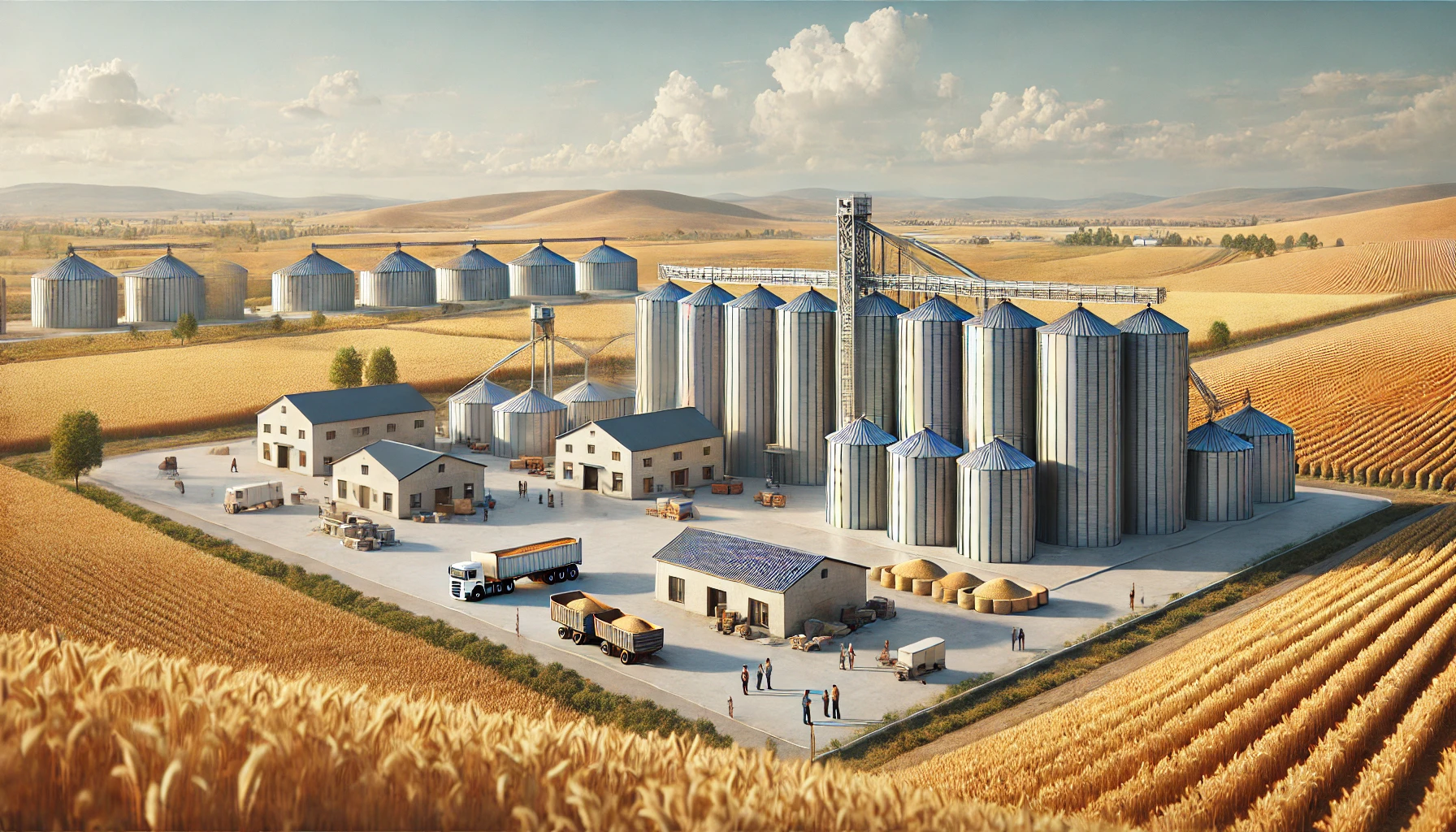
The 2025 joint report Strengthening Strategic Grain Reserves to Enhance Food Security, authored by the World Bank, the Food and Agriculture Organization (FAO), and the World Food Programme (WFP), provides an urgent and detailed assessment of how Strategic Grain Reserves (SGRs) can serve as essential safety nets amid growing global food insecurity. The research, which integrates insights from institutions like the International Food Policy Research Institute (IFPRI), the Centre for Research on the Epidemiology of Disasters (CRED), and the Famine Early Warning Systems Network (FEWS NET), documents a worrying reversal in global hunger trends. After decades of steady improvement, the number of acutely food-insecure people has surged to 343 million across 74 countries in 2024, with 44 million at emergency levels. Chronic undernourishment has also risen to 757 million, a jump from 581 million just four years earlier. These alarming statistics are rooted in overlapping crises: prolonged conflict, climate-induced disasters, and economic volatility triggered by the COVID-19 pandemic and geopolitical shocks, particularly Russia's invasion of Ukraine. The global food system, once buffered by trade and growth, is now being tested like never before.
Strategic Grain Reserves: A Smart Shield in Turbulent Times
SGRs, the report argues, are one of the few tools uniquely suited for crisis response and food supply stabilization. Unlike traditional buffer stocks used for long-term price control, SGRs are designed for rapid deployment during emergencies such as trade disruptions, extreme weather, or logistical breakdowns. These publicly held reserves ensure that food remains available when the private sector cannot act quickly enough. They are especially relevant for low- and middle-income countries that rely on imports and face high transport costs, such as landlocked Zambia and double landlocked Uzbekistan. The report highlights that SGRs are not a panacea but work best when integrated with broader strategies, including open trade, market-friendly procurement, and targeted social safety nets. Countries like India, Pakistan, and Zambia operate large-scale public stock programs, but many others lack the institutional or financial capacity to sustain them effectively. In all cases, SGRs must complement, not substitute, market functions.
Learning from Mistakes: When Grain Reserves Go Wrong
A major strength of the report lies in its examination of what has worked and what hasn't. Drawing from case studies across Asia, Africa, the Middle East, and Latin America, it identifies common pitfalls. Many countries overload their SGRs with multiple, often conflicting objectives, trying to stabilize prices, support farmers, and provide emergency aid all at once. This approach results in excessive fiscal costs, distorted markets, and reduced private sector participation. India, for instance, spends over $35 billion annually to procure and maintain public stocks, amounting to about 1 percent of GDP, even though inflation control outcomes have been mixed. Zambia, meanwhile, allocates nearly 8 percent of its national budget to its Food Reserve Agency, largely to subsidize the price gap between procurement and release. In contrast, Uzbekistan has successfully reformed its SGR approach, reducing stock size, shifting to market-based procurement, and closely aligning domestic prices with international import costs. These reforms have reduced fiscal burdens and improved price stability.
Designing Smarter Reserves: Keep Them Small, Simple, and Efficient
The central message of the report is clear: successful SGRs must be small, simple, and smart. Policymakers should set clear objectives, such as covering food needs for a specific population during an emergency, and avoid overextending the reserves to serve every food-related policy goal. Procurement and release should occur at market prices to avoid distorting trade or crowding out private storage. Transparent tenders, open auctions, and integration with digital commodity exchanges are highlighted as effective methods. SGRs should be lean, with minimal storage costs and efficient transport logistics. Countries like Ghana are evaluating cost-effective models that could provide rations for up to one million people for under $60 million annually. By contrast, using SGRs to manipulate domestic prices or offer broad subsidies can quickly escalate to hundreds of millions in unsustainable fiscal costs. The report also underscores the importance of complementing reserves with functioning trade policies, allowing food to move freely and responsively during global shocks.
Technology and Trust: The Future of Food Resilience
Technology plays a pivotal role in modernizing SGR management. The report showcases examples like IoT-enabled grain silos in India and Egypt's remote monitoring systems that track storage conditions, pest risks, and inventory levels in real time. Such innovations reduce spoilage, improve transparency, and lower operational costs. Yet technology alone is not enough. Strong governance frameworks, clear communication strategies, and institutional accountability are essential. The authors are skeptical about relying on regional or global reserves due to coordination hurdles and trust deficits between countries. While regional initiatives like ECOWAS and ASEAN emergency rice reserves can offer backup, national-level reserves remain the most reliable and responsive form of crisis preparedness.
The report offers both a warning and a roadmap. Food insecurity is not just a humanitarian issue, it is a structural risk that demands urgent policy attention. Countries must invest in smarter, leaner grain reserves tailored to their specific risk profiles, economic conditions, and logistical capacities. SGRs should be seen as one tool among many: a tactical instrument for short-term relief that complements long-term strategies like boosting agricultural productivity, improving trade infrastructure, and expanding social safety nets. When designed and managed well, SGRs can mean the difference between crisis and catastrophe for millions of people. As the world moves deeper into an era of climate uncertainty and geopolitical fragmentation, the case for rethinking and strengthening grain reserves has never been stronger.
- FIRST PUBLISHED IN:
- Devdiscourse
ALSO READ
-
Tanzania’s Growth Gains Need Better Jobs to Bring Lasting Prosperity to More Families
-
Tanzania’s Economy Gains Momentum, but Better Jobs Hold the Key to Broader National Prosperity
-
Tanzania’s Growing Economy Puts Better Jobs at the Heart of Its Next Growth Chapter
-
From Debt Pressure to AfCFTA: Africa Searches for a New Formula to Finance Growth and Jobs
-
World Bank Backs Tonga’s Push for Better Jobs and Business Growth With $15M Grant


 Google News