

UN Experts Warn of Systematic Forced Labour Targeting Minorities in China
In a statement issued on Tuesday, the experts said the evidence points to a pattern of State-imposed forced labour that may rise to the level of serious international crimes.
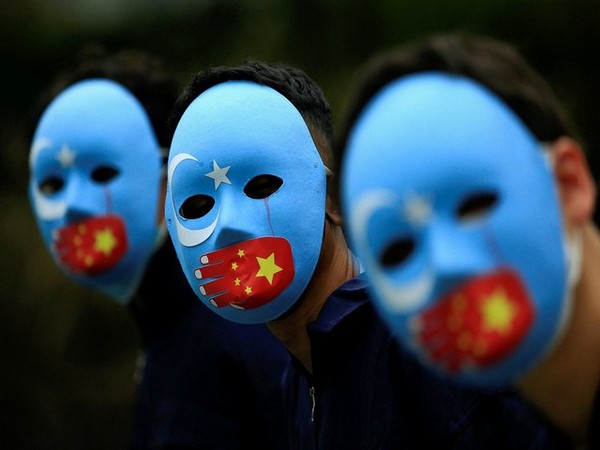
United Nations human rights experts have expressed deep concern over persistent and widespread allegations of forced labour affecting Uyghur, Kazakh and Kyrgyz minorities, as well as Tibetans, across China, particularly within the Xinjiang Uyghur Autonomous Region and other provinces.
In a statement issued on Tuesday, the experts said the evidence points to a pattern of State-imposed forced labour that may rise to the level of serious international crimes.
"There is a persistent pattern of alleged State-imposed forced labour involving ethnic minorities across multiple provinces in China," the experts said."In many cases, the coercive elements are so severe that they may amount to forcible transfer and/or enslavement as a crime against humanity."
Labour Transfer Schemes Central to Allegations
According to the experts, forced labour practices are largely enabled through China's State-mandated "poverty alleviation through labour transfer" programmes, which reportedly coerce Uyghurs and other minority groups into work placements both within Xinjiang and in other regions of the country.
Those subjected to these schemes are said to face systematic monitoring, surveillance and exploitation, with little or no ability to refuse, leave or change employment due to fear of punishment, intimidation or arbitrary detention.
The experts cited Xinjiang's five-year plan (2021–2025), which projected 13.75 million labour transfer placements, noting that actual implementation figures appear to have reached even higher levels.
Forced Labour Allegations Extend to Tibet
The experts warned that Tibetans are also subjected to similar coercive labour programmes, including the Training and Labour Transfer Action Plan, which targets so-called "rural surplus labourers".
"These policies justify coercive methods such as military-style vocational training," the experts said, adding that the number of Tibetans affected by labour transfers in 2024 alone is estimated at nearly 650,000.
In addition, Tibetans are reportedly displaced through "whole-village relocation" programmes, which the experts said rely on coercion to manufacture consent. Tactics allegedly include repeated home visits, implicit threats of punishment, suppression of criticism and threats to cut access to essential services.
"Between 2000 and 2025, some 3.36 million Tibetans have been affected by government programmes requiring nomads to rebuild their homes and adopt sedentary lifestyles," the experts said.
Official data further indicates that approximately 930,000 rural Tibetans have been relocated through whole-village or individual household relocation schemes.
Cultural Erosion and Loss of Traditional Livelihoods
The experts warned that labour and land transfer policies form part of a broader strategy to re-engineer the cultural identities of Uyghurs, other ethnic minorities and Tibetans under the guise of poverty alleviation.
"Labour and land transfers forcibly change agriculture-based or nomadic livelihoods by displacing people to locations where they have no choice but to pursue wage labour," they said.
As a result, the experts warned, language, community ties, traditional ways of life, and cultural and religious practices are being eroded, causing what they described as irreparable harm and loss.
Global Supply Chain Risks
The experts also raised concerns about goods produced through forced labour entering global supply chains, often indirectly via third countries. They warned that this undermines the effectiveness of targeted trade restrictions and raises serious questions about human rights due diligence practices worldwide.
They urged investors and companies operating in or sourcing from China to conduct robust human rights due diligence in line with the UN Guiding Principles on Business and Human Rights, with particular attention to supply-chain risks.
"Companies must ensure that their operations and value chains are not tainted by forced labour," the experts said.
Call for Independent Access and Accountability
The UN experts reiterated their call for unfettered access for independent UN human rights mechanisms to China, stressing that transparency and international oversight are essential to assess allegations, protect affected communities and ensure accountability.
They said meaningful international engagement is required to address the human rights implications of forced labour practices and prevent further violations.


 Google News