

Spain's Socialist PM rules out grand coalition with conservatives
- Country:
- Spain
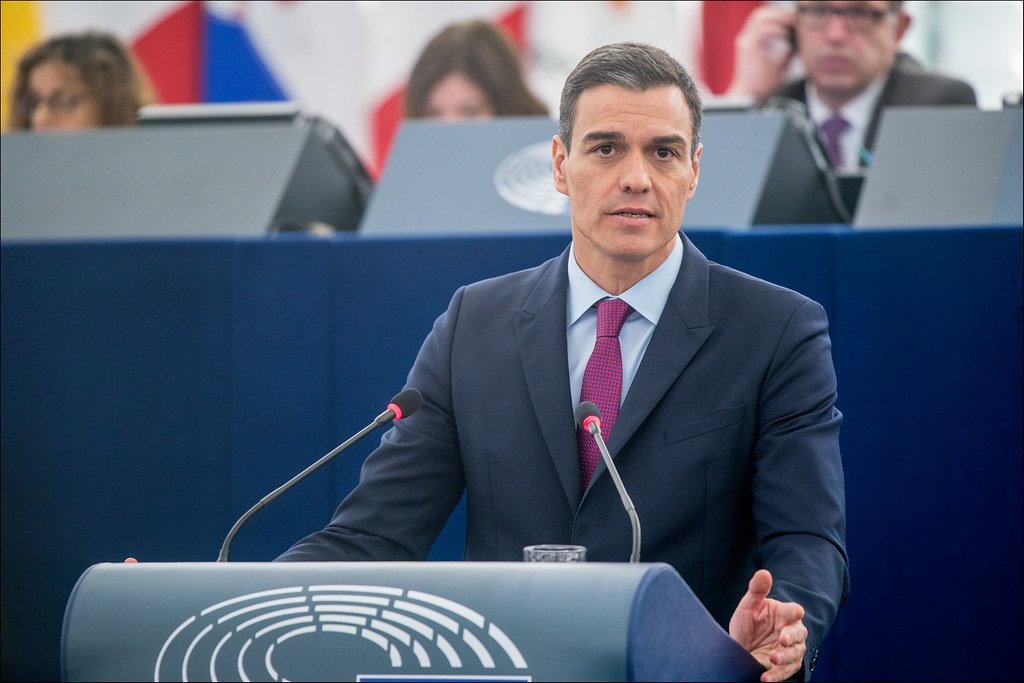
Spain's acting Prime Minister Pedro Sanchez on Friday ruled out forming a "grand coalition" with the opposition People's Party (PP) after a parliamentary election on Nov. 10. A previous election in April ended in a stalemate, and opinion polls show the repeat vote could be as inconclusive, with all possible scenarios for deals to form a government fraught with difficulties.
"We are not going to form a government with a party that has reached pacts with the extreme right, that trivializes gender violence, equality between men and women, and the democratic history of our country," Sanchez told supporters at a Socialist Party rally. Sources in the conservative PP said recently they could be open to such a coalition this time, as opinion polls show the election result could leave no party strong enough to govern on its own while the two rivals combined would comfortably win enough seats to form a majority in the 350-strong parliament.
Sanchez called the repeat election after winning the April ballot but failing to garner enough seats to govern without the support of other parties - which he did not secure. The latest polls show that the Socialists will likely win again, but could get fewer seats than in April.
The PP and the Socialists dominated Spanish politics for decades, but new parties emerged after the financial crisis, fragmenting the political landscape and making it much harder to form governments with stable majorities. Opinion polls show the two combined could account for more than two-thirds of parliament this time, with the Socialists still in the lead and PP not far behind, making a comeback after a poor showing in the previous ballot.
ALSO READ
-
South Korean Stance on Middle East Conflict
-
France's Bold Budget Battle: A €54 Billion Deficit Dilemma
-
Unleashing Market Forces: The Path to Reviving Britain's High Streets
-
Argentina Targets Companies with Falklands Bill Amid Tensions
-
Government Dismisses Claims of External Influence on UPI MDR Policy


 Google News