

Study reveals 25 mega-cities account for 52% of total urban GHG emissions globally
Of the top 25 cities which accounted for 52% of the total GHG emissions, cities in Asia such as Handan, Shanghai, and Suzhou in China and Tokyo in Japan were found to be important emitters. In terms of per capita emissions, cities in Europe, the US, and Australia had significantly higher emissions than most cities in developing countries.
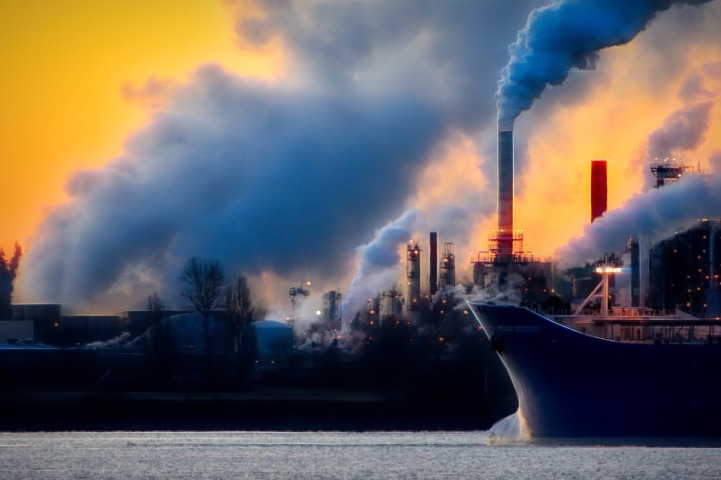
Just 25 megacities, mainly from Asia countries, account for more than 50 percent of the total greenhouse gas (GHG) emissions from a group of 167 surveyed cities around the world, finds a new study published by Frontiers.
The cities were chosen from 53 countries in North and South America, Europe, Asia, Africa, and Oceania. Of the 167 surveyed cities, 113 have set varying types of GHG emission reduction targets, while 40 have set carbon neutrality goals.
The study, published in the journal Frontiers in Sustainable Cities, presents the first global balance sheet of GHGs emitted by major global cities that are at different developmental stages. The findings show that both developed and developing countries have cities with high total GHG emissions.
Of the top 25 cities which accounted for 52% of the total GHG emissions, cities in Asia such as Handan, Shanghai, and Suzhou in China and Tokyo in Japan were found to be important emitters. In terms of per capita emissions, cities in Europe, the US, and Australia had significantly higher emissions than most cities in developing countries.
Apart from this, the research also identifies some of the most important sources of GHG emissions, with stationary energy - which includes emissions from fuel combustion and electricity use - and transportation being the two major sources. For instance, in one-third of the cities, more than 30% of total GHG emissions were from on-road transportation.
"Breaking down the emissions by sector can inform us what actions should be prioritized to reduce emissions from buildings, transportation, industrial processes and other sources," noted co-author Dr Shaoqing Chen, of Sun Yat-sen University, China.
Further, the researchers have made three key policy recommendations:
- Key emitting sectors should be identified and targeted for more effective mitigation strategies
- The development of methodologically consistent global GHG emission inventories is needed to track the effectiveness of urban GHG reductions policies
- Cities should set more ambitious and easily-traceable mitigation goals


 Google News