

(Updated) NASA defers Webb Telescope launch due to adverse weather conditions
A fresh weather forecast will be issued tomorrow evening in order to confirm the date of December 25, the U.S. space agency said on Tuesday.
- Country:
- United States
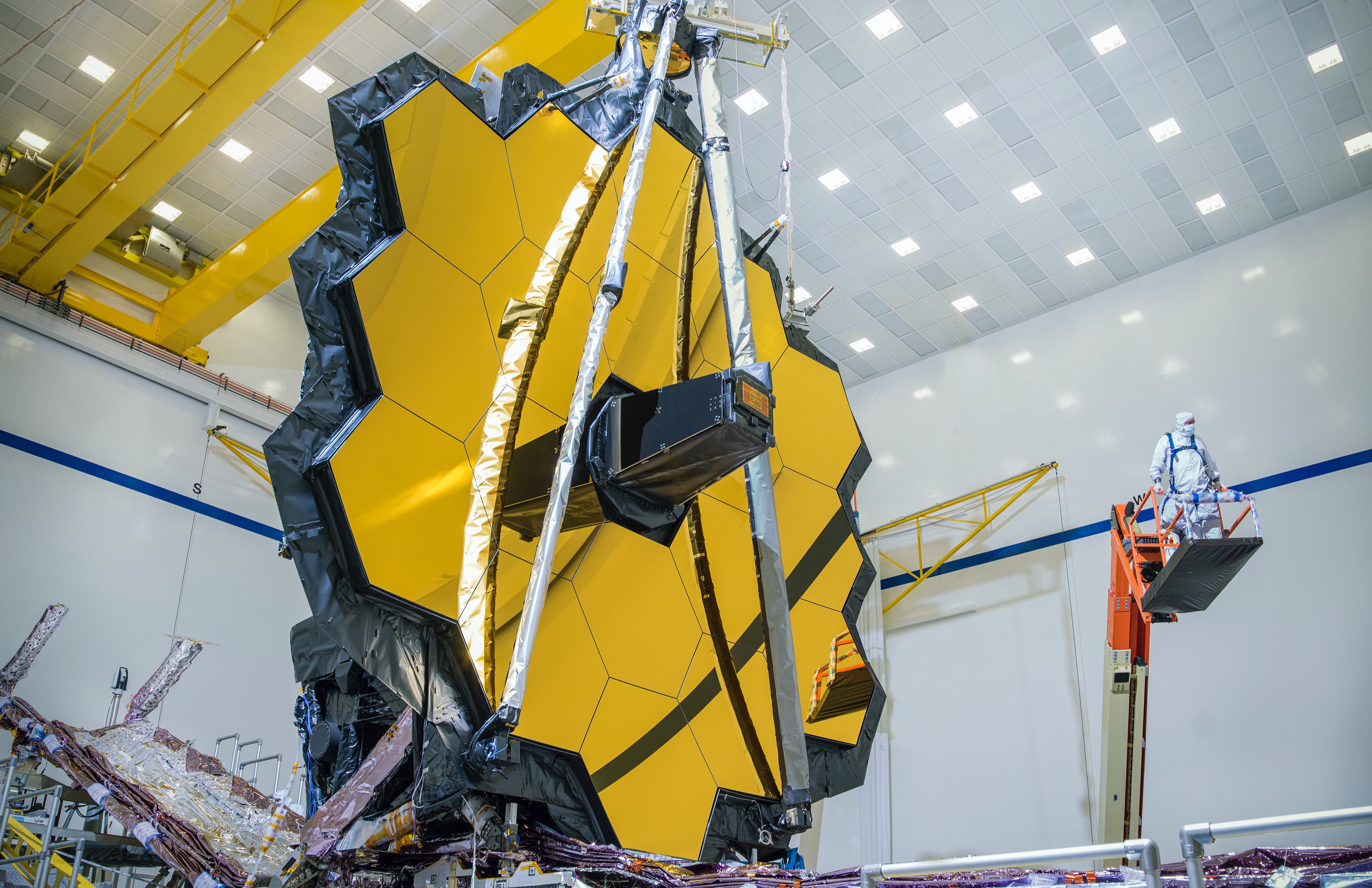
NASA has delayed the launch date of the James Webb Space Telescope to December 25 due to bad weather. Initially scheduled for Dec. 24, the world's largest and most powerful space science telescope will launch on an Ariane 5 ECA rocket on Saturday at 7:20 am ET (12:20 am UTC) from Europe's Spaceport in French Guiana.
A fresh weather forecast will be issued tomorrow evening in order to confirm the date of December 25, the U.S. space agency said on Tuesday.
UPDATE: @NASAWebb completed its Launch Readiness Review & is safe atop its Ariane 5 rocket.However, the weather in French Guiana isn't looking good.Launch is now no earlier than Dec 25 at 7:20am ET (12:20am UTC). We'll monitor things & keep you posted. https://t.co/94ZOj9aU6Y pic.twitter.com/CwfdGmLn0R
— NASA (@NASA) December 21, 2021
Webb is an international program led by NASA with its partners - the European Space Agency (ESA), and the Canadian Space Agency (CSA). It includes four scientific instruments:
- The Near Infrared Camera (NIRCam) - built by the University of Arizona working with Lockheed-Martin
- The Near-Infrared Spectrograph (NIRSpec) - provided by ESA
- The Mid-Infrared Instrument (MIRI) - provided by a consortium of European countries and ESA and the NASA Jet Propulsion Laboratory (JPL)
- The Fine Guidance Sensor/ Near InfraRed Imager and Slitless Spectrograph (FGS-NIRISS) - provided by CSA
Designed to look deeper into space, Webb will travel to an orbit about one million miles away from Earth and undergo six months of commissioning in space - unfolding its mirrors, sunshield, and other smaller systems. The telescope's revolutionary technology will study every phase of cosmic history - from within our solar system to the most distant observable galaxies in the early universe.
Webb will send science and engineering data to Earth using a high frequency radio transmitter. Scientists will use the data to study planets and other bodies in our solar system to determine their origin and evolution and compare them with exoplanets, planets that orbit other stars. It will also observe exoplanets located in their stars' habitable zones and determine if and where signatures of habitability may be present.
NASA says the James Webb Space Telescope will complement and extend the discoveries of the Hubble Space Telescope and other telescopes.
Update 1
NASA, ESA and Arianespace have confirmed that the James Webb Space Telescope will launch on Saturday, December 25.


 Google News