

Speed of sound slower on Mars than on Earth, reveals new study
- Country:
- United States
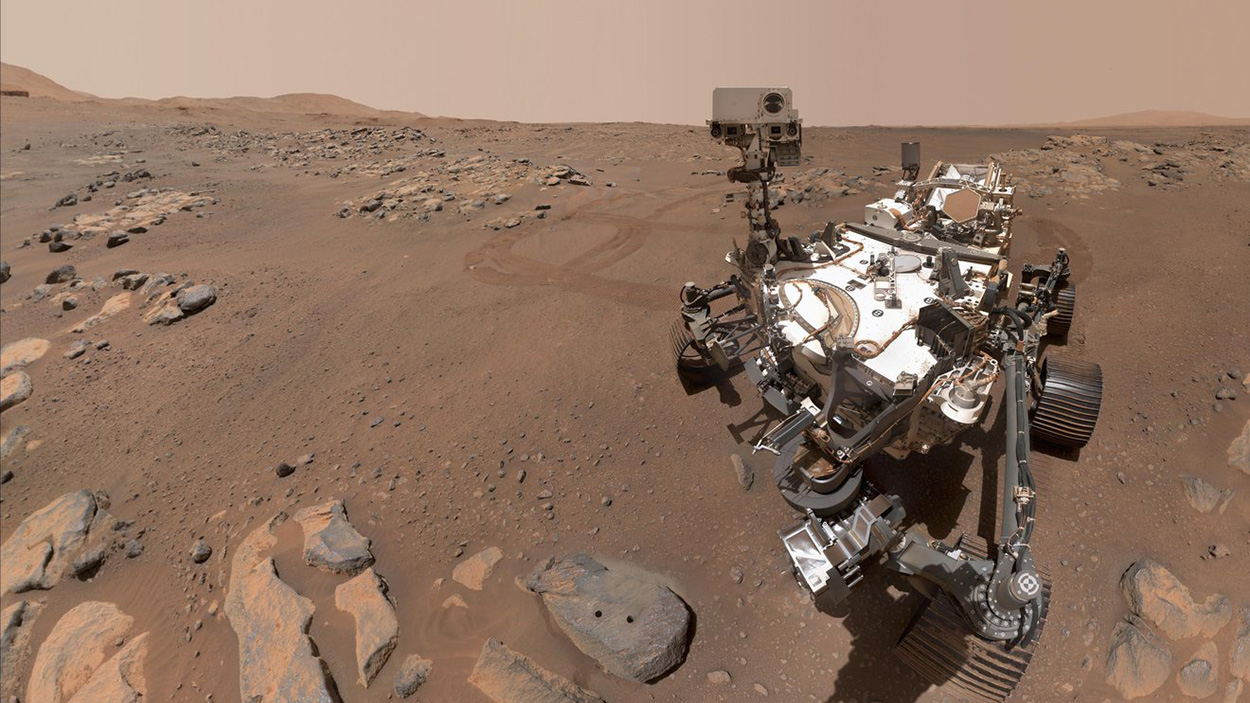
A new study has revealed that the speed of sound is slower on Mars than on Earth. The study is based on the recordings captured by NASA's Perseverance rover during the first 216 Martian days of the mission.
Led by Sylvestre Maurice, an astrophysicist at the University of Toulouse in France, the new study explores how fast sound travels through the extremely thin, mostly carbon dioxide atmosphere, how the Red Planet might sound to human ears, and how scientists can use these recordings to probe subtle air-pressure changes on another world – and to gauge the health of the rover.
The sounds were captured mostly by the microphone on the SuperCam, mounted on the head of the rover's mast. Another microphone mounted on the chassis of the rover also recorded the sounds, which were used in this study.
Sounds typically travel at 767 mph (343 meters per second) on Earth. On the other hand, low-pitched sounds travel at about 537 mph (240 meters per second) while higher-pitched sounds move at 559 mph (250 meters per second) on the Red Planet. Researchers attribute the variable sound speeds on Mars to the thin, cold, carbon dioxide atmosphere.
Another important finding of the study is that sounds carry only a short distance on Mars. On Earth, sound might drop off after about 213 feet (65 meters) whereas, on Mars, it falters at just 26 feet (8 meters), with high-pitched sounds being lost completely at that distance, the study has revealed.
"One of the most striking features of the sound recordings is the silence that seems to prevail on Mars. At some point, we thought the microphone was broken, it was so quiet. That, too, is a consequence of Mars having such a thin atmosphere," Maurice said.
The team also studied what the SuperCam microphone picked up from the spinning double rotors of the Ingenuity Mars helicopter and found that the rotors produce "a distinctive, low-pitched sound at 84 hertz".
More information can be found here.


 Google News