

NASA's Parker Solar Probe makes inroads towards achieving key goals
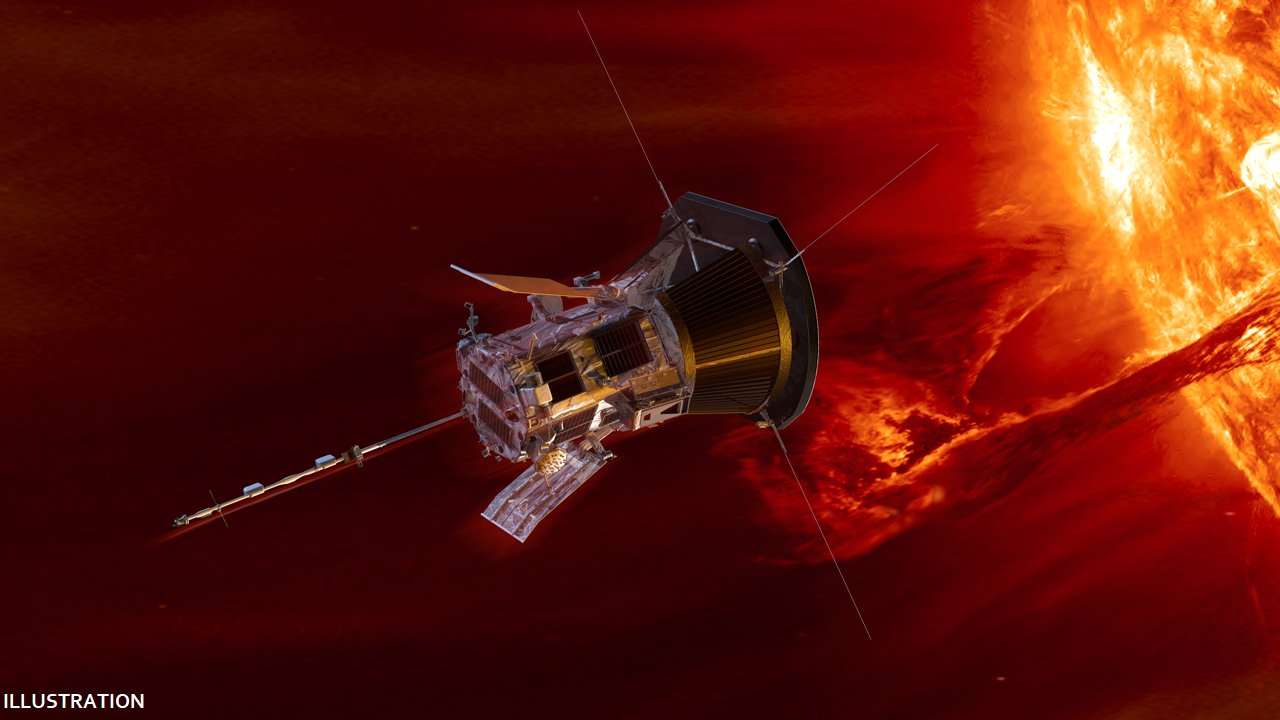
NASA's Parker Solar Probe, the first-ever mission to touch the Sun, has made inroads toward achieving the mission's key goals. Launched in 2018, the spacecraft continues to make game-changing discoveries to help scientists uncover critical information about our closest star and its influence on the solar system.
Parker, the first spacecraft in history to fly through the Sun's upper atmosphere - the Corona - and sample particles and magnetic fields, continues to break records - from making the first-ever crossing of what's known as the Alfvén critical surface to tracing the origin of switchbacks, magnetic zig-zag structures in the solar wind and more.
Our #ParkerSolarProbe has a pretty impressive resume! See what NASA's mission to touch the Sun has accomplished in less than four years in space. ☀️ https://t.co/n999PoQoQg pic.twitter.com/pW94t947FK
— NASA Sun & Space (@NASASun) April 29, 2022
The key science goals for the Parker mission are to trace how energy and heat move through the solar corona and to explore how solar energetic particles are transported and accelerated. The spacecraft carries four instrument suites designed to study magnetic fields, plasma and energetic particles, and image the solar wind. These include:
- The Solar Wind Electrons Alphas and Protons Investigation (SWEAP) - gathers observations using two complementary instruments
- The Wide-Field Imager for Parker Solar Probe (WISPR) - looks at the large-scale structure of the corona and solar wind before the spacecraft flies through it
- FIELDS - captures the scale and shape of electric and magnetic fields in the Sun's atmosphere
- The Integrated Science Investigation of the Sun (ISʘIS) - measures particles across a wide range of energies
According to NASA, the Parker Solar Probe will eventually come within 4 million miles (6.2 million kilometers) of the solar surface in December 2024 at speeds topping 430,000 miles per hour. More information about the mission can be found here.


 Google News